Culross
Culross is a small village on the Firth of Forth west of Inverkeithing and reached via 2 buses. Its history is associated with a monastery from the 6th century, monks who mined coal and rescued a royal damsel in distress, a couple of saints, export of coal and salt, creation of iron griddles, import of red pantiles as ballast, a smart man called George Bruce C 1548-1625 friend of the king and also the National Trust. The monks ran into trouble when the coal seam disappeared under water and later they allowed George Bruce to use techniques acquired during his travels to continue the work. He built a coffer dam and created a tall strong wall around a tidal island. A shaft was dug over which he installed an Egyptian wheel which drained the mine and allowed mining to continue for about 50 years until a fierce storm ruined it, the same year as Sir Georges death.
Coal and salt were natural raw materials exported to the surrounding areas. George Bruce’s friendship with the king and the booming economy created the conditions for the granting of Royal Burgh status allowing Culross to export products overseas. Empty ships returned with red tiles as ballast explaining the uncommon colour and style of roof tiles in the area. The growing prosperity ensured that George Bruce enlarged his house frequently to provide room for visitors, both business and social in addition to a growing family and was knighted.
The Bruce family and town did well until the storm and death of Sir George. Thereafter prosperity was never as ready and the town fell into a decline to the extent that when Sir George’s old property was purchased by the National Trust in 1932 it and the town had not modernized with the times and they were ripe to be retained as period pieces. Numerous more properties were bought by the National Trust and also private owners were assisted to repair and renovate their properties. It has been the site of numerous period programs including Outlander and on the day I visited several film people were shown around and a staff member was interviewed on camera.
Accidently I discovered that a direct descendent from Inverkeithing had been awarded a Burgess Ticket and Seal by Culross in 1791. It means that he would have been a great value to the town in some way. He was a merchant so perhaps he assisted with trade. In 1922 a great grandson donated the document to a Scottish institution and subsequently it was given to another. The second receiving institution cannot find it in their listed and archived items so until it is found we may never know the reason for its grant. After discovering the connection I read up on Culross and due to the family connection, the nature of the town and its accessibility to Inverkeithing decided to visit. It was well worth it. A guided tour of some of the closed properties was included and I bought an informative book.
For more information see https://en.wikipedia.org/wiki/Culross
http://www.undiscoveredscotland.co.uk/culross/culross/
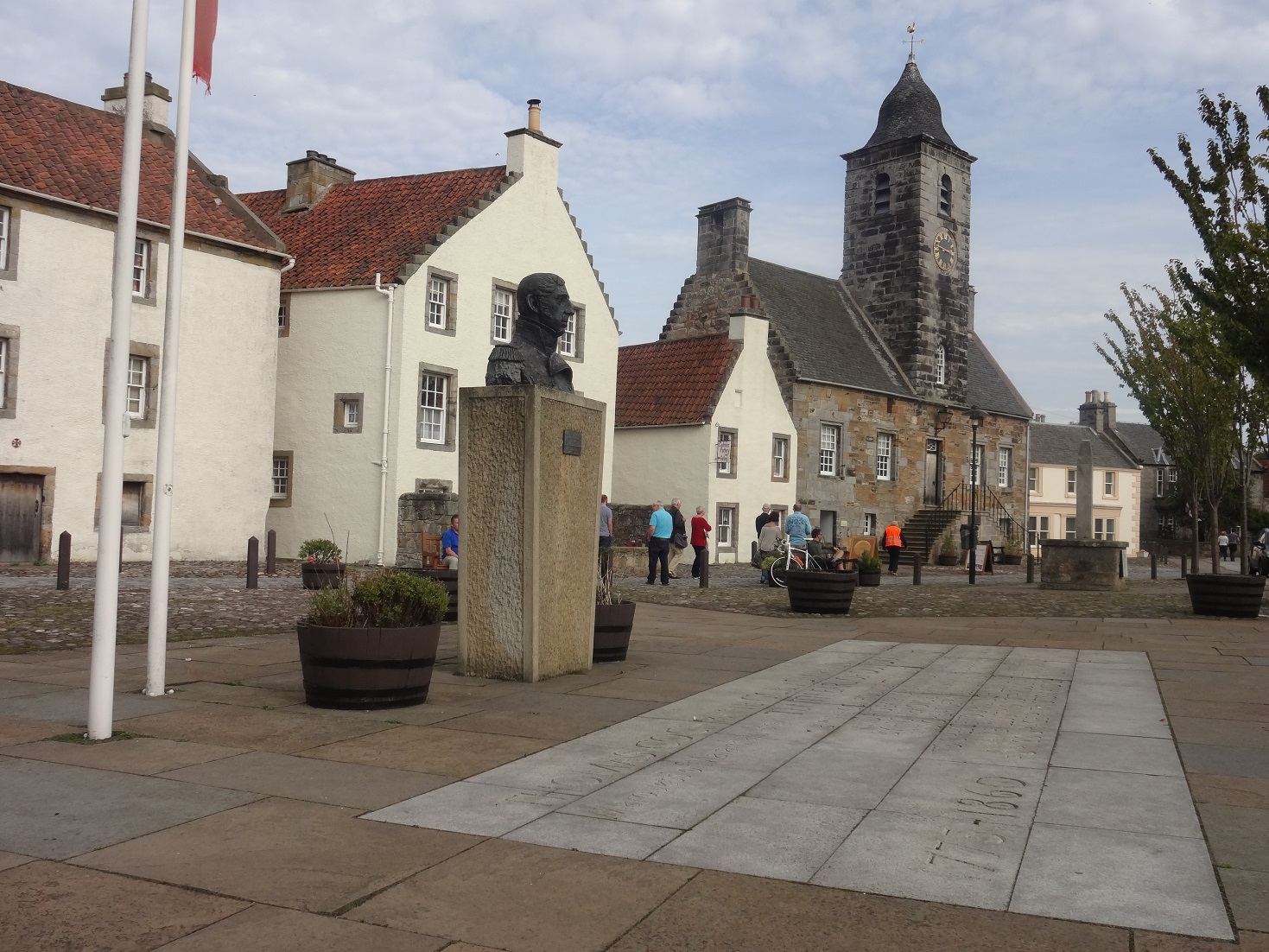
Culross – Town House, site of town official weighing beam – the tron, statue and information about another famous inhabitant and some quayside warehouses
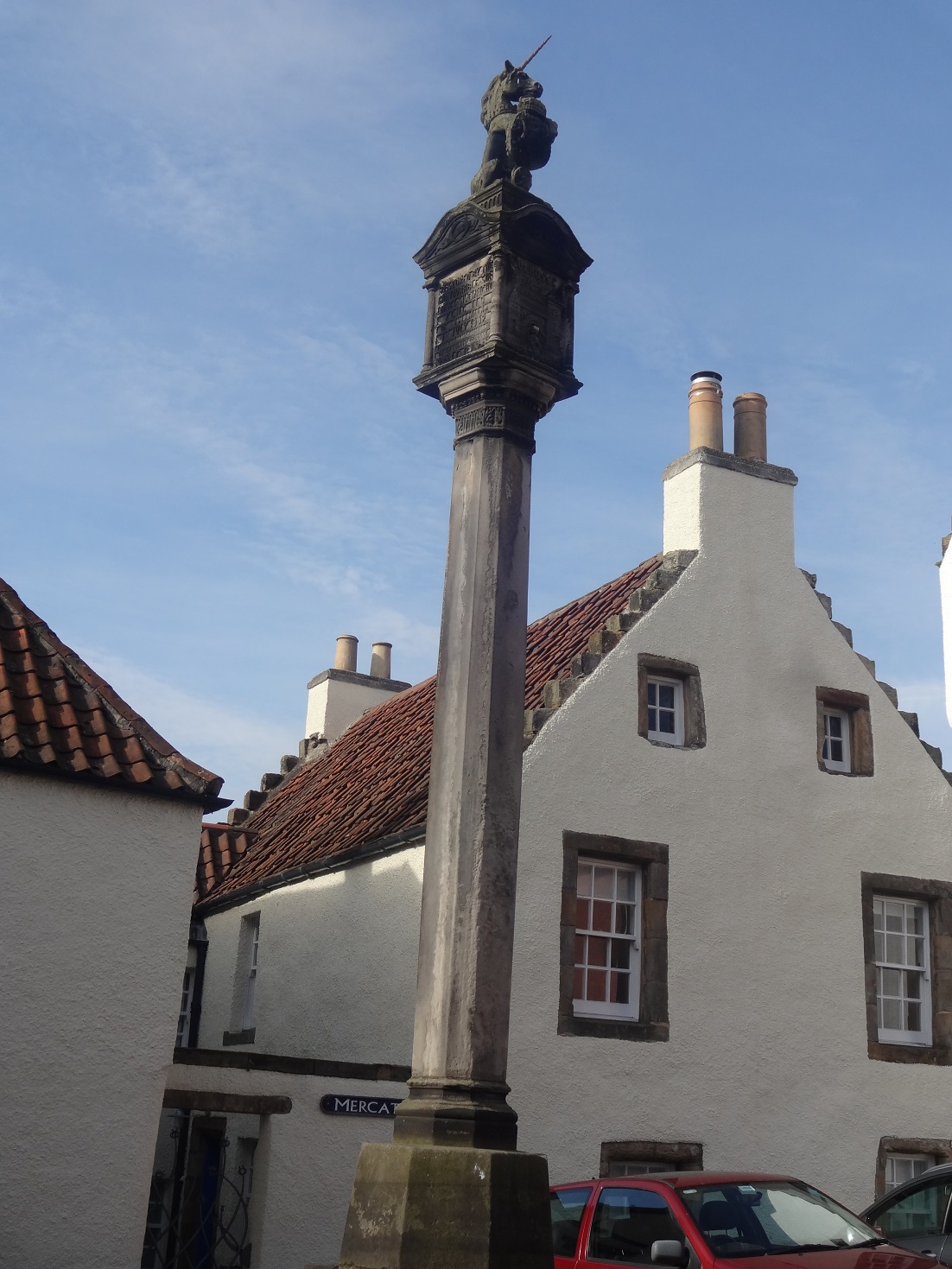
Mercat (market) cross, site of early markets
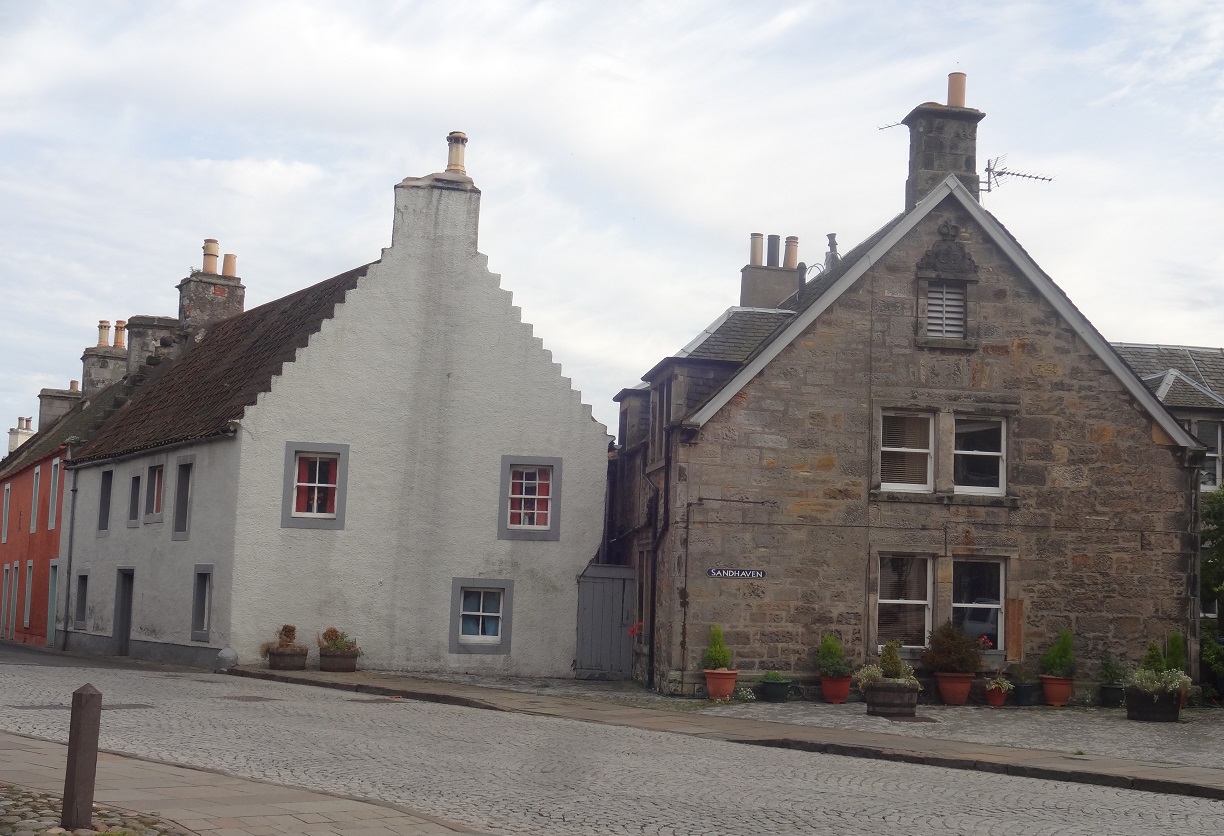
Buildings
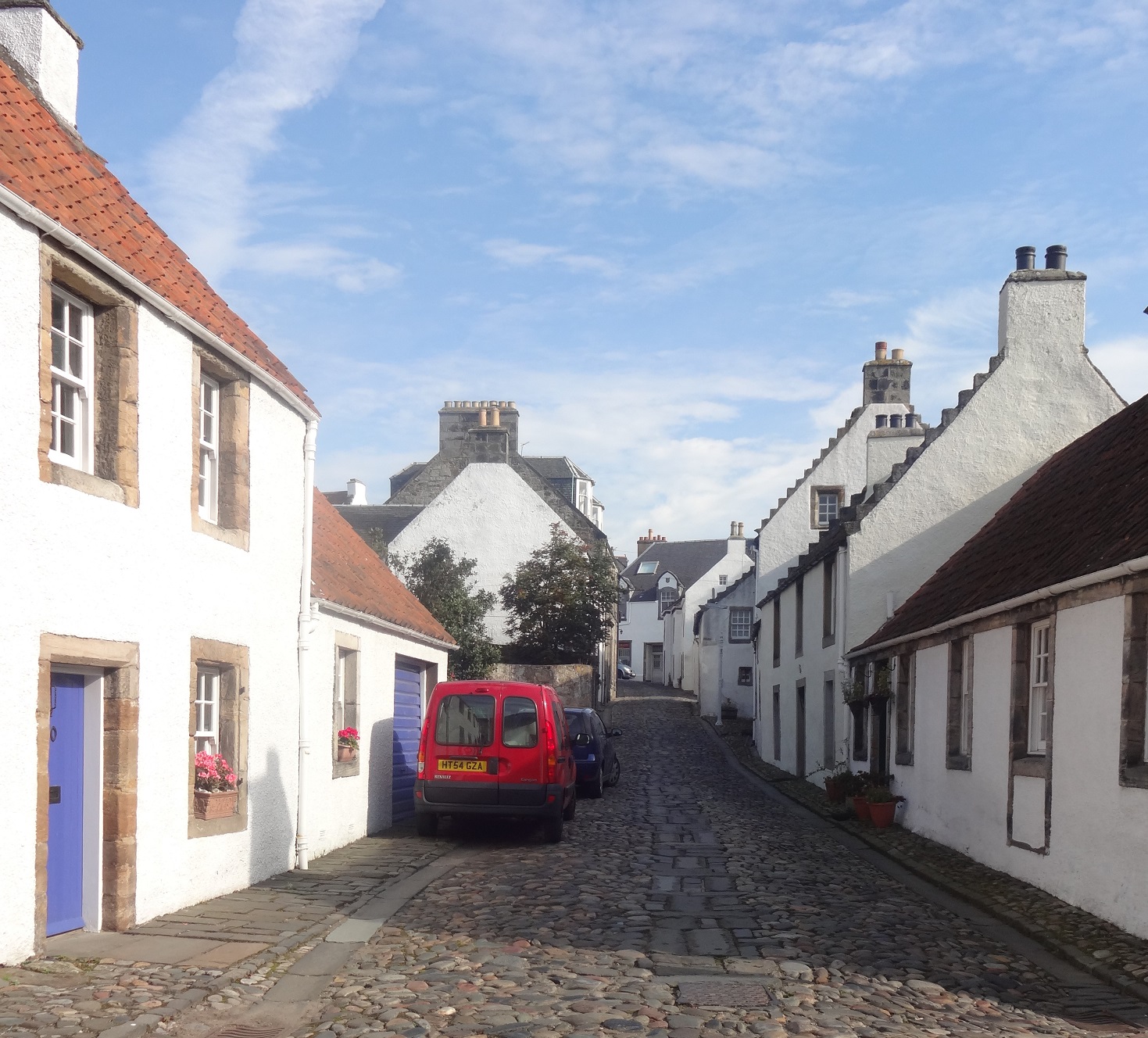
Cobble-stoned street
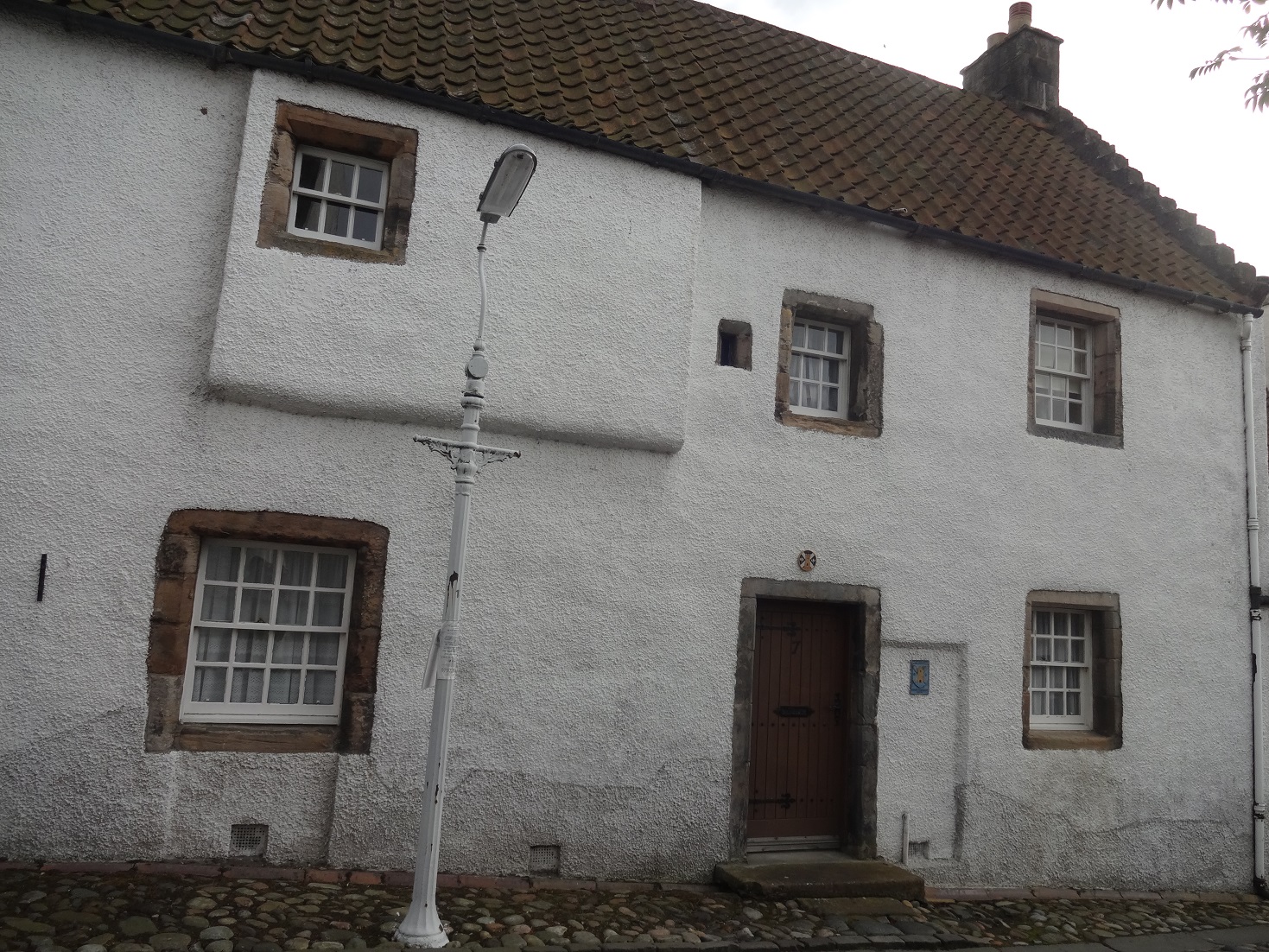
Old building, note small opening in wall
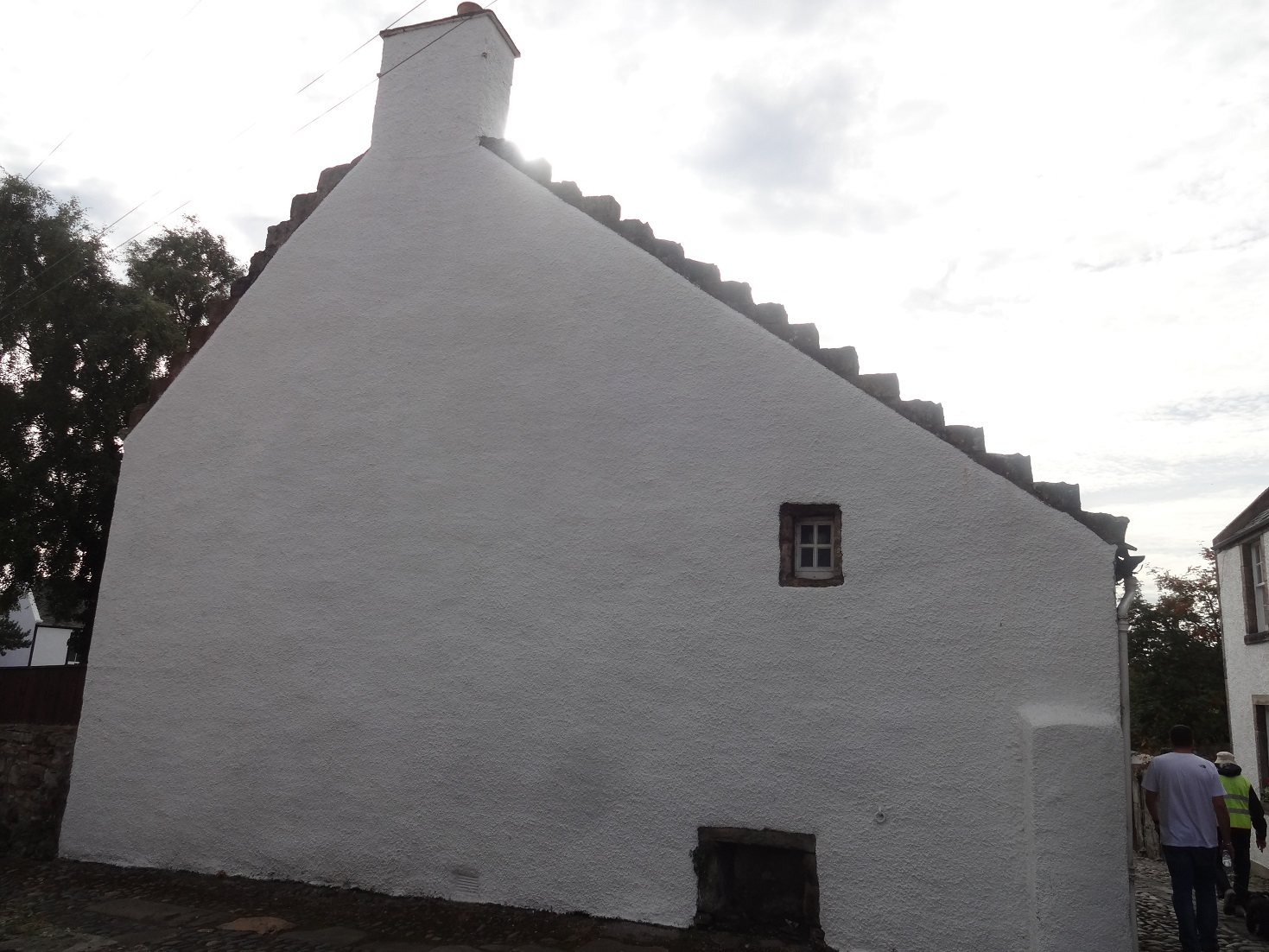
Note small opening in wall. It was designed to allow owls free entry and exit as they controlled vermin above the floor. Cats dealt with vermin at ground level. Many have now been filled in, others glazed.
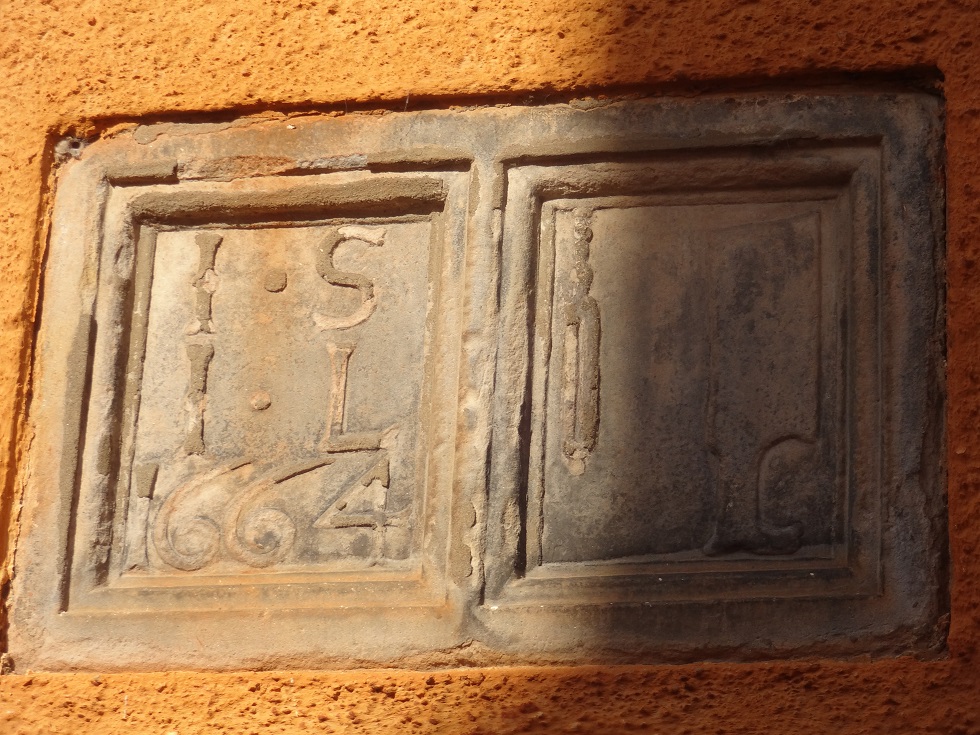
Date, initials and indication of owner’s occupation – 1664, IS nd IL and butcher
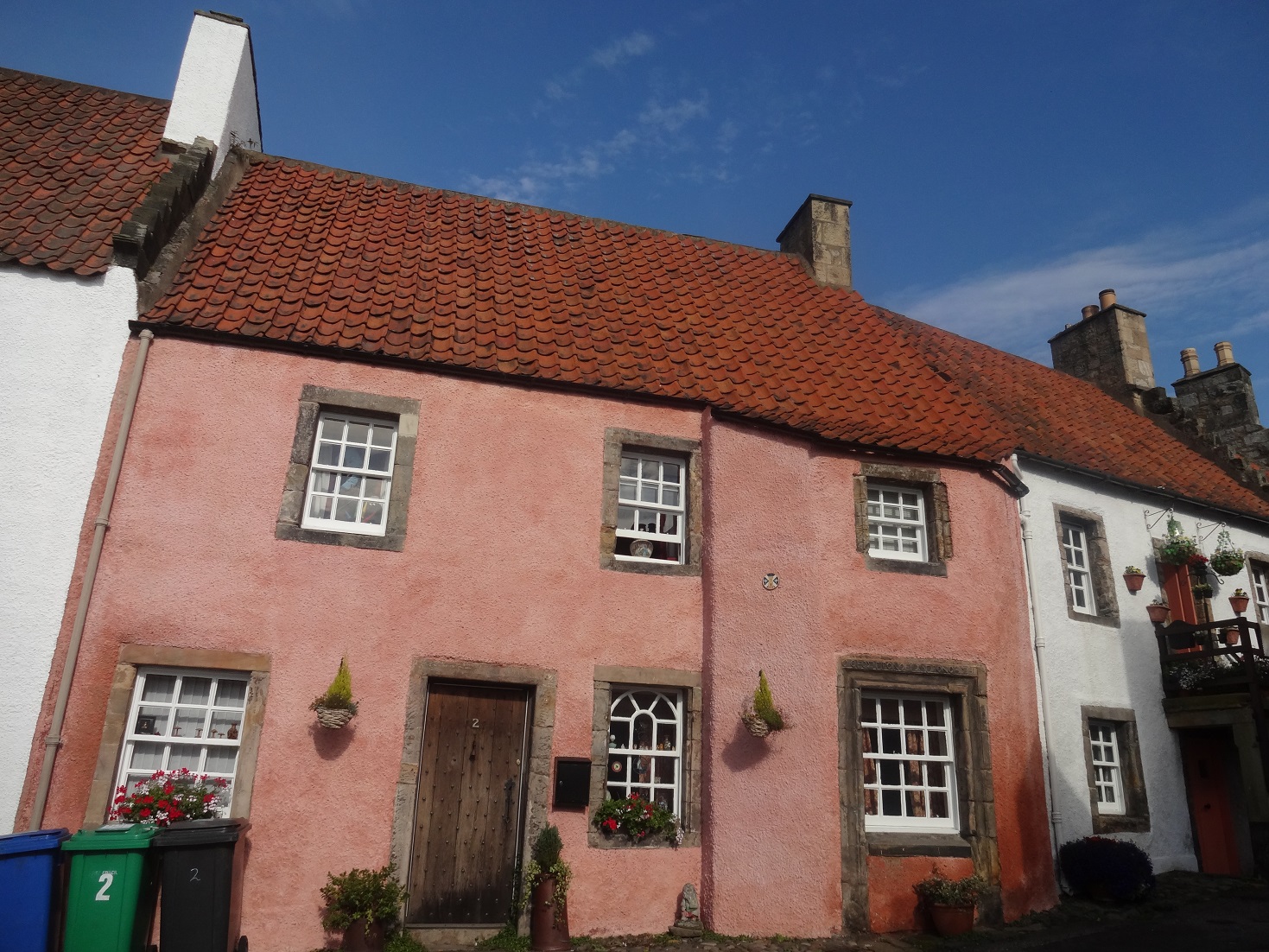
Colourful house
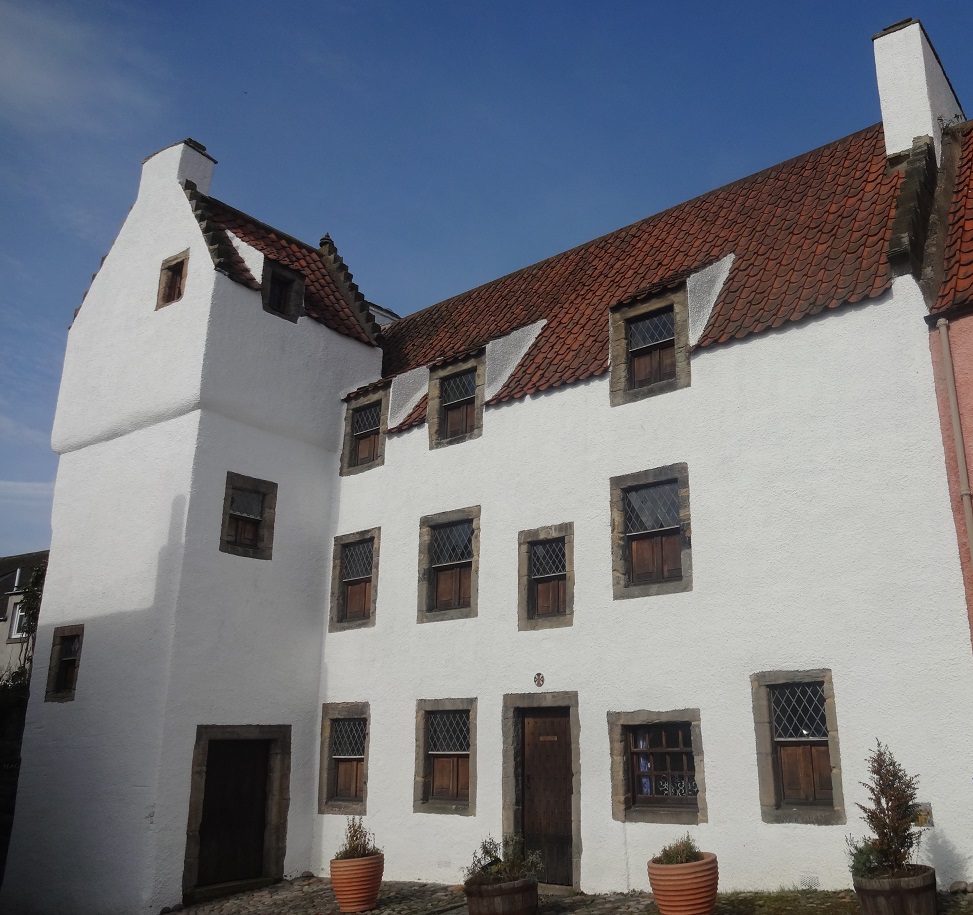
Property opened for tour to display painted ceiling
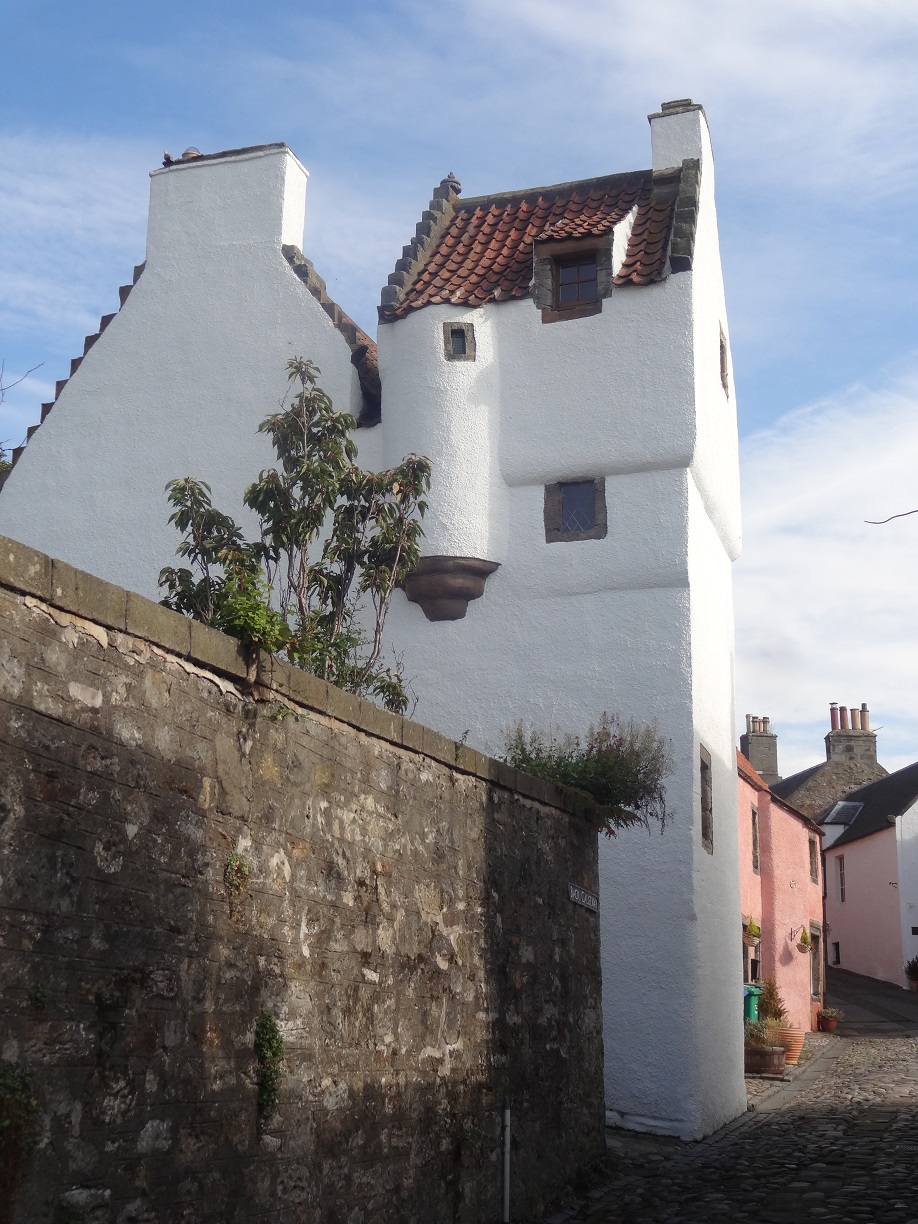
Side of same house
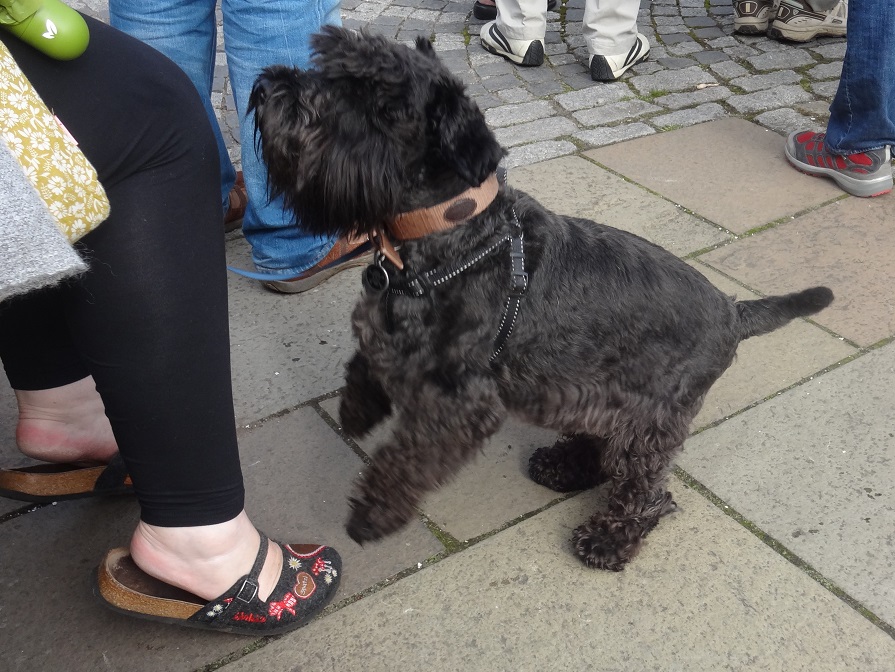
Dog on the tour. He was very agile on the narrow, worn spiral stairs.
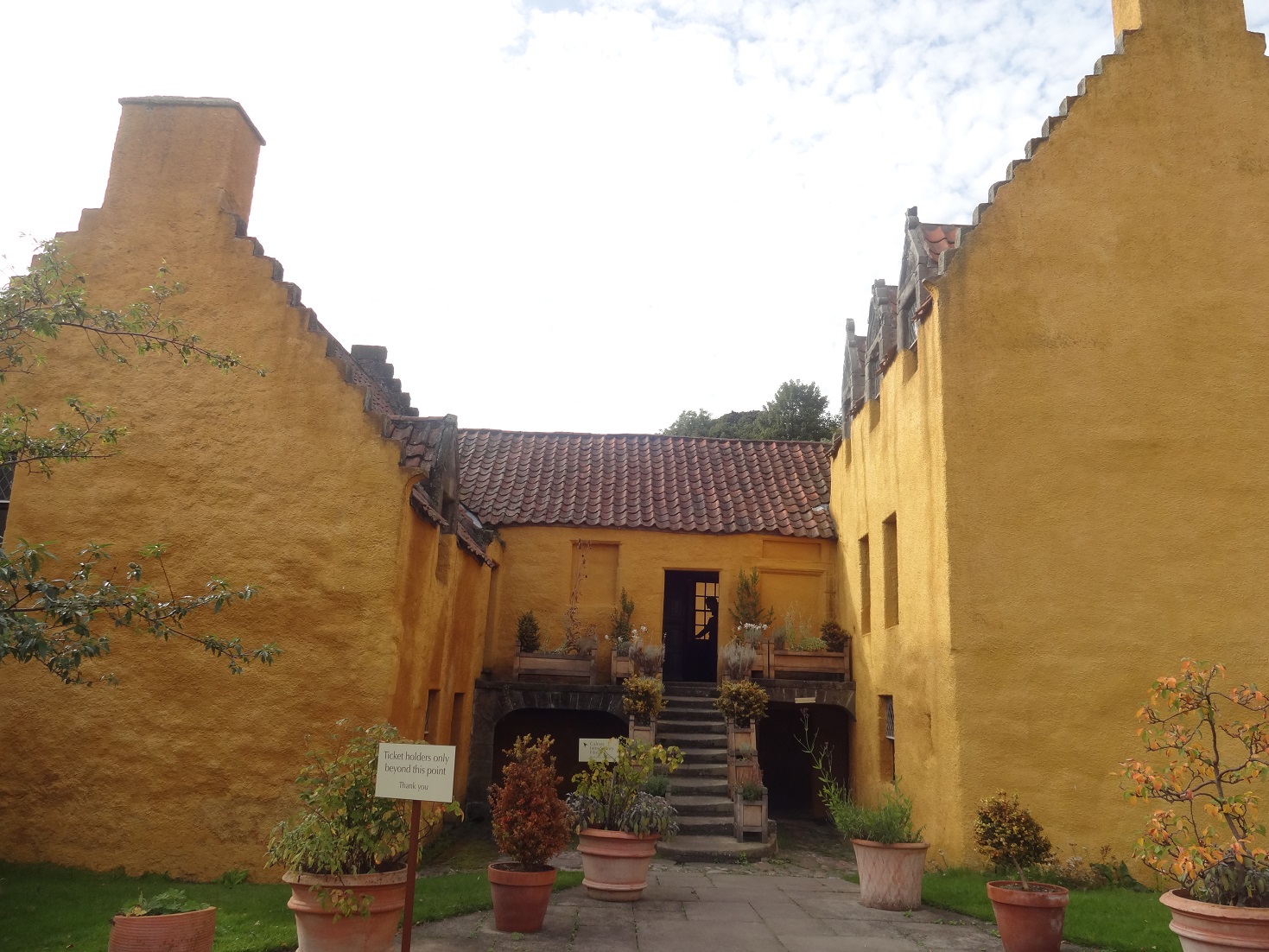
Entrance to Sir George Bruce’s house known as The Palace
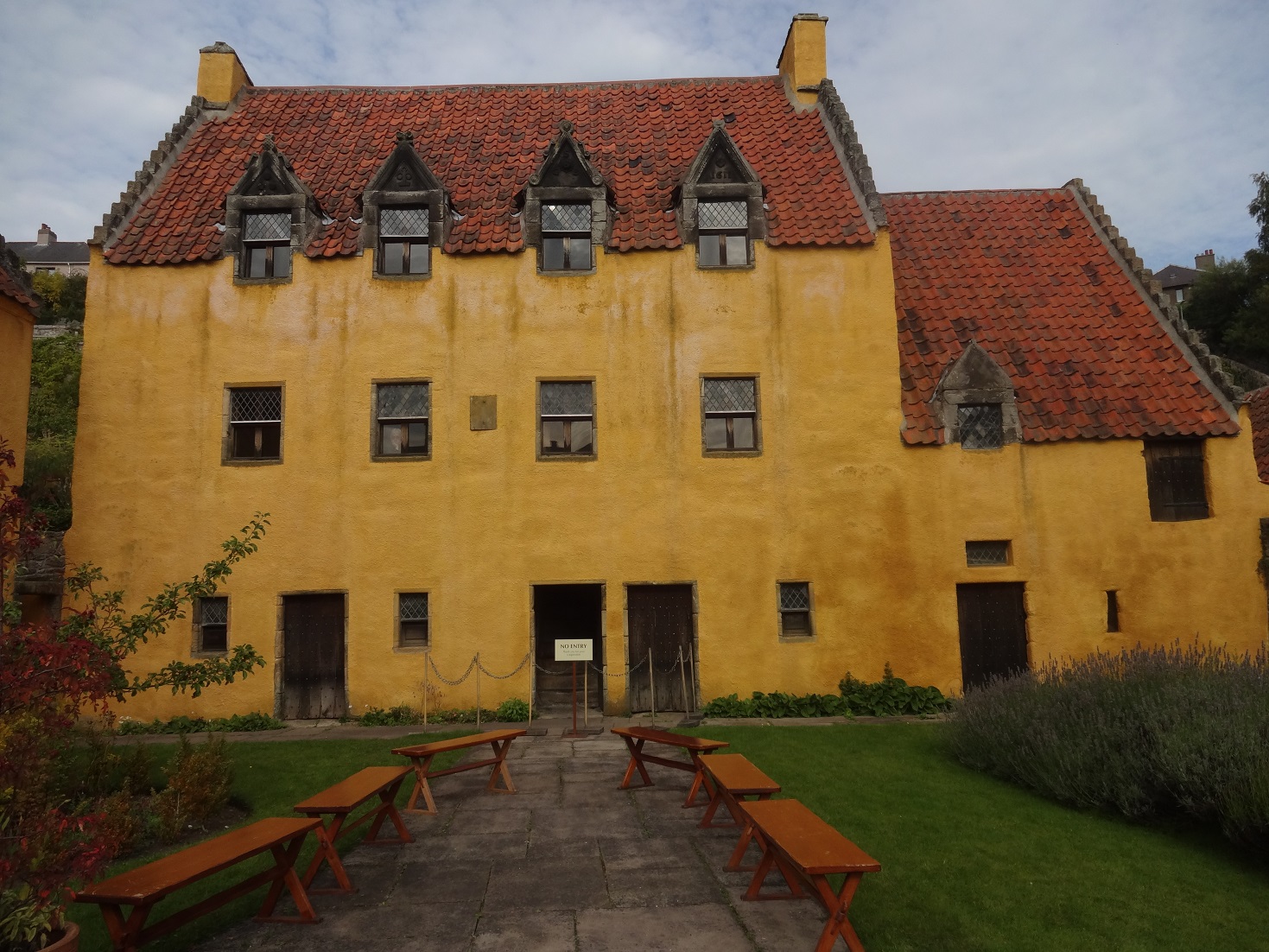
Also part of The Palace
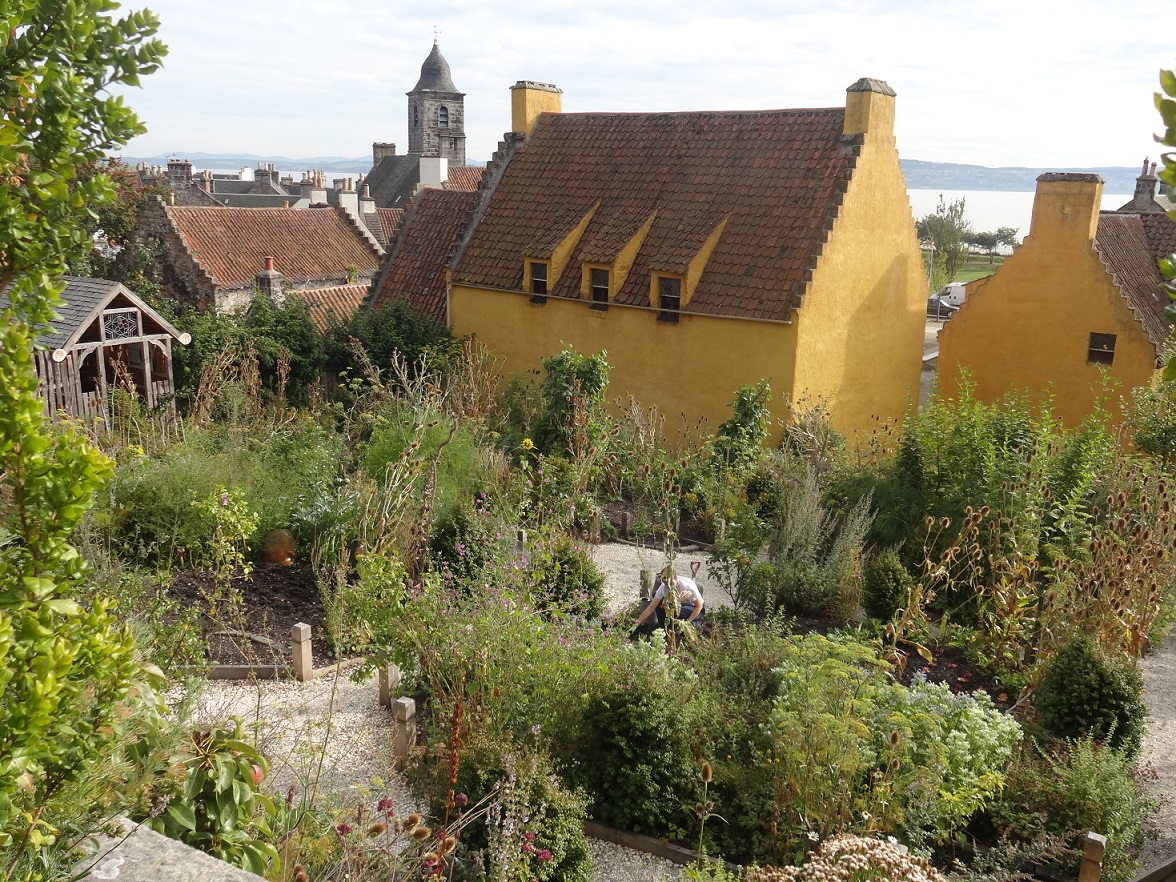
Garden and property from one of the garden tiers
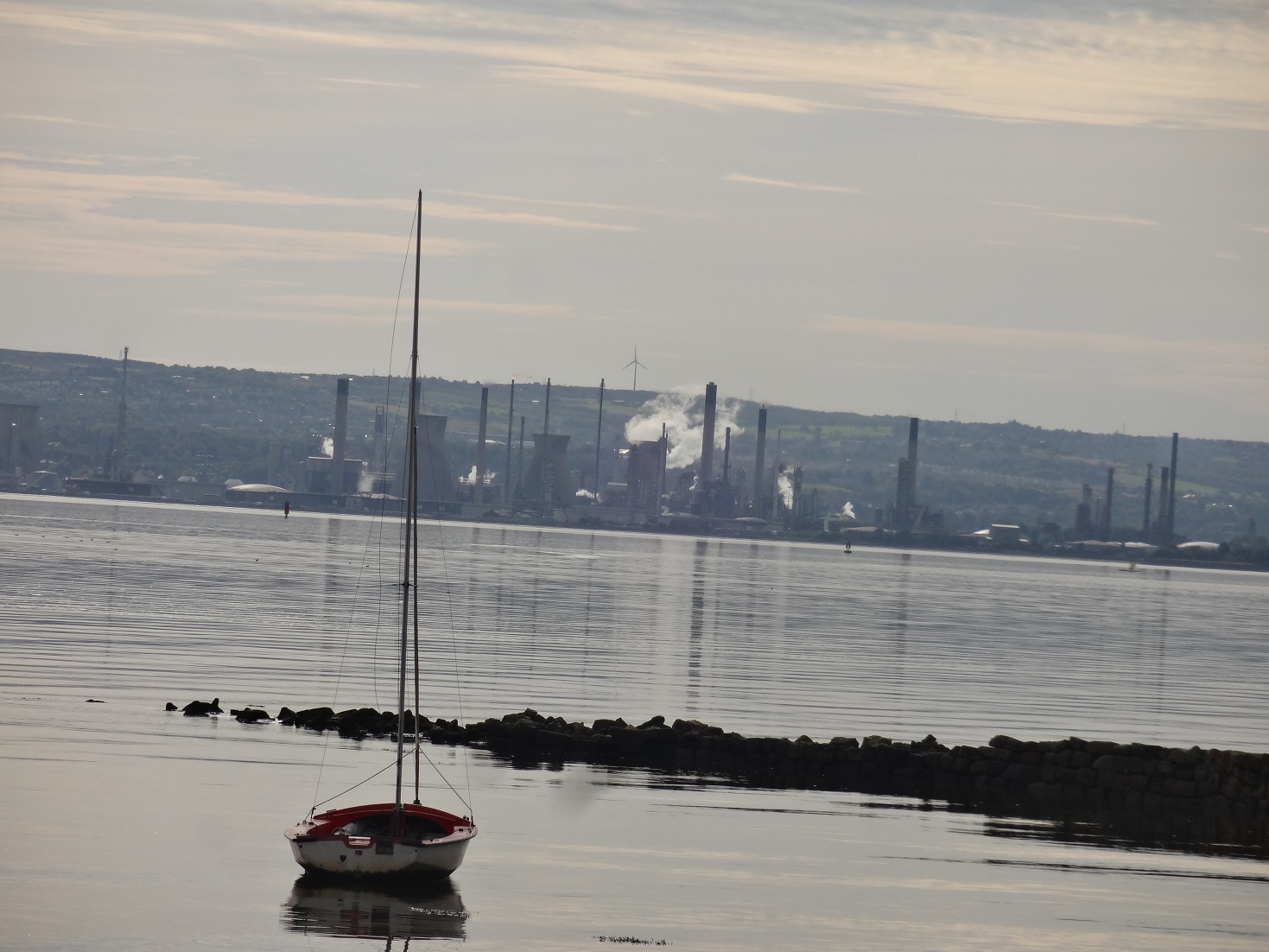
Directly across the Firth of Forth to Grangemouth