On my third day I walked up to Derrybeg. Essentially the main road is an undulating string upon which houses, empty blocks and commercial properties perch themselves with one tiny townland merging into another. The local church is in Derrybeg and I wanted to access church records.
There are two churches, a closed one and a replacement built in the 1970s. The older church is an unimpressive looking building tucked into a hillside with a gloomy garden walkway covered by overarching trees, rather unusual in an area place with minimal trees due to the strong winds from the Atlantic Ocean. It suffered badly from flooding in the 1880s with many church records destroyed.
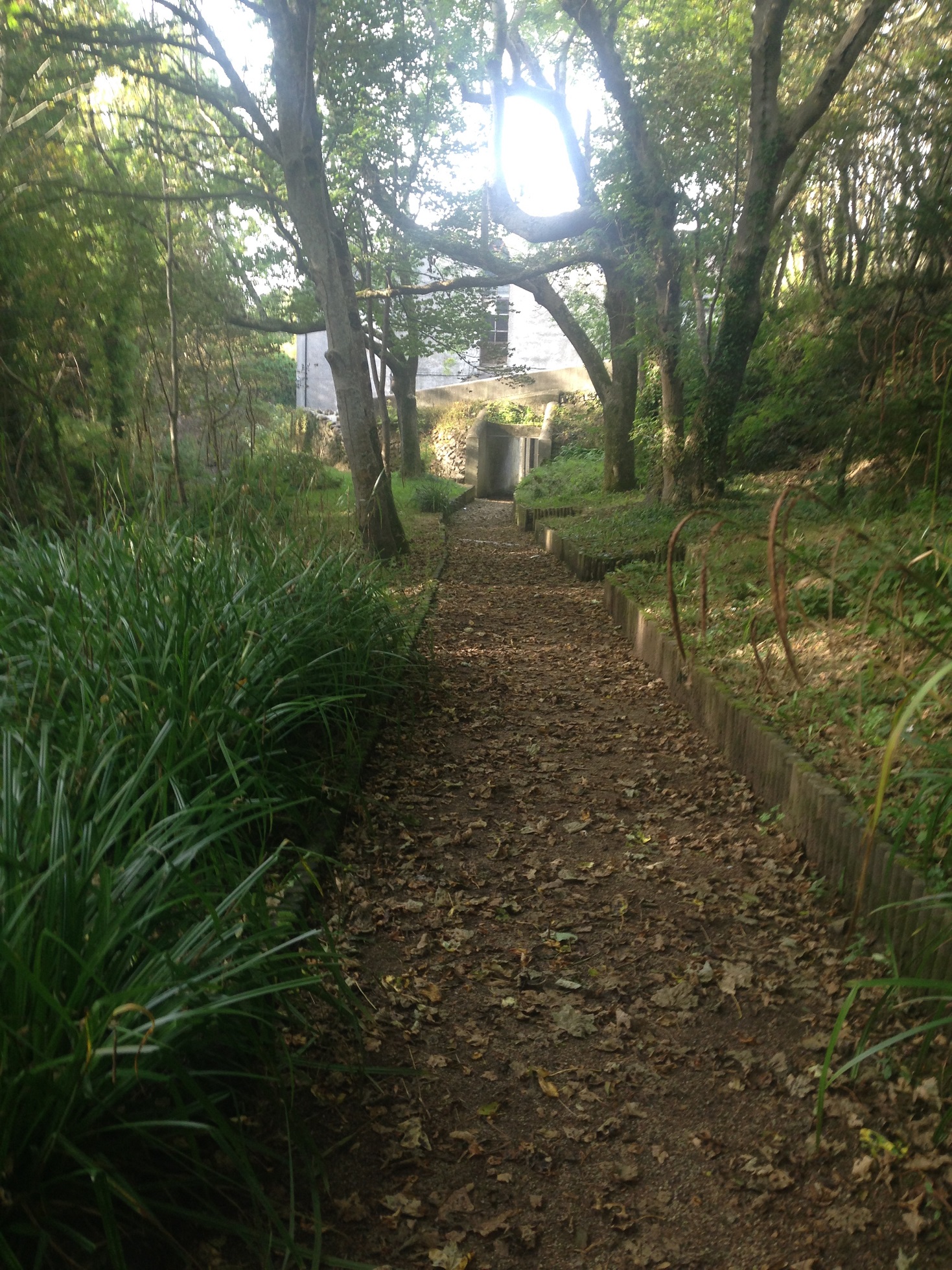
Path behind old church looking towards church
I then went looking for the priest’s house which was up the hill above along with another priests house and the newer church. The parish priest was not home but I did get to talk with the gardener and a grandmother accompanying her grand kids home from school. She advised me of the concept that if there are two people with the same name their father’s name is added to distinguish one from another. eg Mary O’Tool becomes Mary “Paddy” O’Tool. I had read of this happening long ago but had no idea that it still existed. I left a note for the priest and returned a couple of days later to discover that remaining baptismal registers were too recent to provide the information I wanted for my great grandmother and her older twin sisters.
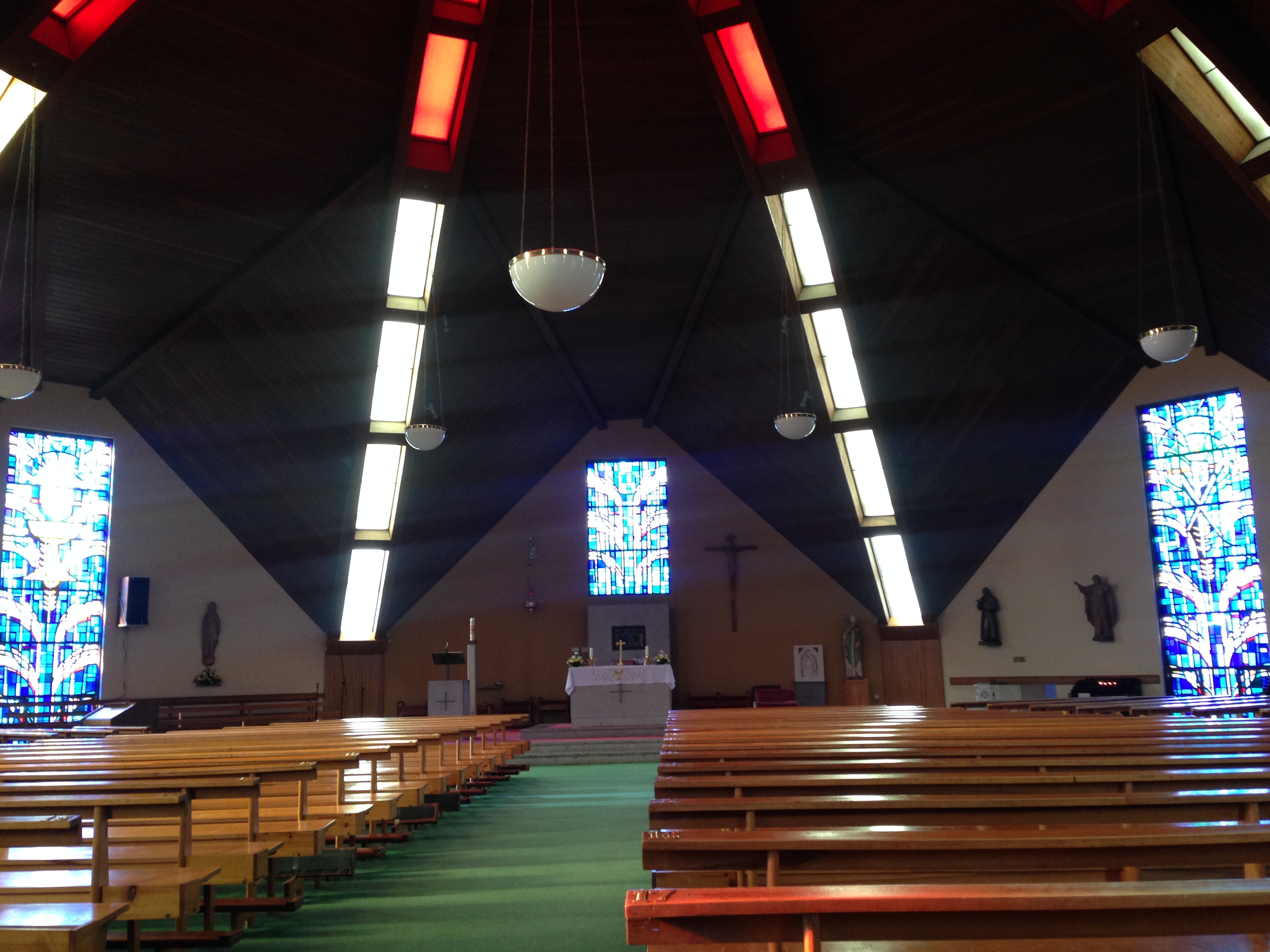
Inside the new church
The female owner of my B&B returned from an absence and busied herself sourcing people who knew my relatives. She, from her childhood, also remembered my great grand aunt Cecilia and one of her kids. Descendants of Cecilia had also visited in the past too. Two people came to visit me and showed me a photo of my great grand aunt with her son and shared information. One was generous enough to leave some of her records with me until we met again a couple of days later to visit Cecilia’s home.
The day before I left I was visited by a number of women who were related either as siblings and/or as relations to my family many generations ago. There is a strong knowledge of family genealogy which is just as well due to the paucity of records. Was rather hard to keep up with the conversation and source specific information due to the nature of the conversation. Everyone always seemed to be talking and often it was in Gaelic if not directed at me as one promptly added information to something another had said. I need to email and seek specific information I missed in the confusion. It was a real melee of conversation.
We then drove to the land which Cecilia had owned. Whether this is the same land that her father had rented in the mid 19th century is unknown but seems a reasonable possibility but needs further investigation. She was the only child left in Ireland with her three sisters having travelled to Australia. Cecilia’s stone house still stands minus its porch. A small window showed a good stack of turf; at least some of the house is now used as a storeroom. A modern house has been built adjacent but the owners don’t always live there, seemingly a common occurrence. Several of the people I met had grown up next door and knew Cecilia when they were children when they used to run errands for her. Their family home could be seen and is lived by another sibling while their homes are nearby. The land was located near what used to be boggy land and the community’s common land ie land available for all. The community sold the land in the 20th century and an industrial park and community facilities created. The industrial park was adversely affected by the most recent financial crisis with the closure of many businesses although some still do exist.
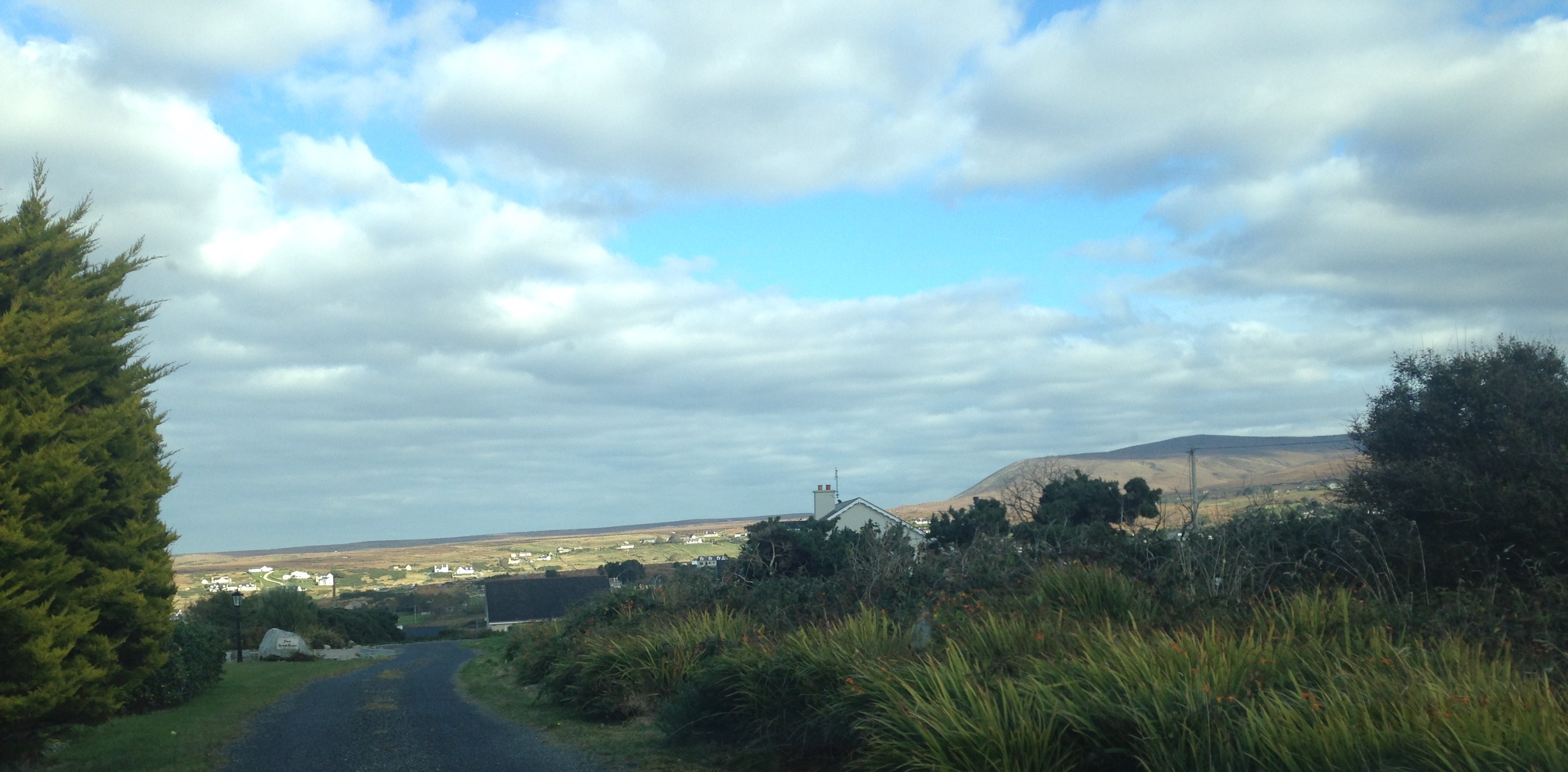
Roadway down to Cecilia’s property. The main road has numerous such roads accounting for the scattered nature of housing
According to my informants, towards the end of her life, Cecilia sold her land to a farmer neighbour with the understanding that she and her son, Eddie, could continue to live in the house during their lifetimes. Eddie was an odd character who had no employment and used to go off wandering for weeks at a time. Cecilia admitted herself to the local hospital/rest home twice with the last one coinciding with one of Eddies trips. When he returned he found the farmer had locked him out. One of the locals was so upset that he canvassed the community for donations of 5 ponds each to build Eddie a hut on common land. The hut is no longer in existence as the land was part of that sold for the industrial park but I was shown the location.
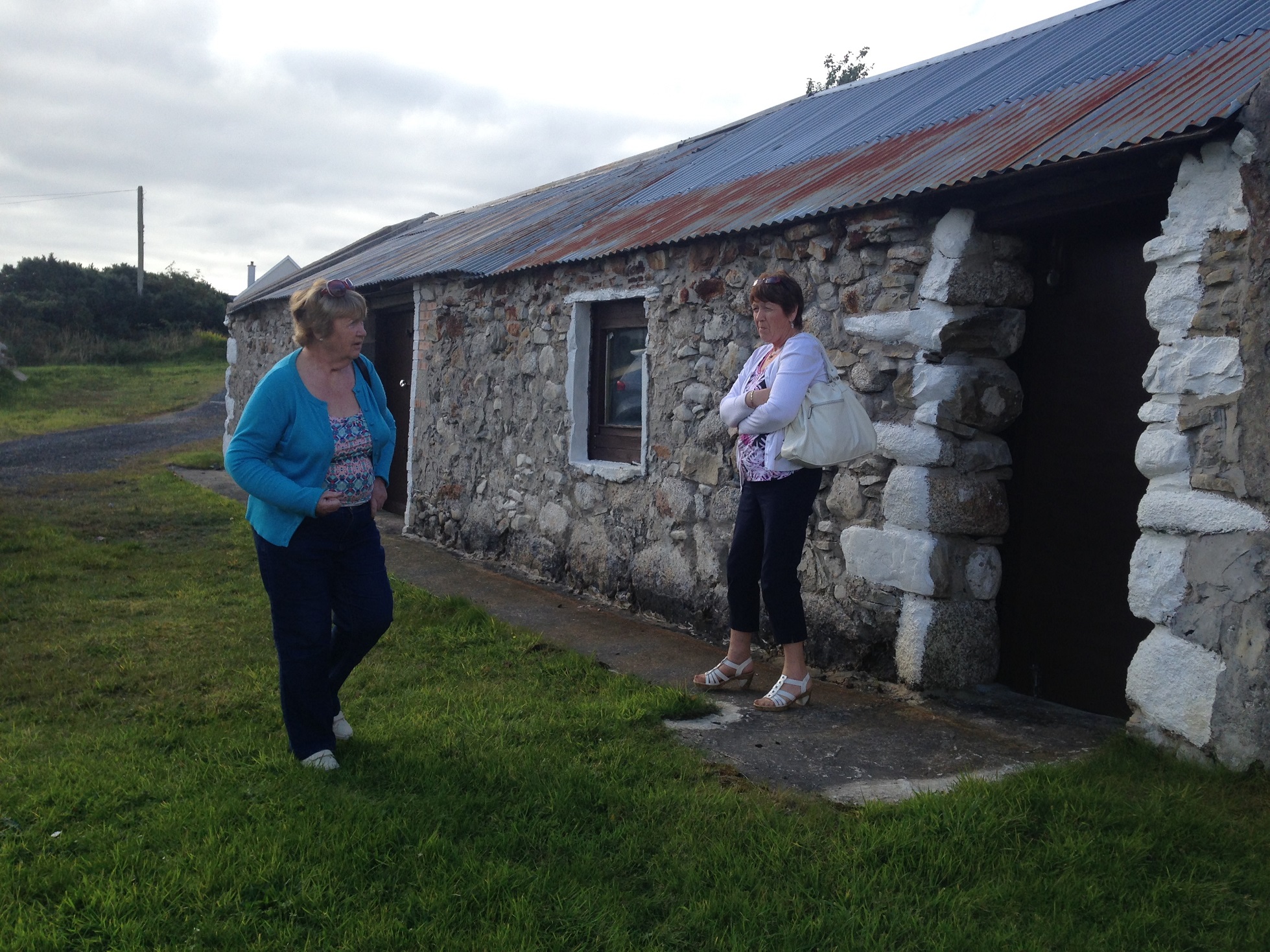
Cecilia’s house
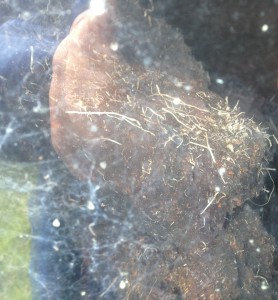 Turf in Cecilia’s old house
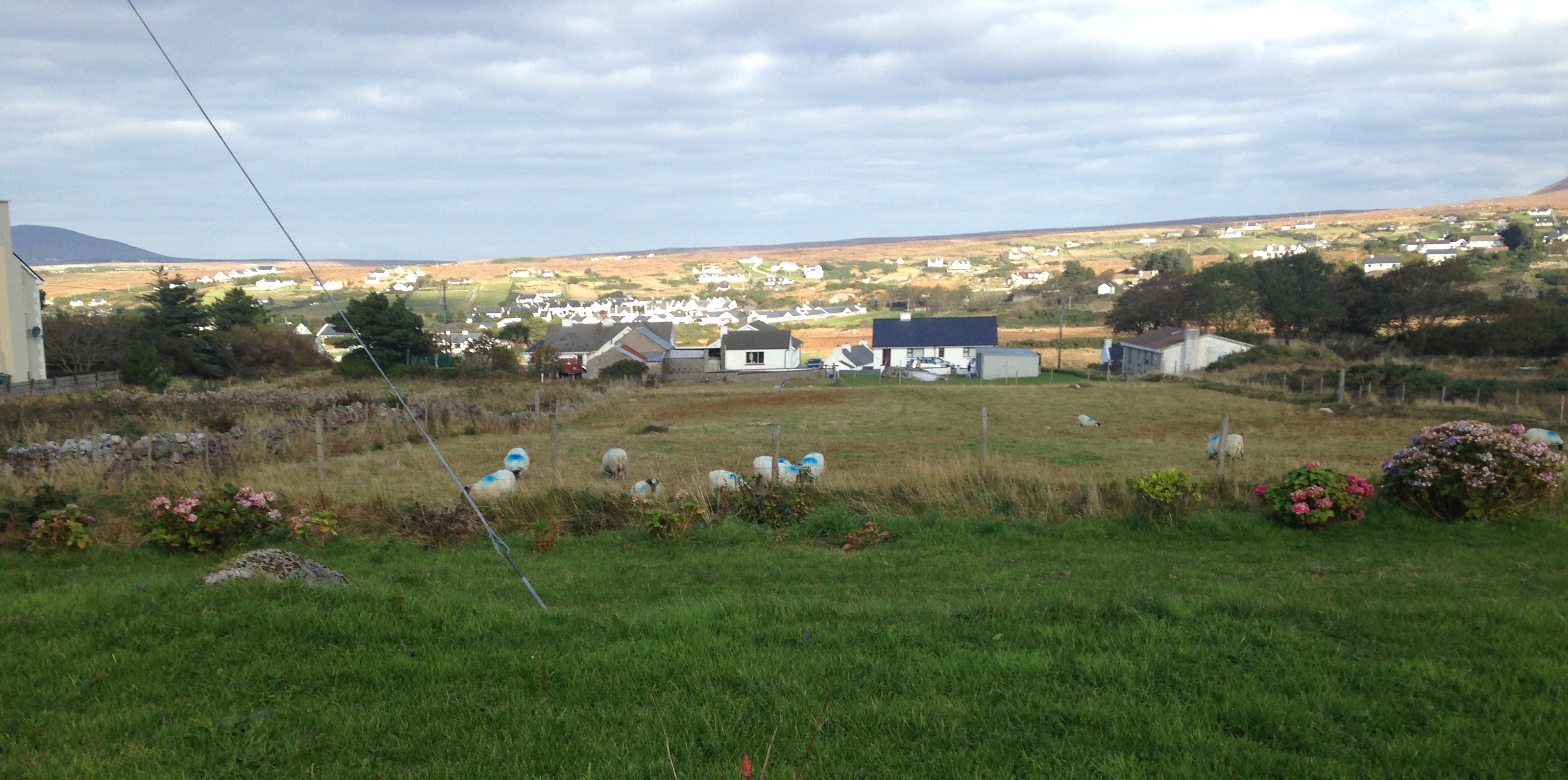
View from Cecilia’s property
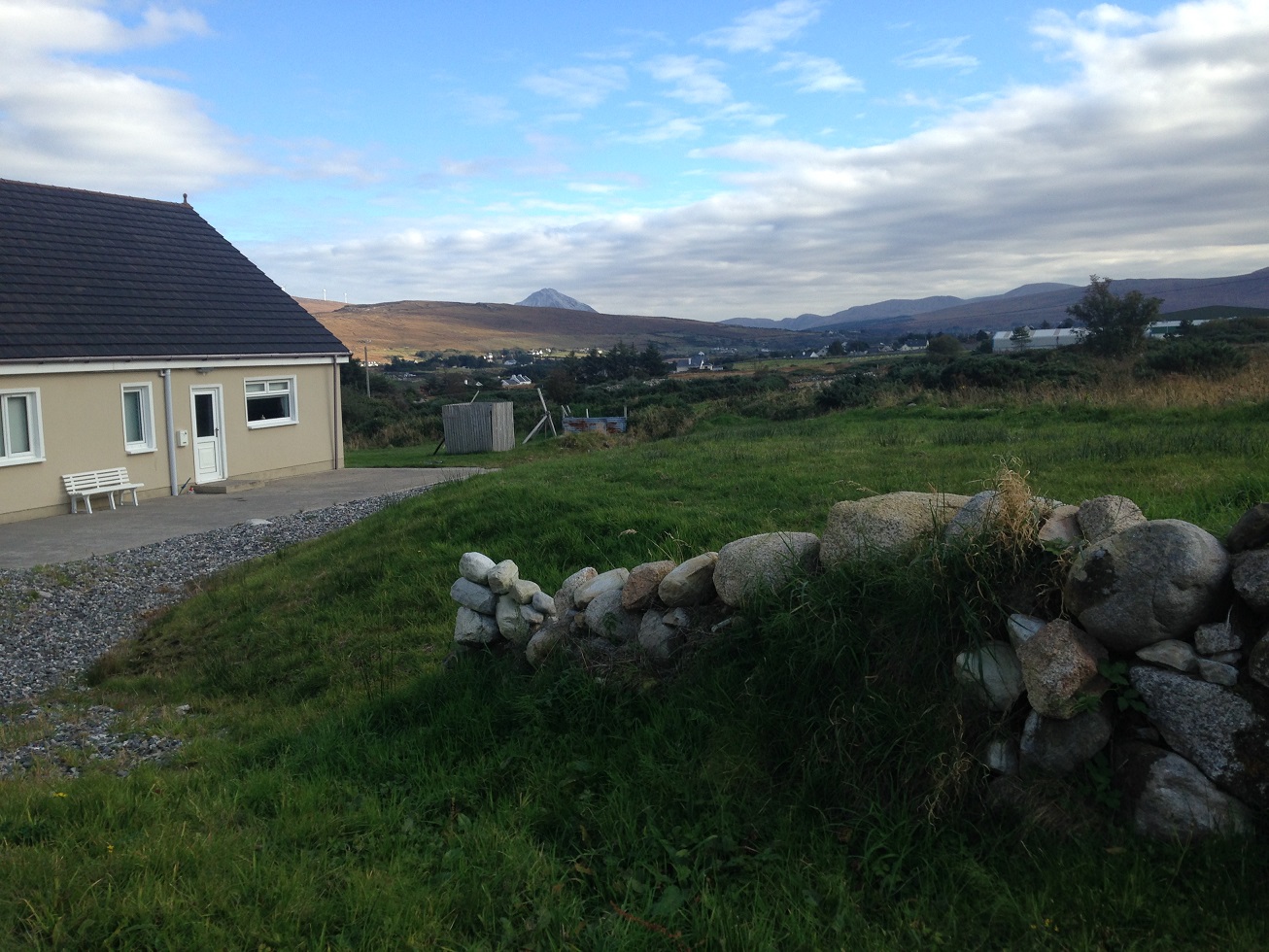
The new house on Cecilia’s property and Mt Errigal in the distance
After some photos we adjourned next door to the old family home of some of my informants for a cuppa and more chat and to meet another sister. There was a wonderful pile of rich dark turf drying in the back yard but the photo didn’t work out. I was offered some turf to take home but had to reject it on quarantine grounds. A cheerful turf fire was burning inside. I was told that everyone had had land elsewhere where they dug turf for their fires. From what I’ve read the old system of land use meant that land was allocated so that all families had separate pieces of land of differing qualities and uses. The next morning I saw some land from the bus where it was obvious that turf had been cut.
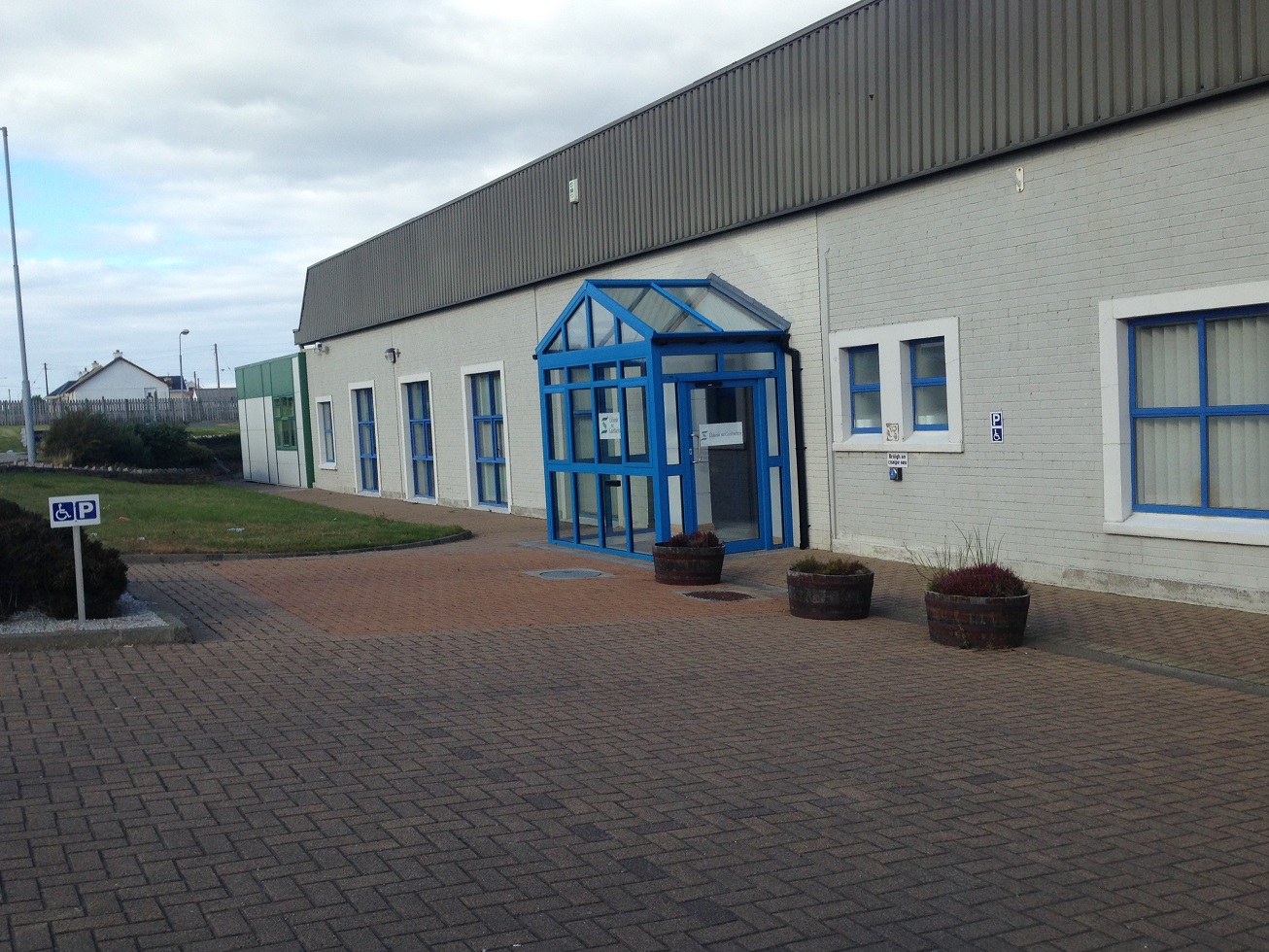
One of buildings in the industrial park and location of Eddie’s hut
It was an interesting and unexpected experience as I’d never expected to meet anyone who’d known my relatives including those who themselves are related. From what I gleaned “everyone” was and is related to one another. I hadn’t expected to find such strong cultural knowledge in terms of family lines especially as at least several of my informants had worked away from home including overseas. They were very welcoming and happy to share time and knowledge.