My initial thoughts on the first day after walking through Gloucester’s main streets was that few old buildings remained apart from a couple of very distinctive ones. Once I’d learnt to look up I realised many were partly camouflaged by modern shopfronts or hidden down small alleys. There are so many old buildings of interest that I’ve had to divide street scenes into several posts.
There are a couple of photos of writing which may be hard to read. Click on the photo to read it more clearly.
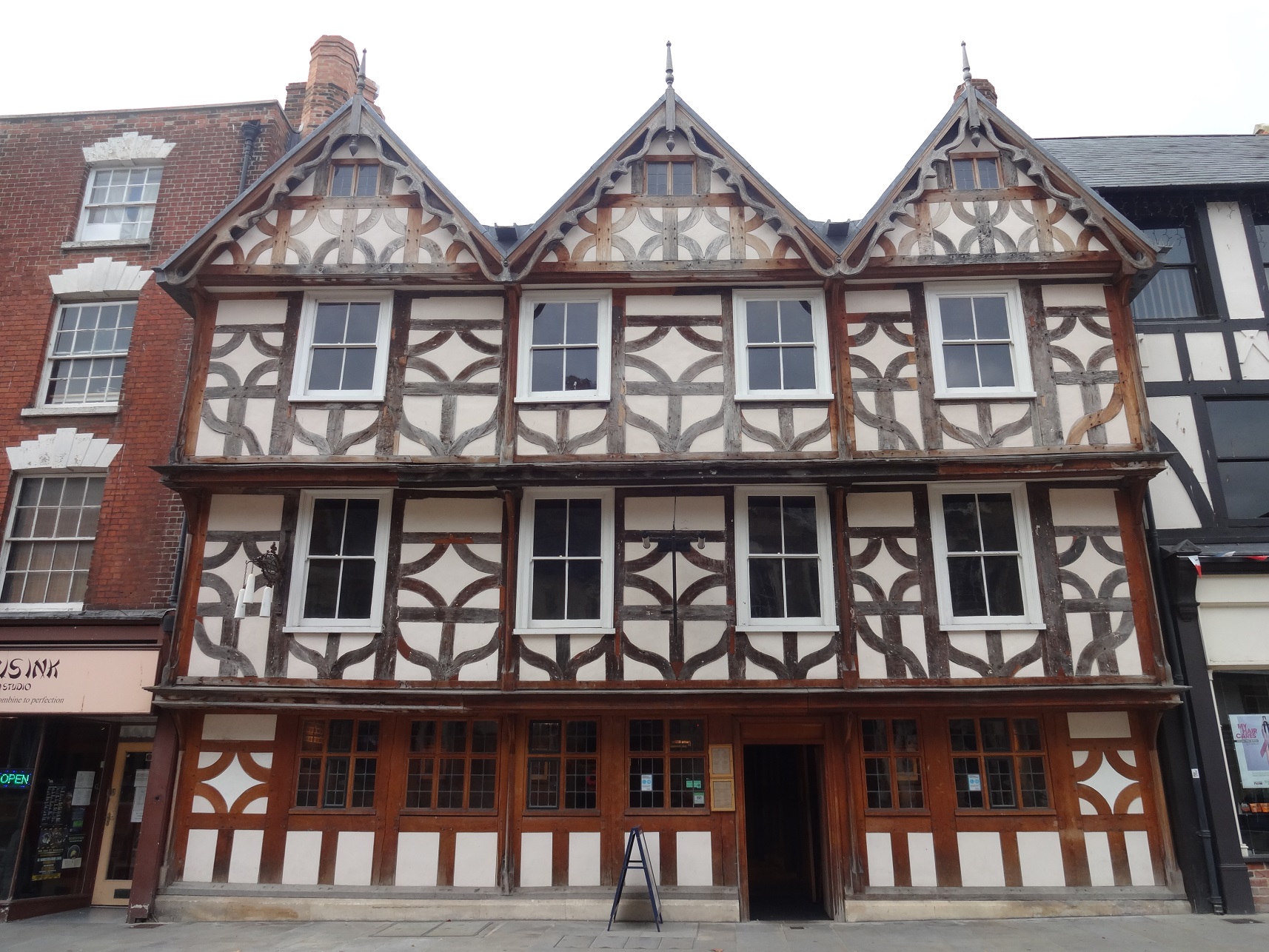
Robert Raikes’ House pub.
The building dates from the mid 1500s and was the home of Robert Raikes who inherited a publishing business from his father. He is known as a philanthropist and for starting the free Sunday School movement as a means of educating poor children away from poverty and temptations of vice.
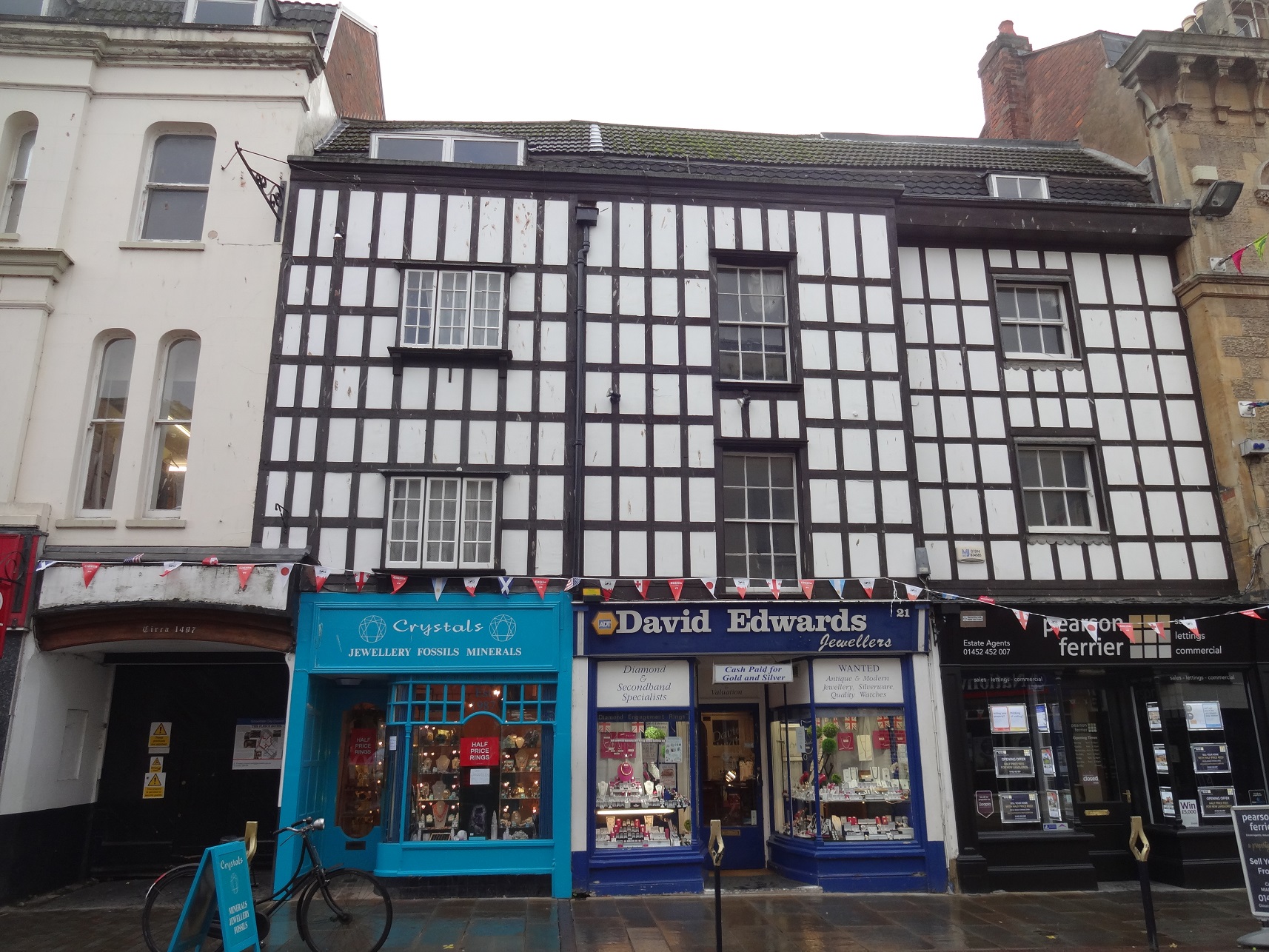
The upper section remains from a pub called The Fleece which covered a large area in the vicinity. The council has restoration plans.
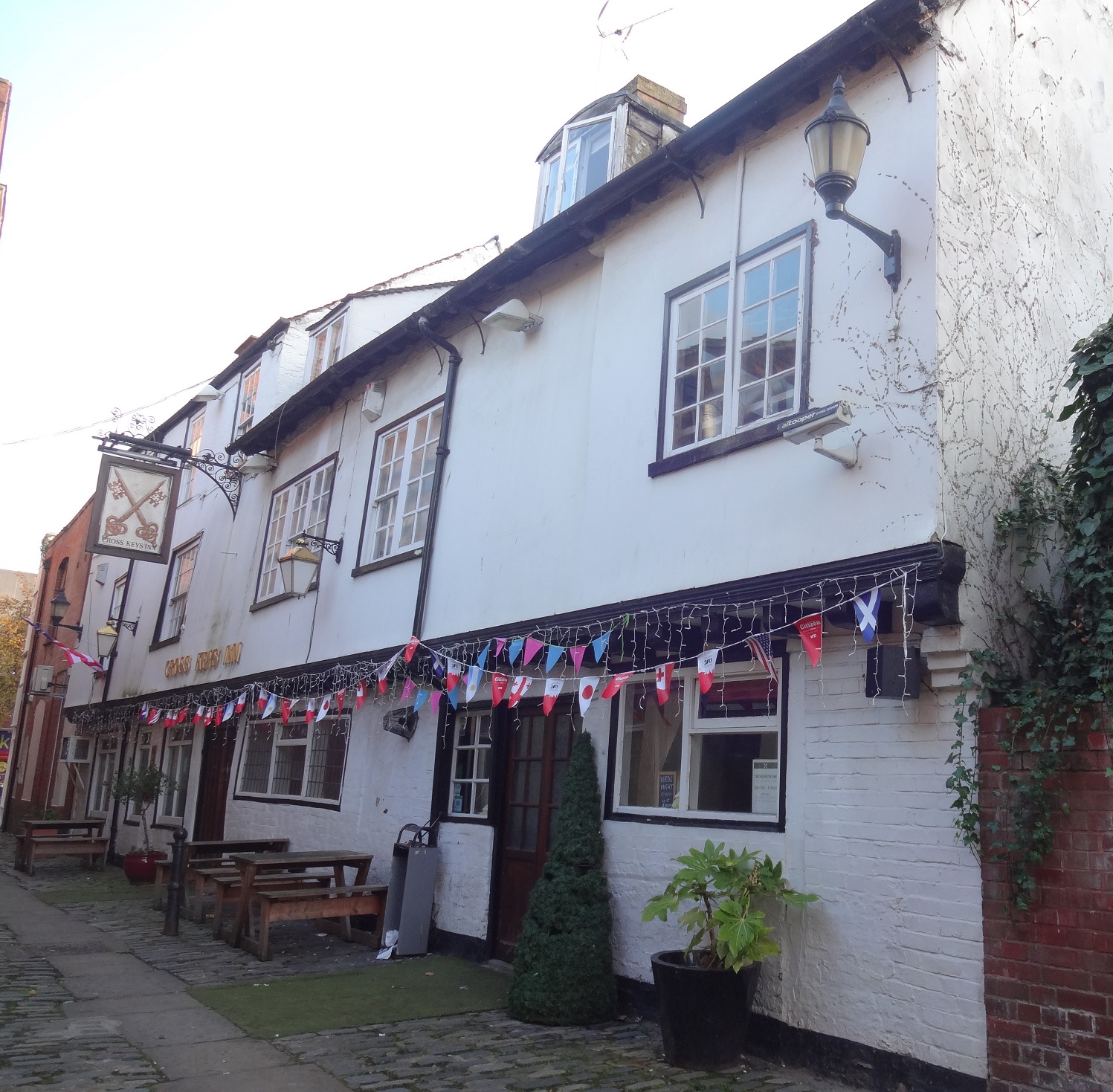
Cross Keys Inn is said to be the smallest in Gloucester and dates from the 1600s. A pub run by some Vick relatives in the mid 1800s was supposed to be in the same lane but is gone.
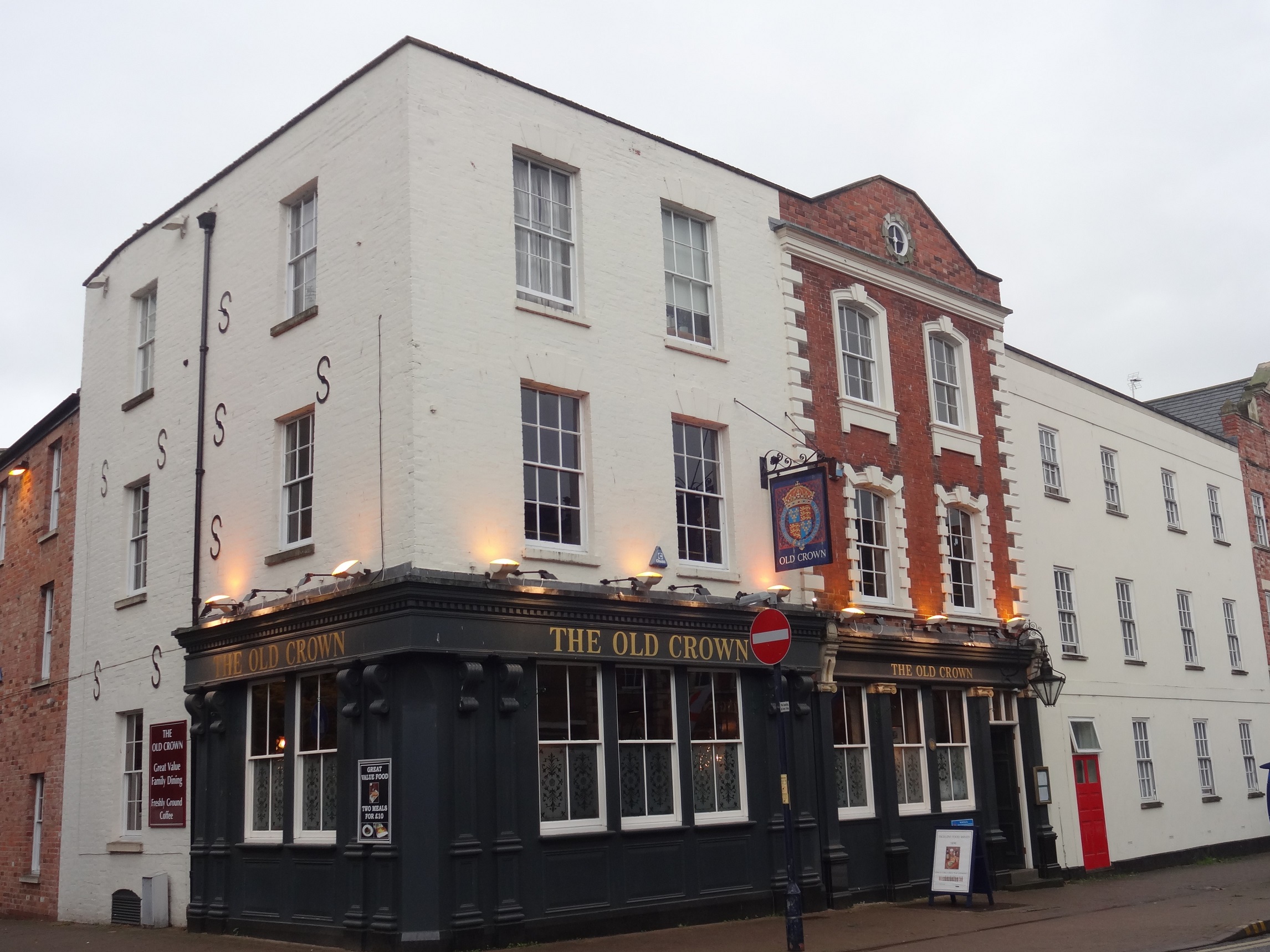
The Old Crown Inn
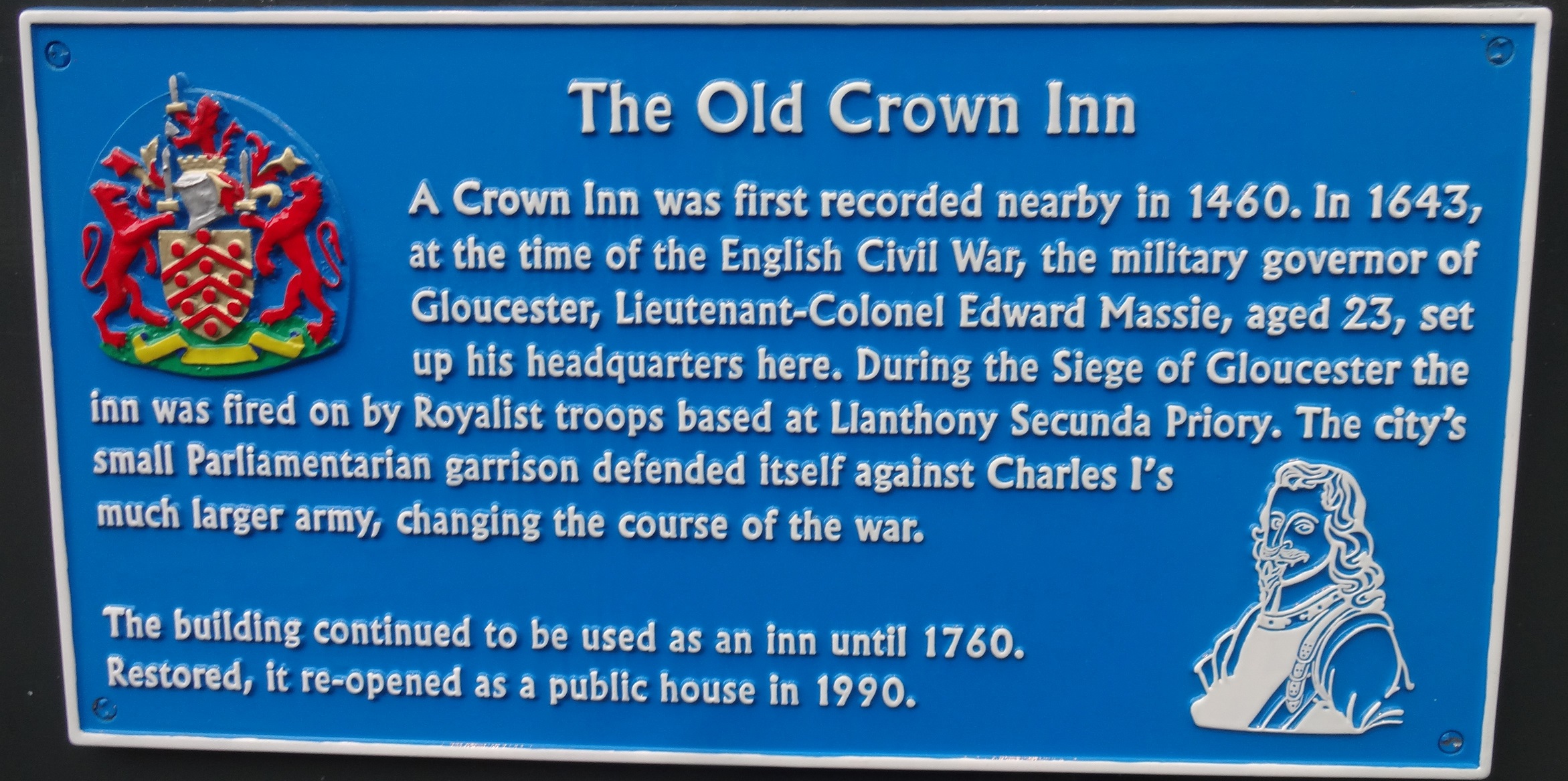
Information sign
The remains of the priory mentioned above is near the docks and canal and photos appear in the post on the Gloucester docks.
I visited the Folk Museum and the sign below comes from there about the events mentioned above.
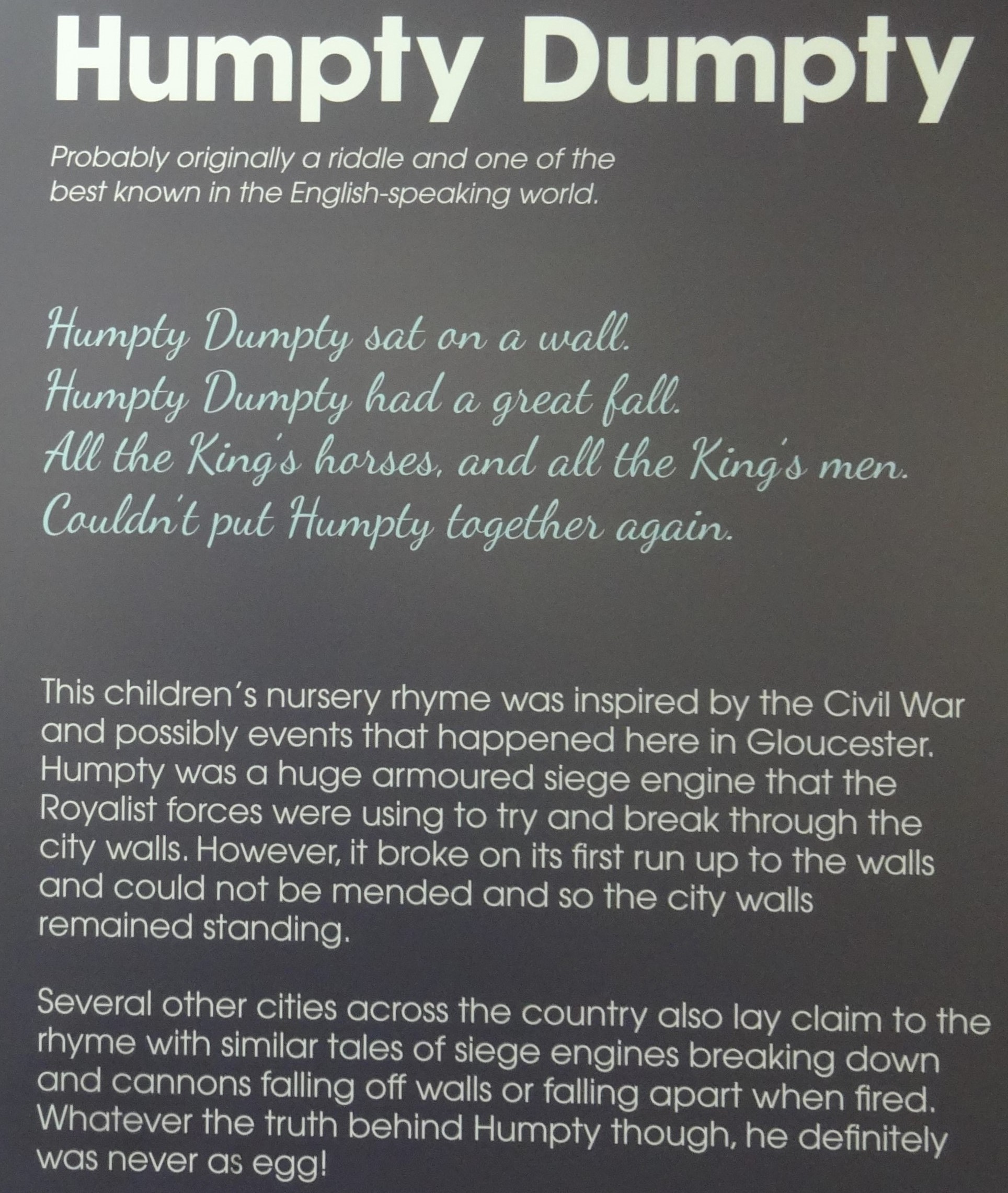
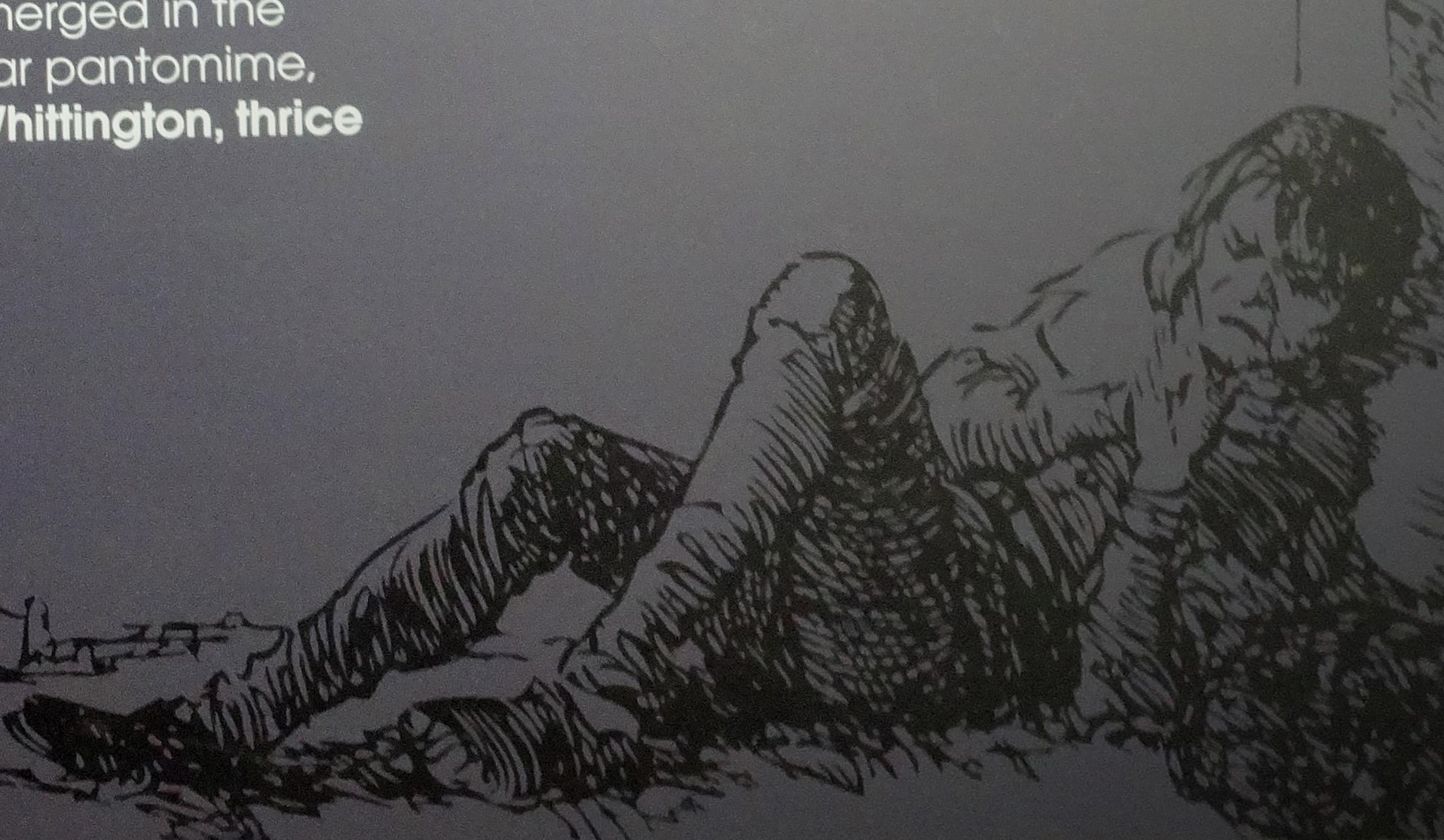
Comment on siege warfare and a children’s rhyme. The original had a line drawing of Humpty on a wall but it’s inclusion made the writing too indistinct to read.
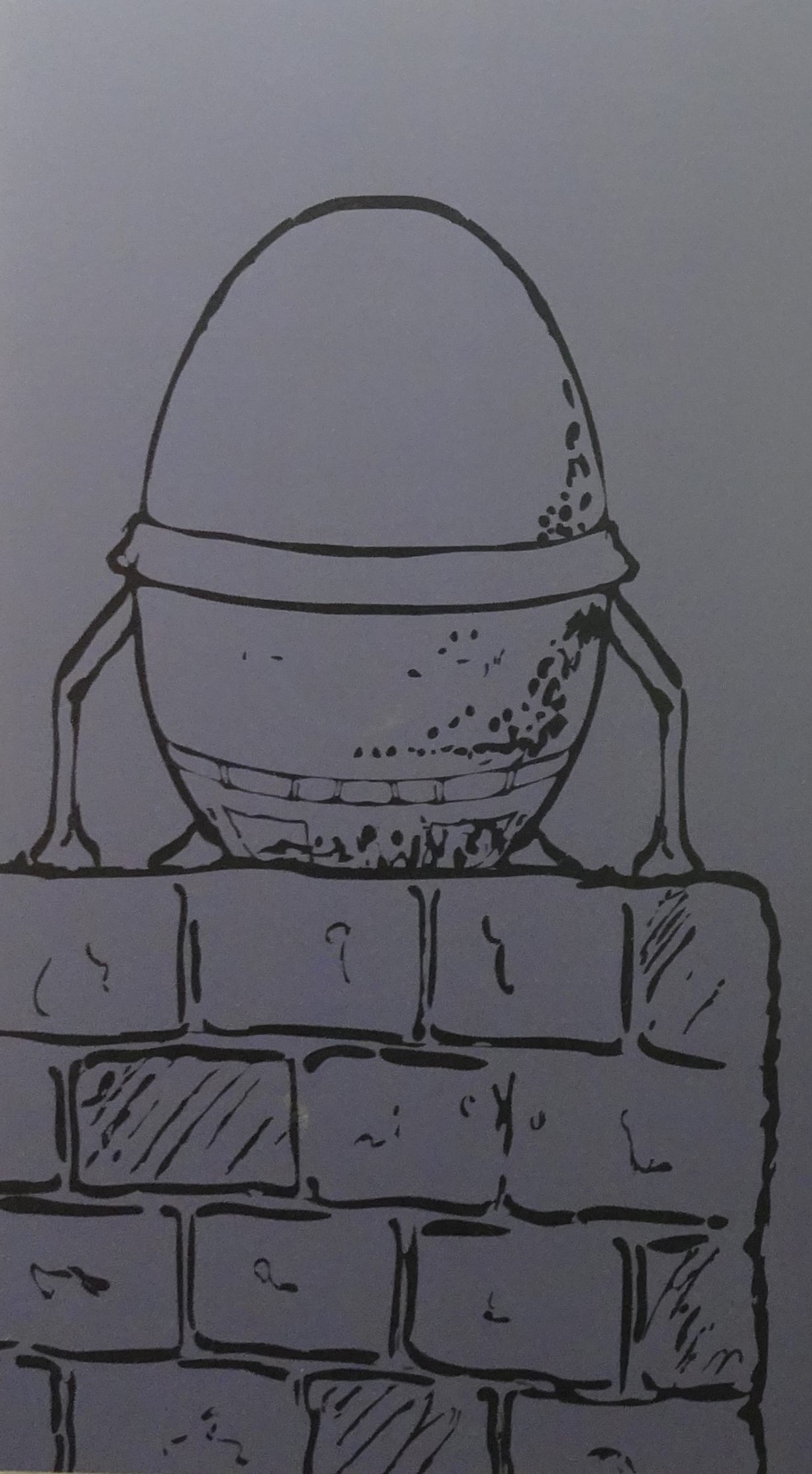
Line drawing of Humpty Dumpty
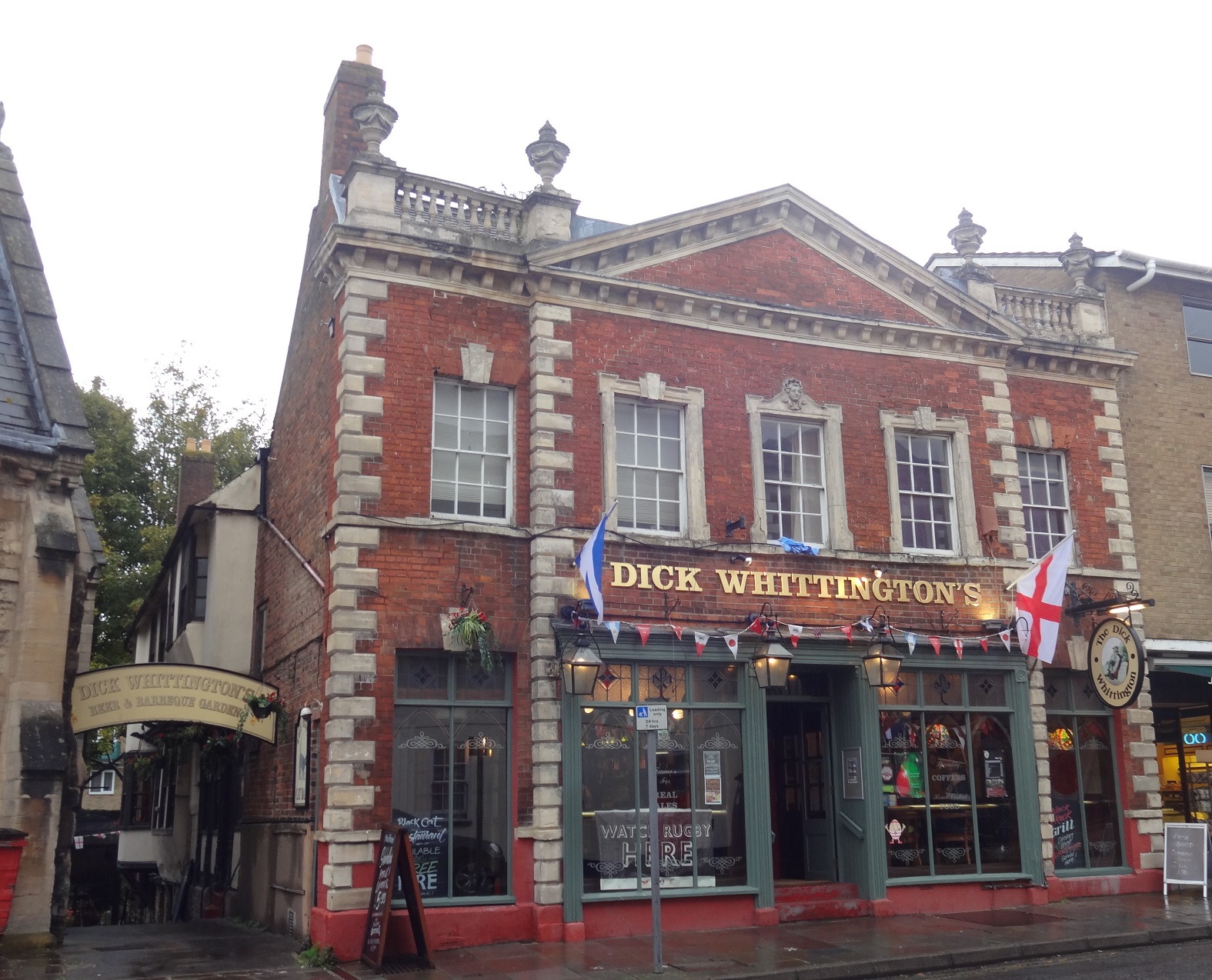
The Dick Whittington front and side entrance with an 18th century facade.
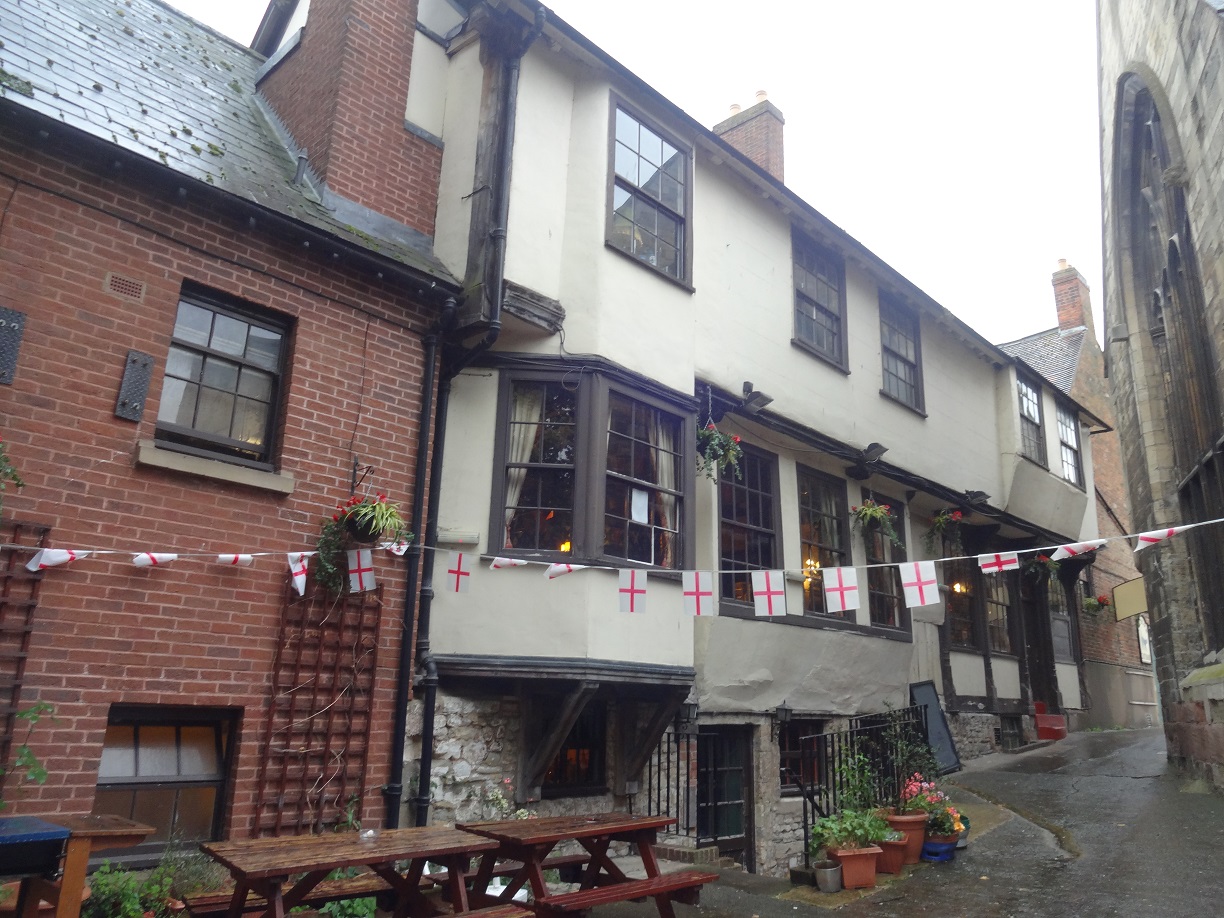
The side of The Dick Whittington showing the Tudor overhangs. The building was built for a relative of a different Dick Whittington of nursery rhyme fame. Queen Elizabeth 1 is supposed to have stayed in it in 1754.
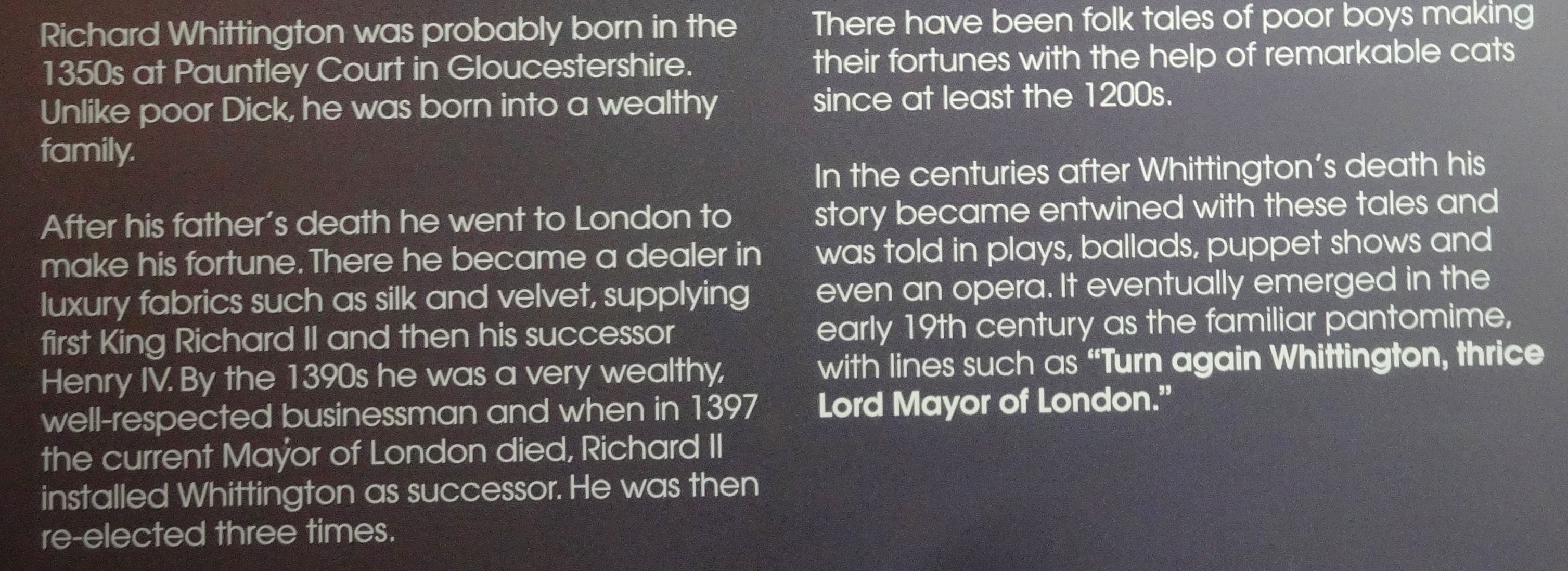
Information from the Folk Museum about Dick Whittington. Dick Whittington and his cat are popular motifs around Gloucester
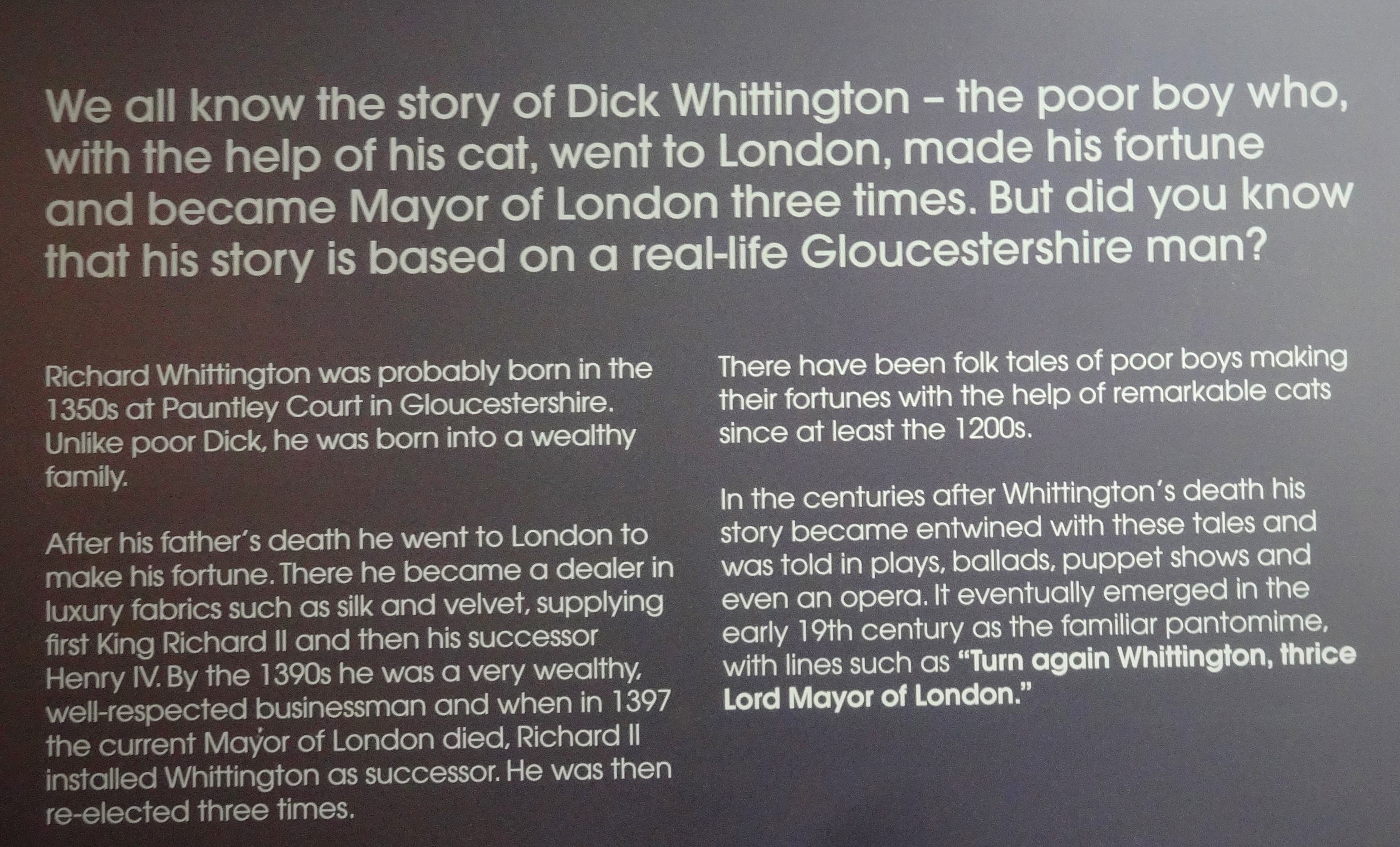
Information from the Folk Museum about the real Dick Whittington
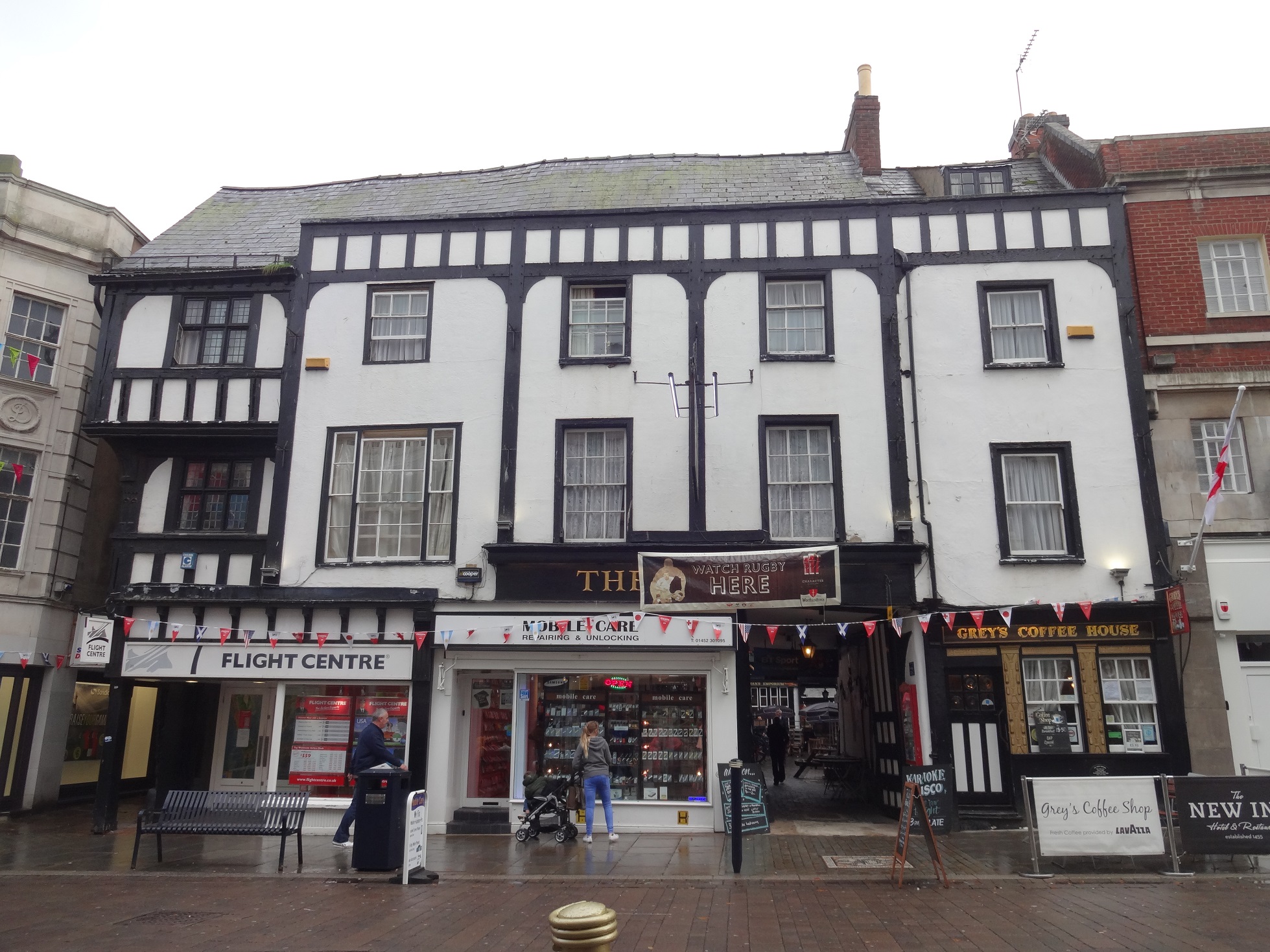
The New Inn
I had considered staying at this pub. However, it’s reviews indicated some problems and given the 3 of us stayed at the Station Hotel for the first night I decided to remain as while its reviews weren’t really any better, it was more convenient and I couldn’t be bothered lugging my luggage around town.
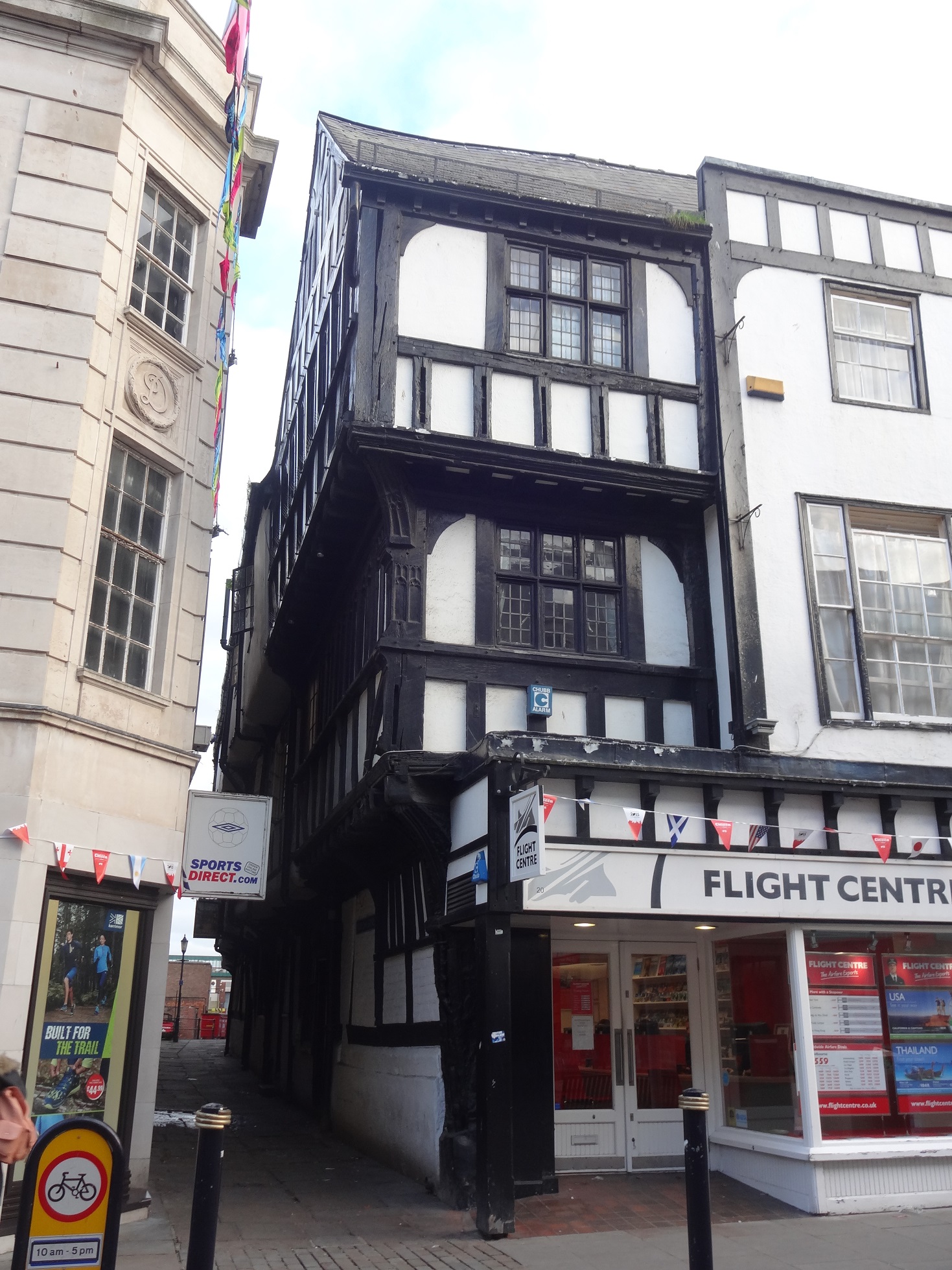
Left hand corner of the building
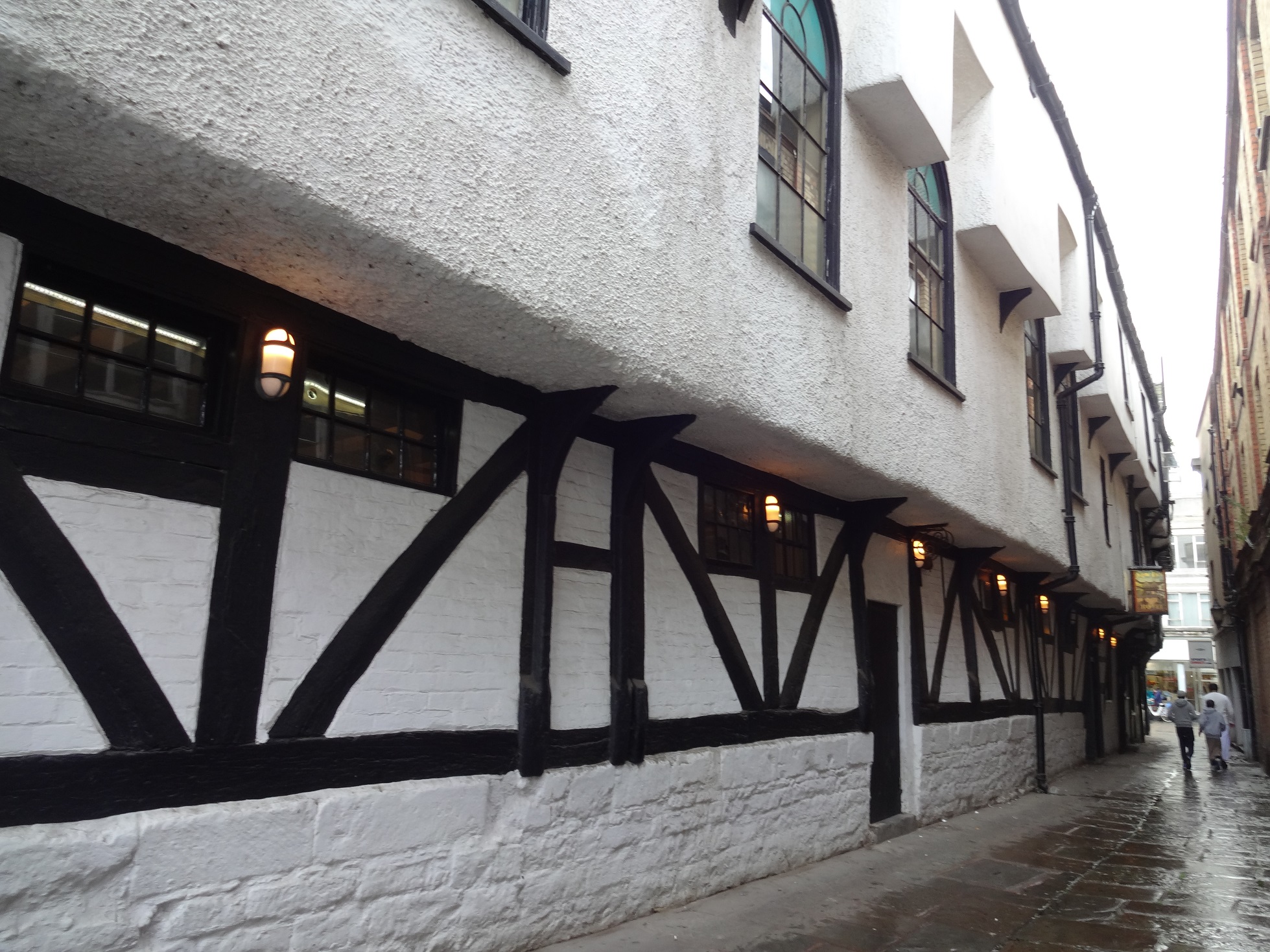
From the side alley with the walls showing the Tudor overhang
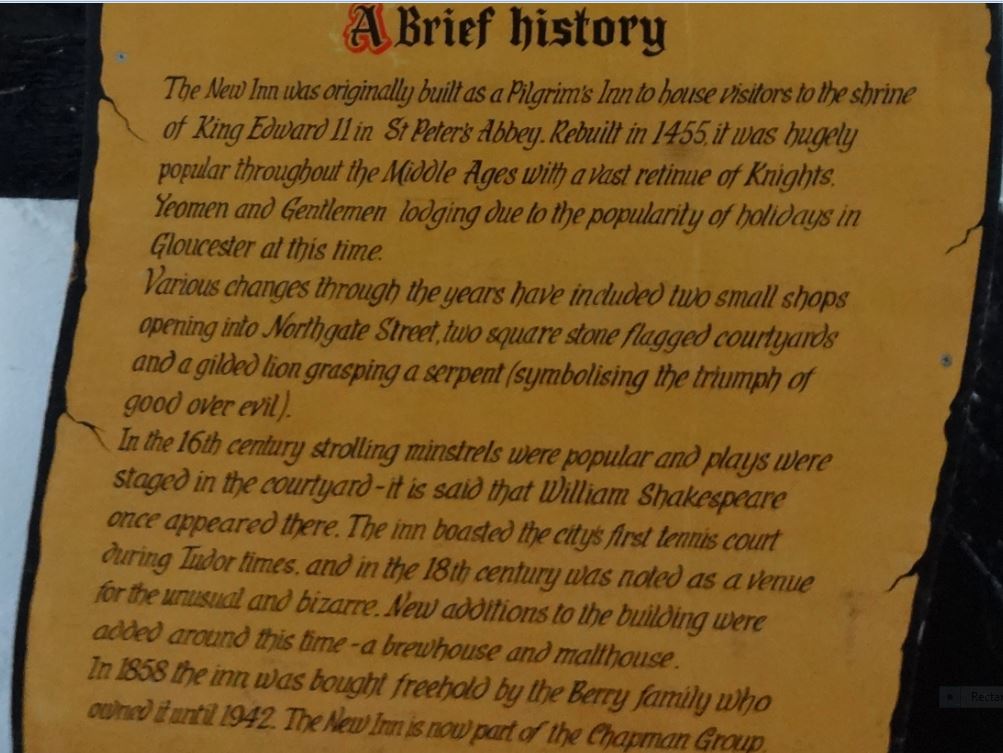
History Its rather hard to read but basically it’s really, really old being built in the mid 1400s for the monks to house pilgrims visiting the tomb of King Edward 11 (photo in Cathedral post), has connections with Lady Jane Grey, strolling minstrels, maybe Shakespeare and benefited from the stagecoach trade.
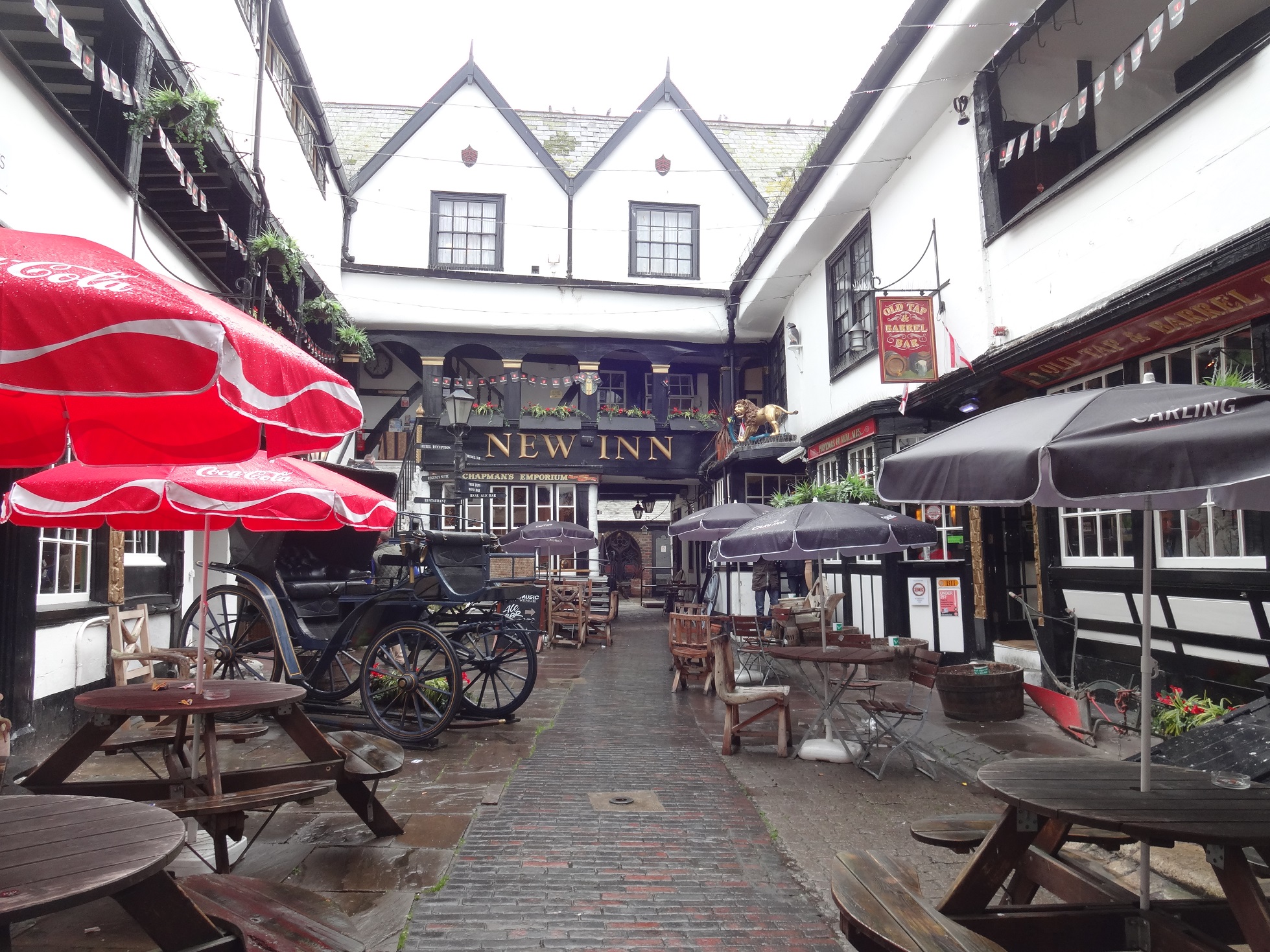
Looking from the street entrance
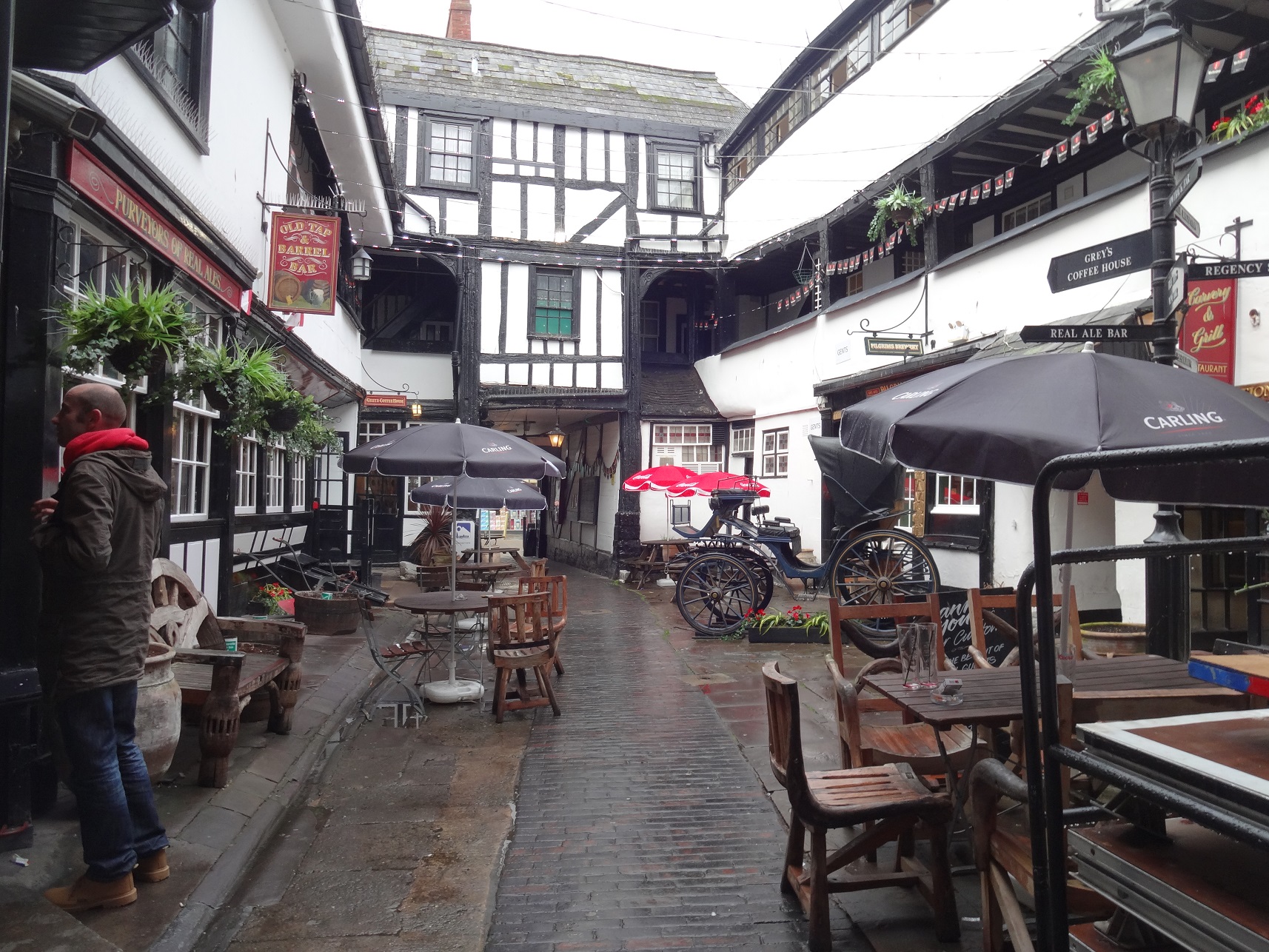
View from the back of the courtyard looking towards the street entrance
http://www.thecityofgloucester.co.uk/dbimgs/Historic%20Pubs%20Guide%20DL%20web.pdf has information and photos of old pubs.