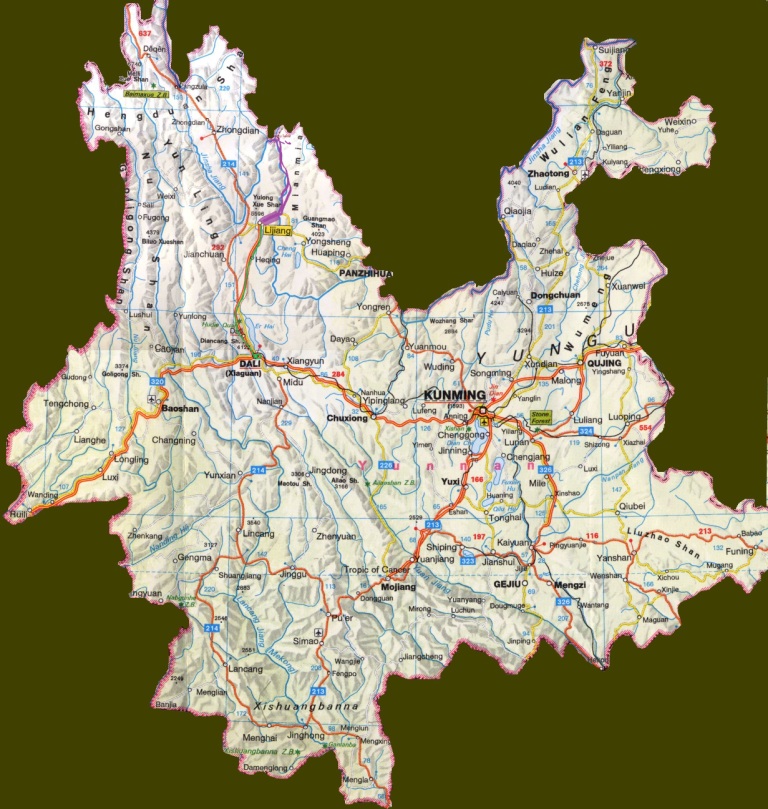
I spent 3 days at Lugu Lake which is a couple of hundred kilometres north of Lijiang. Look for the purple lines north of Lijiang, in the north. The green line from Lijiang shows my current position, Dali.
When we reached Lake Lugu from Lijiang the minibus driver stopped at the lakeside for us to have a boat ride to a nearby island. I’d read of the scam on the internet the previous night and after more than 7 hours of travel was not interested. Fortunately it was raining so none of the others was interested either although it took some time for the driver to give in and start driving again. Apparently he tried to have them agree to an expensive dinner and dance performance too, but none took up the offer. (I was the only foreigner & non Chinese speaker there.) Some of us went under our own steam on another night for a much cheaper experience.
The entrance fee to the area was pretty steep, like its mountains. I wouldn’t have minded if they had put some of it towards clearing the roads. The rock the mountain is composed of is crumbly and there were numerous piles of dirt, rocks or boulders strewn around blocking or impeding traffic.
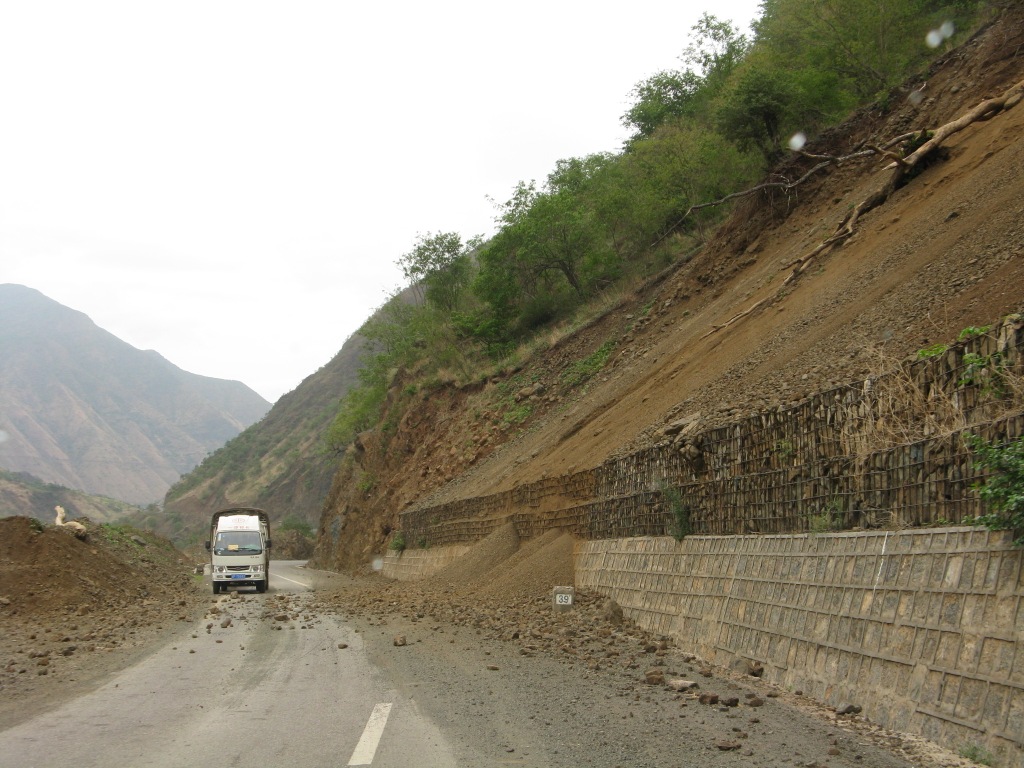 The road from Lijiang to and through the area is only two lanes wide. Workers continued to make concrete strips on either side of the tar and that seemed to be the priority rather than landslides. New road works were under way on another part of the main road. When I left Lugu Lake part of the road had either been damaged by nature or blocked due to road work. I never did work it out I was too concerned about staying upright while putting one foot in front of the other while walking up a very broken, very muddy, very steep road for what seemed like about 2 miles while carrying far too much luggage. The bus dropped us and we had to walk through the muck and along the steep road till we reached the area where the next bus would collect us. About half way through one of the people I’d been hanging out with offered to carry my suitcase. The next bus could have driven down a lot further than it did but none of them did for some reason. We only had to wait about an hour, an hour too long, but when we reached the pickup point I saw one of the hostellers who had left 3 hours before. Fortunately his bus soon appeared. If I’d had any breath or known that my bus wouldn’t arrived for an hour I would have taken some photos once I left the mud.
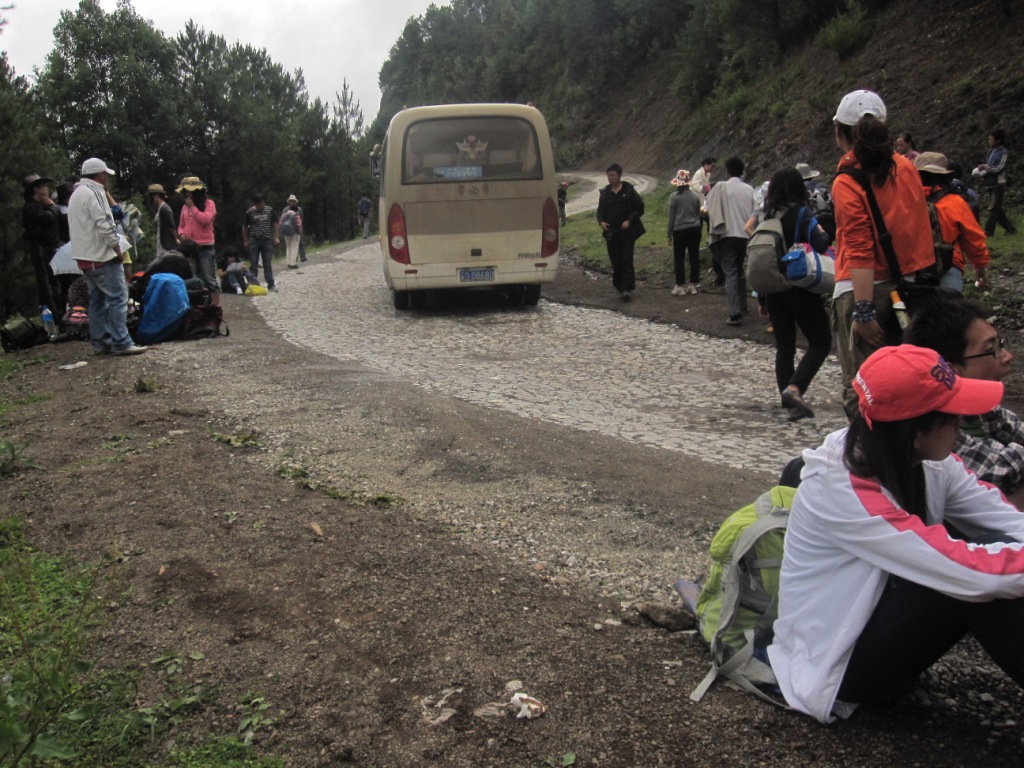 Here is one of us waiting. It started to rain lightly soon after we arrived at the collection point.
Lugu Lake is an area famous for its matriarchal society and beautiful scenery.
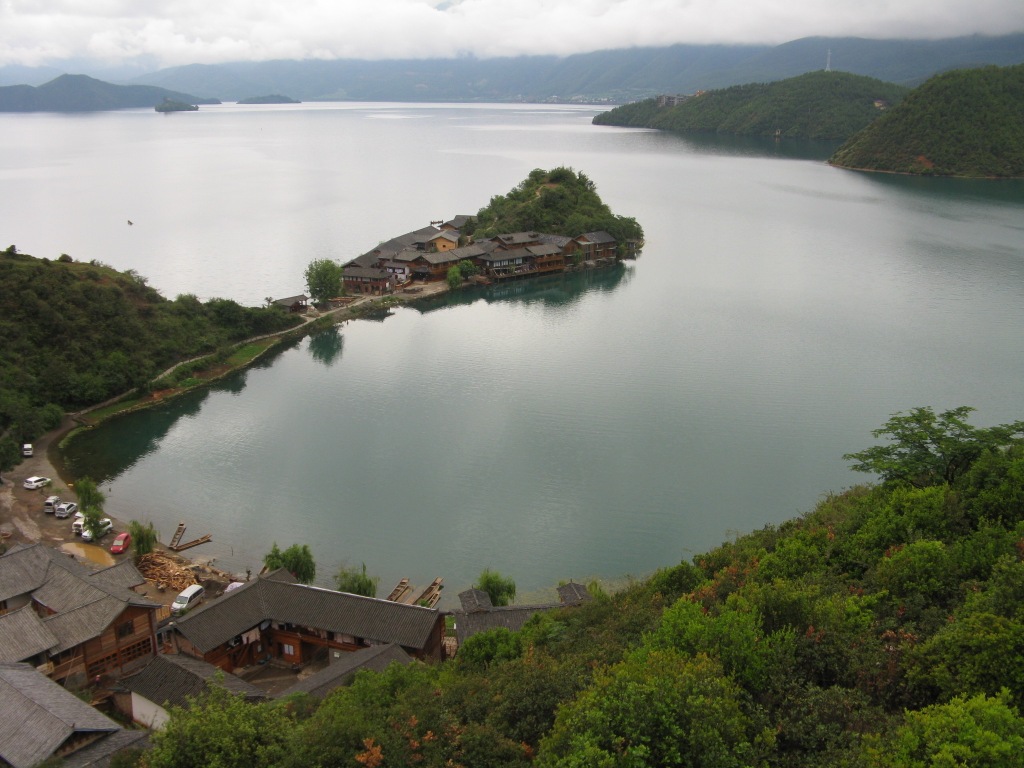 That’s the village I stayed in, Lige.
The Mosuo women make the decisions. The grandmother is the boss. The custom is for women not to marry but to take a lover. Adult sons live with their mothers and do their bidding. If they have children they are required to support them, while the relationship lasts, but not live with them. Inheritance is through the woman. That is the custom. I’m not sure to what extent it is still followed as I saw and heard a few things which indicate that it is not that straightforward.
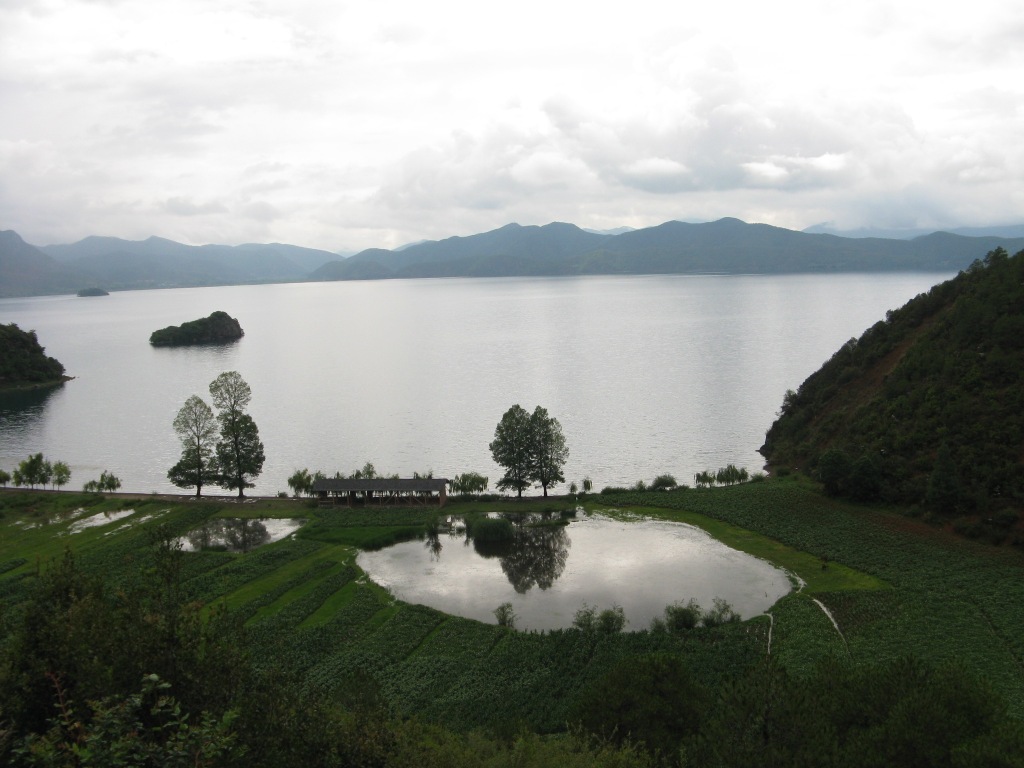
The other photos are of parts of Lugu Lake. There are many little settlements scattered around the lake which is mainly in the province of Yunnan and partly in Sichuan.
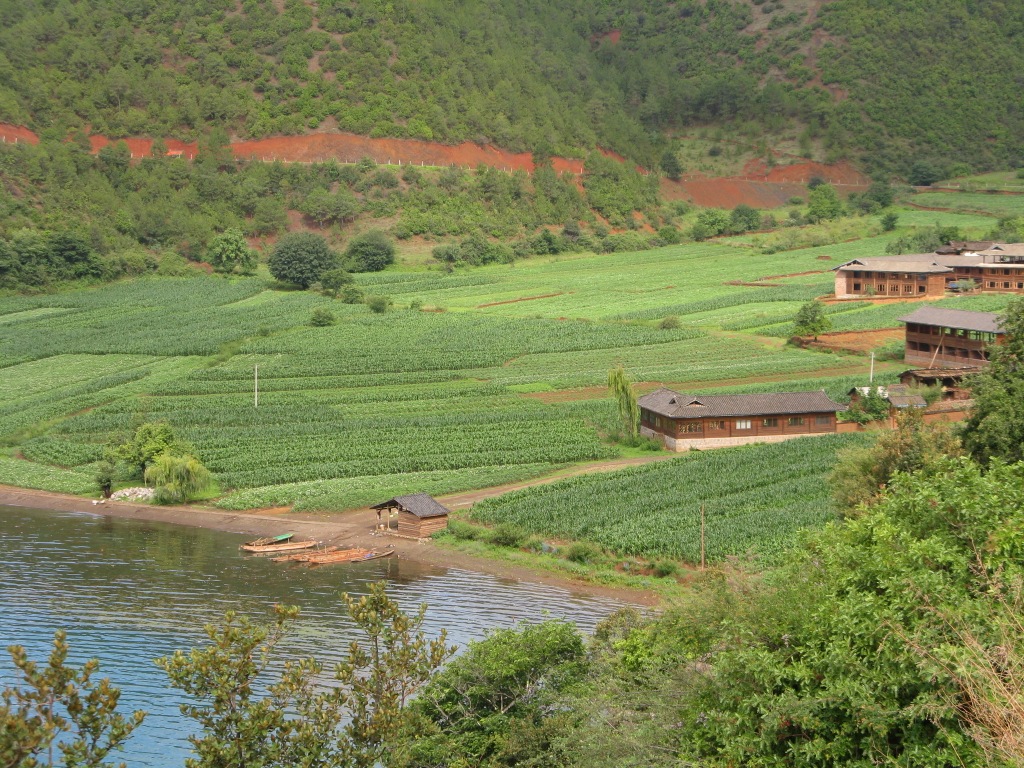
The major crop is potatoes. There are potatoes everywhere. The other main crop is corn which is grown everywhere I’ver ever been in China. Every afternoon several small piglets were sacrificed for BBQed pig which was cooked in the streets.
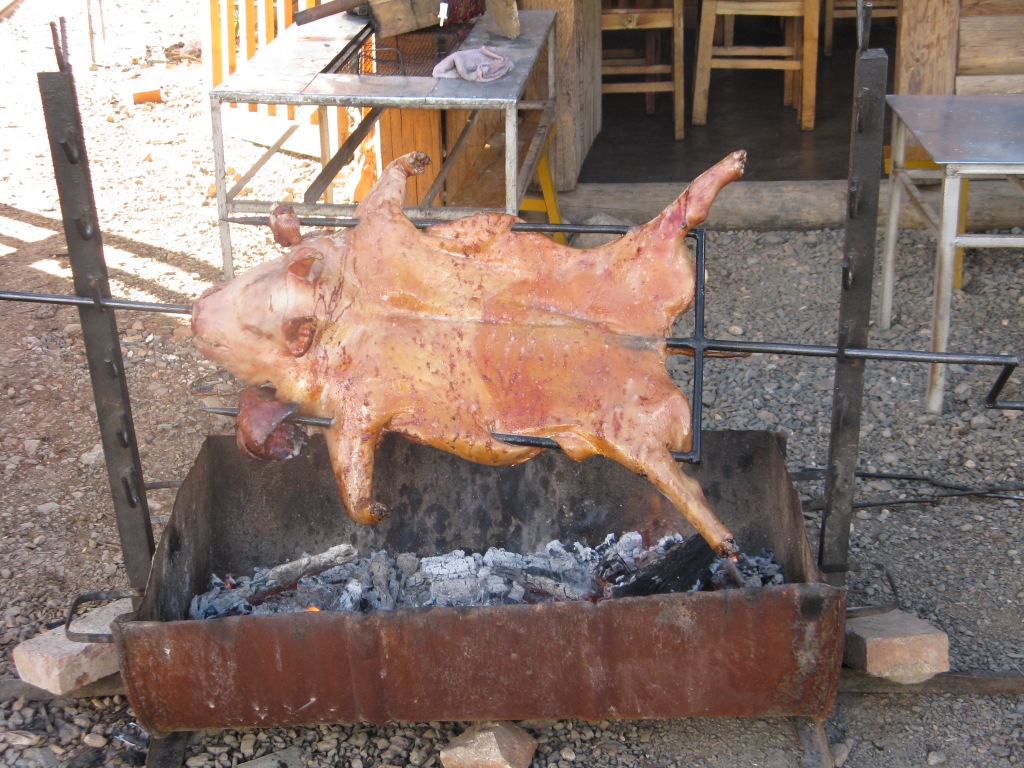 I don’t see how the supply could cope with the usage I observed. There must be lots of pig breeding occuring which I didn’t see.
I went on a couple of boat rides, including one very early in the morning, a 6 hour minibus tour around part of the lake, a performance by the Mosuo people and a few short walks in the vicinity of the hostel.
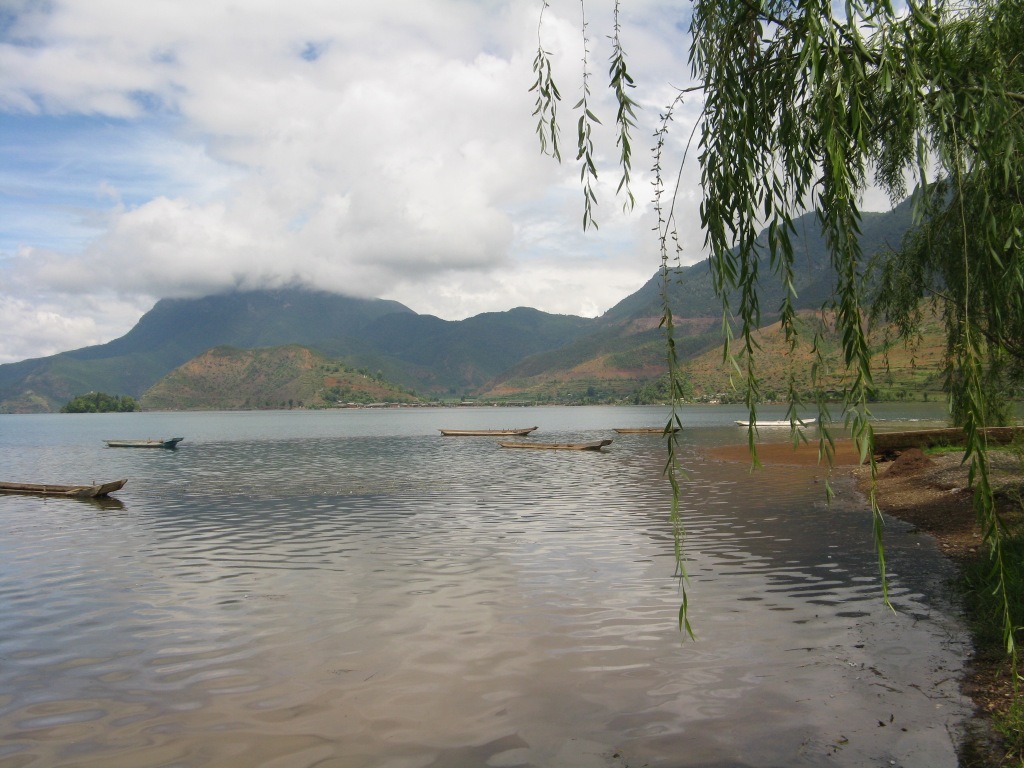 There is a considerable amount of construction work occurring all over the area to bring in more tourists. Internet access, while not good was better than I had previously experienced in Yunnan. We had a few blackouts including one lasting for hours on the morning of my departure. The night before it had rained for 12 hours.
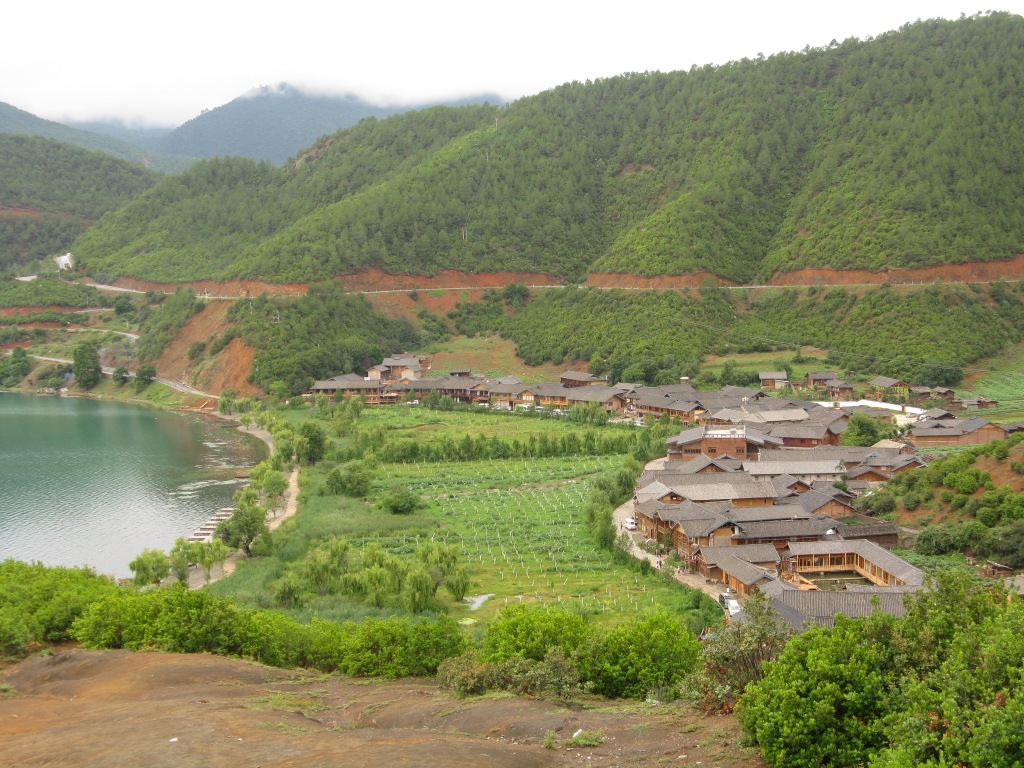
This is another view of the settlement I stayed in.
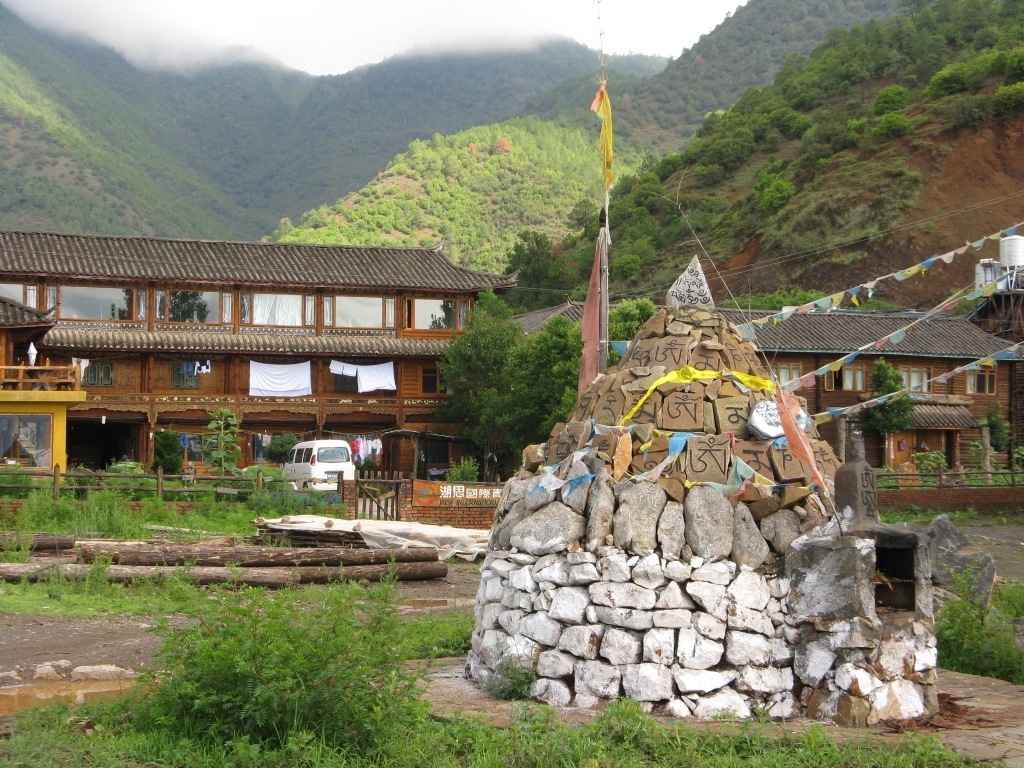
These are mani towers where many stones are inscribed with a Tibetean mantra. There were many around the area along with Tibetean prayer flags. A man was busy writing on a stone near one mani tower near where we visited. Beforehand he had lit a fire in a small altar area.
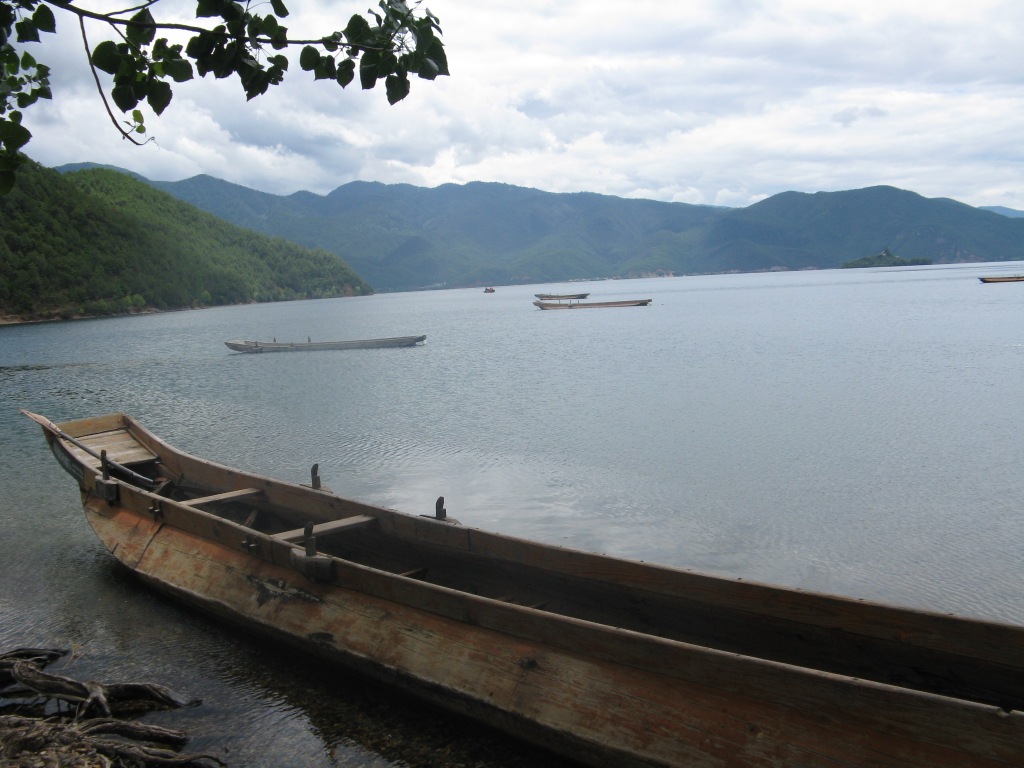
These are the boats they use for fishing and for transporting tourists. Powered by a human or two.
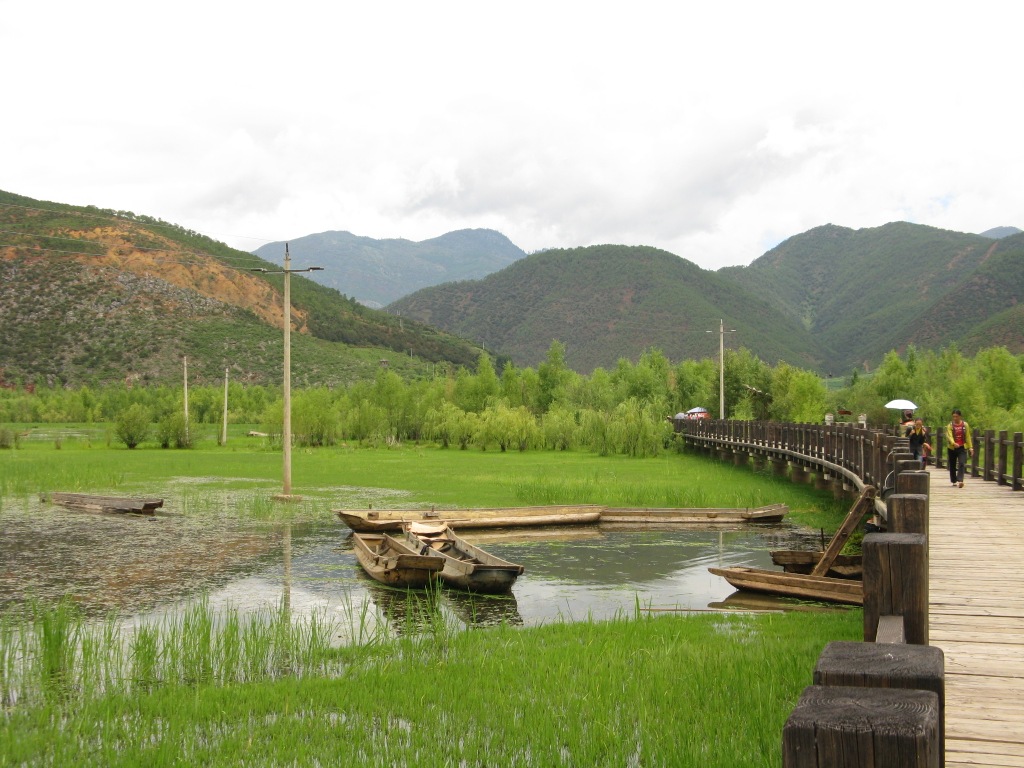
A wetland area. The bridge connects two sections of the lake and was built to facilitate romance.
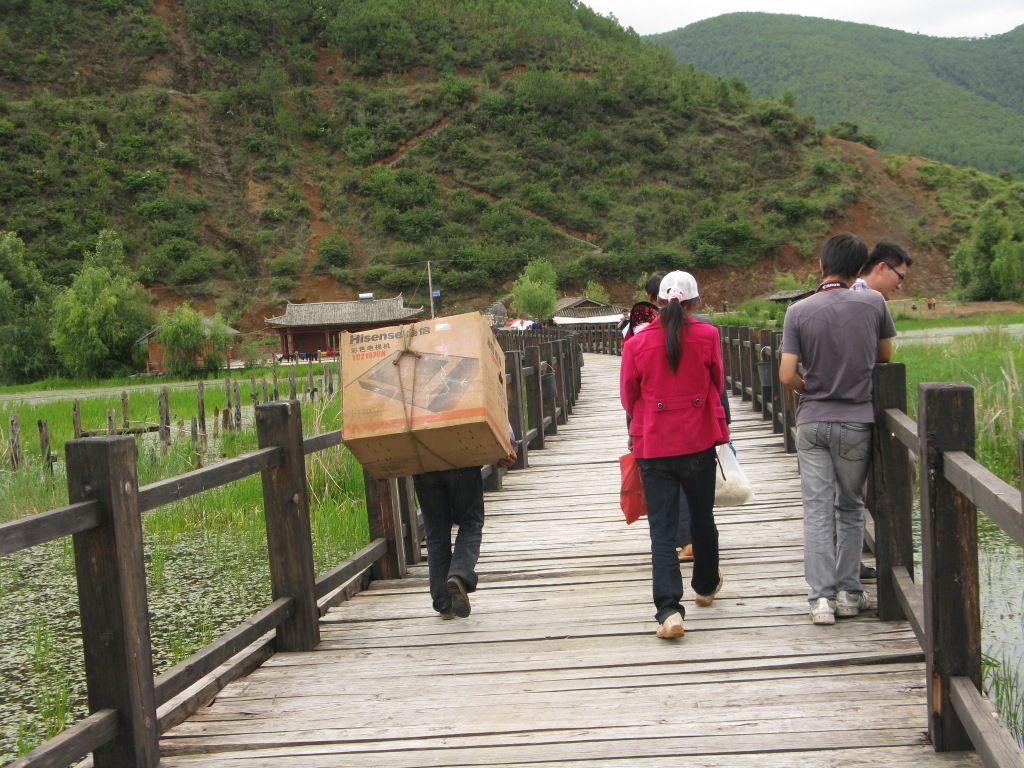
This is how you transport your new TV home if you have no access to a bike.
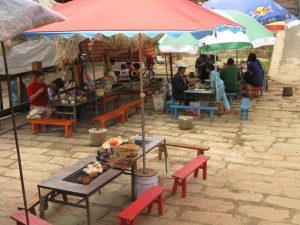
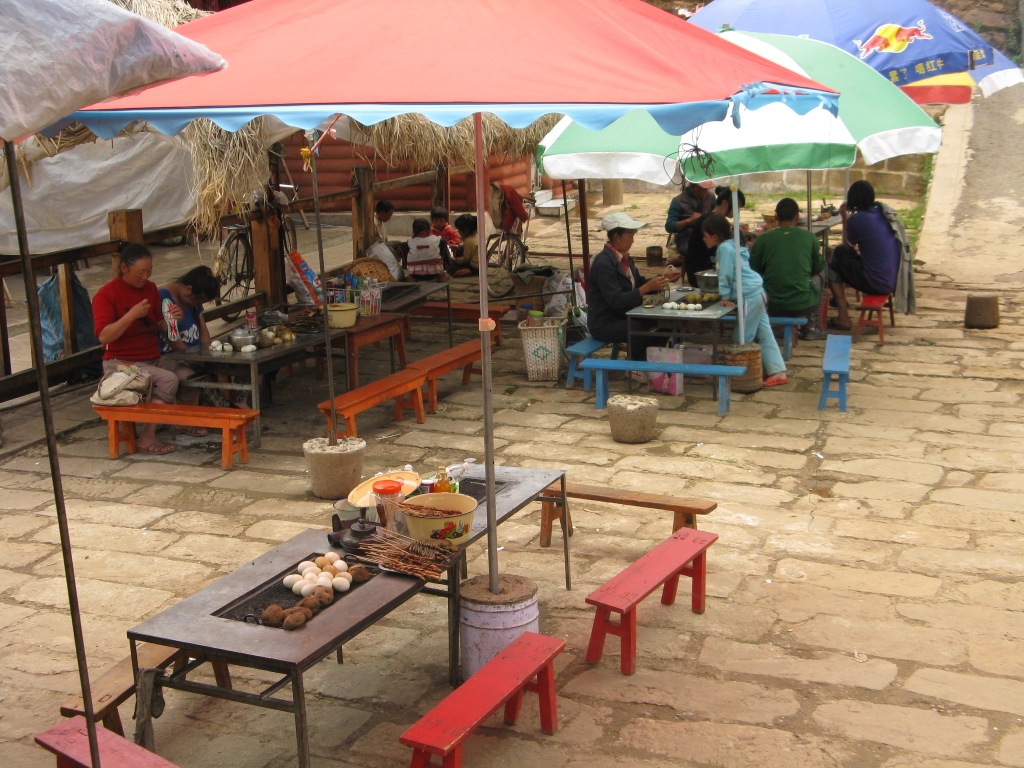
This is the samll market at the other end of the bridge. The tables had trays of hot coals over which potatoes and fish were cooked. Hard boiled duck eggs were also part of everyones repertoire. I had a duck egg and it was good. The fish were tiny little things on a skewer, about 6/ skewer and were eaten in entirety. I had one and it tasted suprisingly good. The women embroidered, usually inner soles, while they waited for customers. I was fascinated by the innersoles and asked to photograph a couple. One woman was so happy after the first photograph that she ran off and returned wearing a “good” traditional type jacket for a photo with me. Another, who was young, was embroidering a couple of larger items and was totally fascinated by her photograph on the LCD screen of the camera.