Dali
Dali was an ancient capital in northern Yunnan. The dominant population is the Bai people. Outside of Dali they live in white painted villages with pictures painted on the exterior walls.
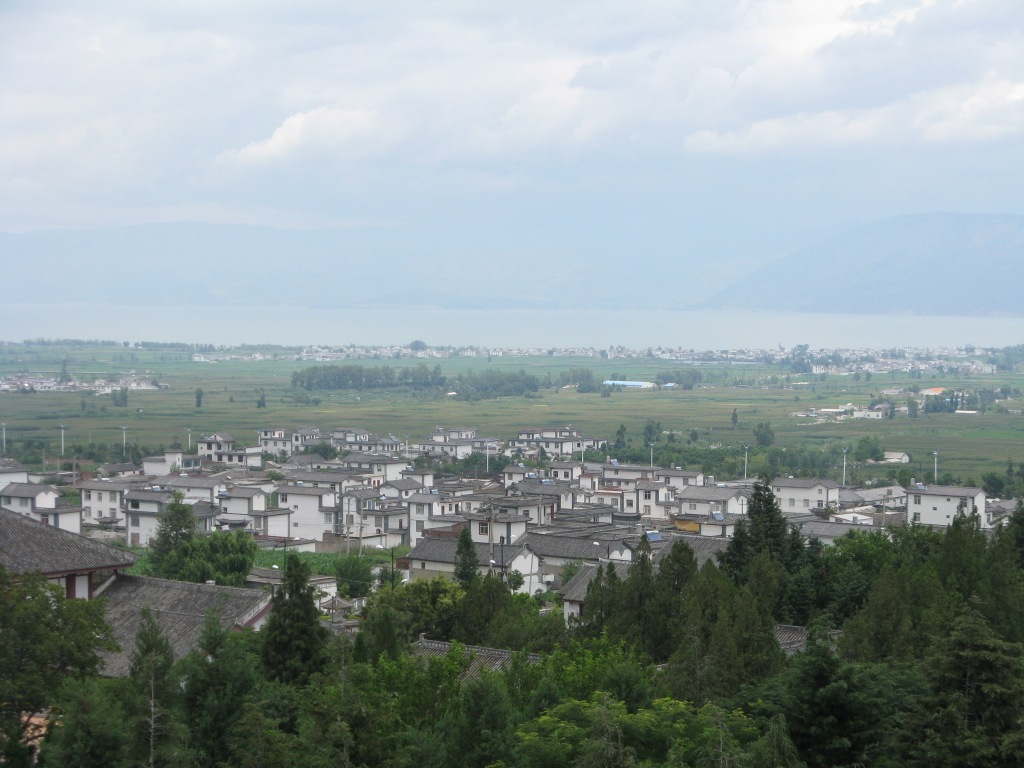 This was taken from one of the buildings at Chongsheng Temple. It shows one of the nearby villages.
Rice and corn are common crops as seen in this photo taken while walking between Taoyuan & Zhoucheng. 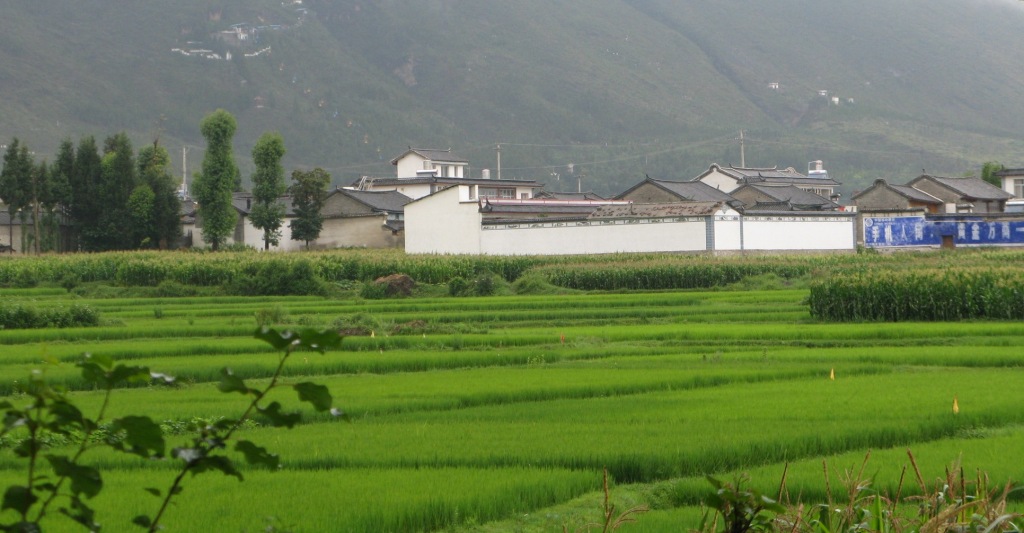 Old Dali and modern Dali (Xioguan) sit beside a large freshwater lake.
The old city of Dali is laid out on a rectangular grid on fairly flat land and is reasonably easy to get around without becoming lost, although that has happened too. It has four city gates and the remains of some city walls.
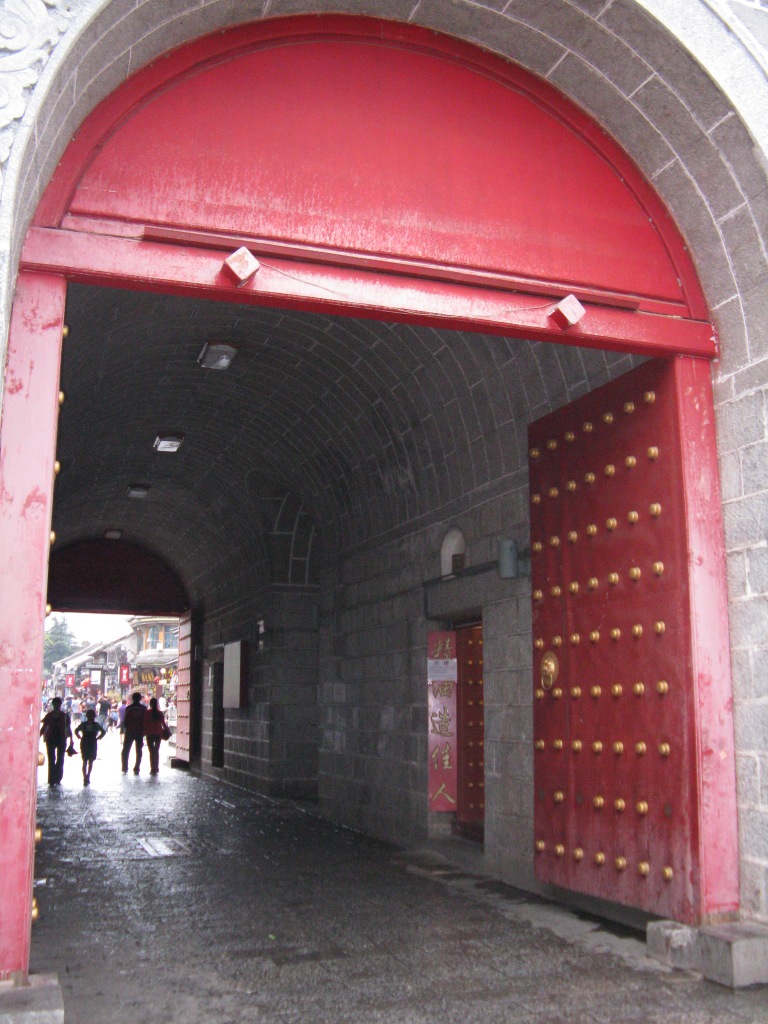
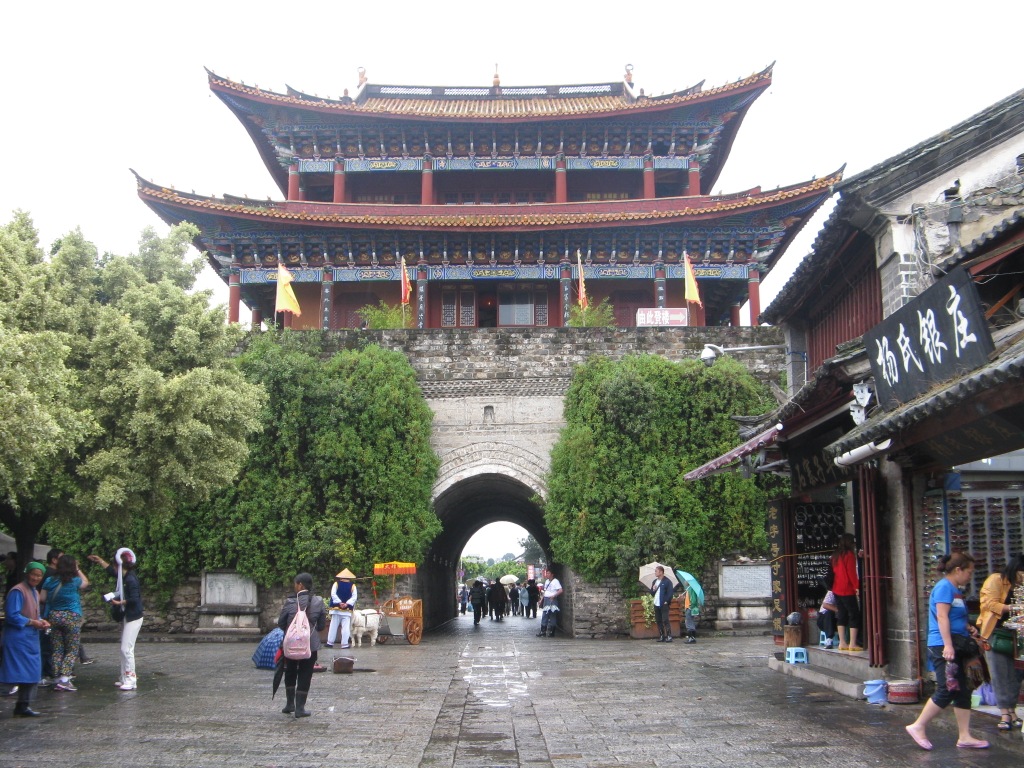 The South Gate from inside Old Dali
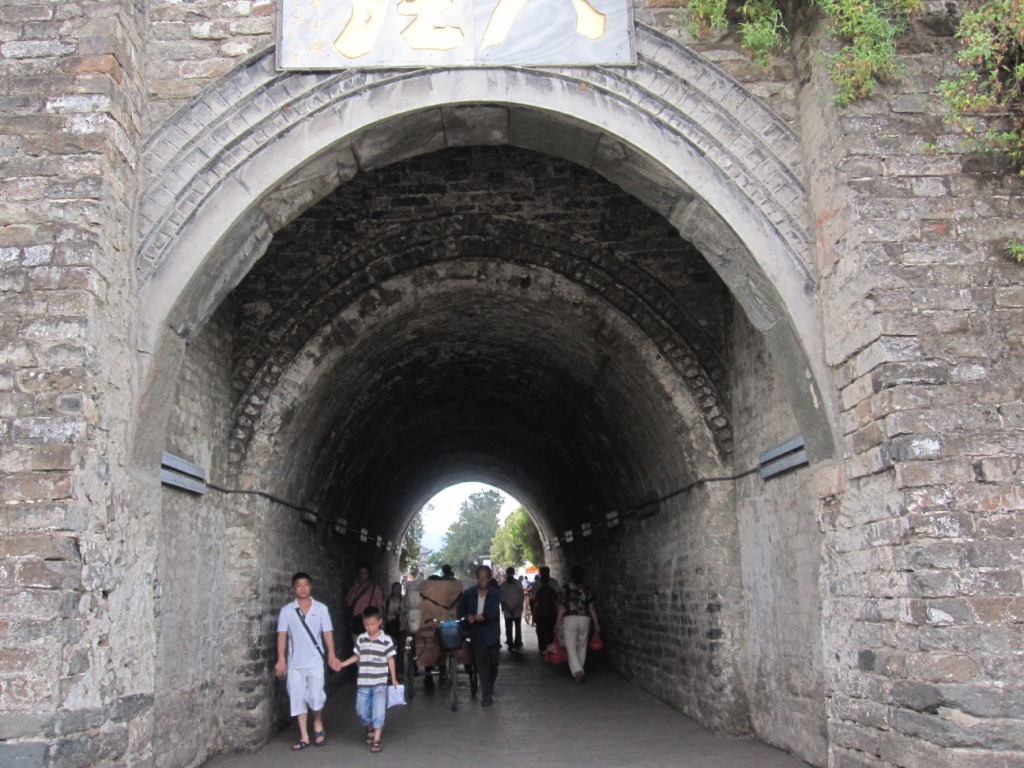 The interior of the gate.
 The interior of the Wenhua Tower
Some areas have been gentrified while others look pretty untouched.
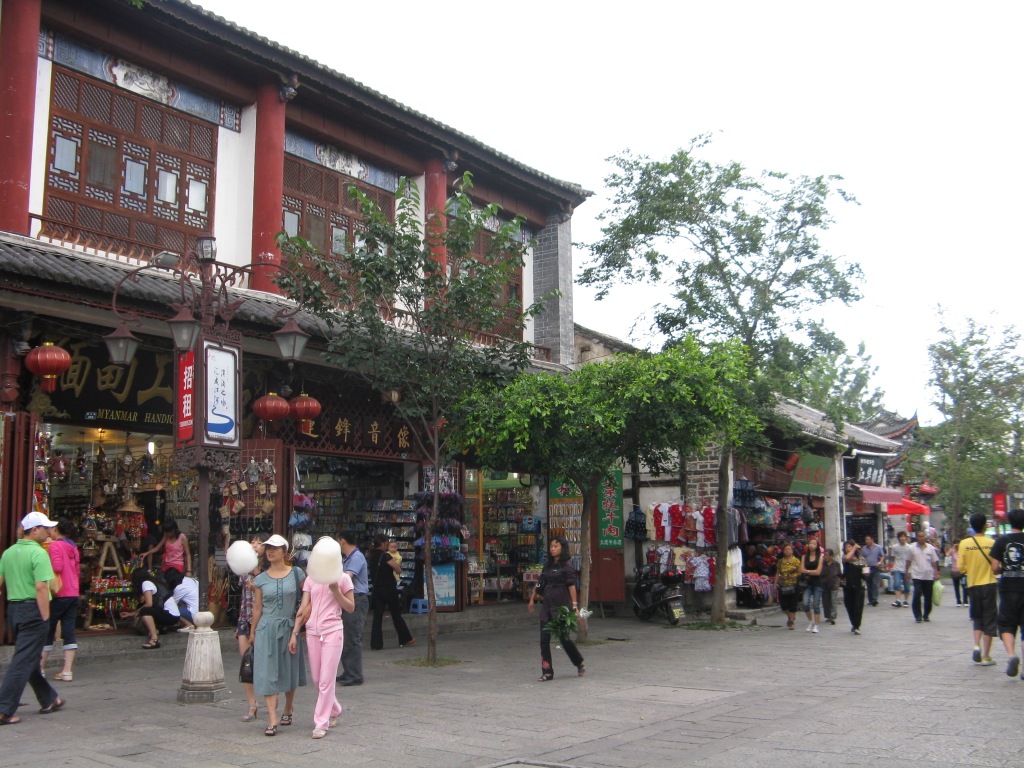
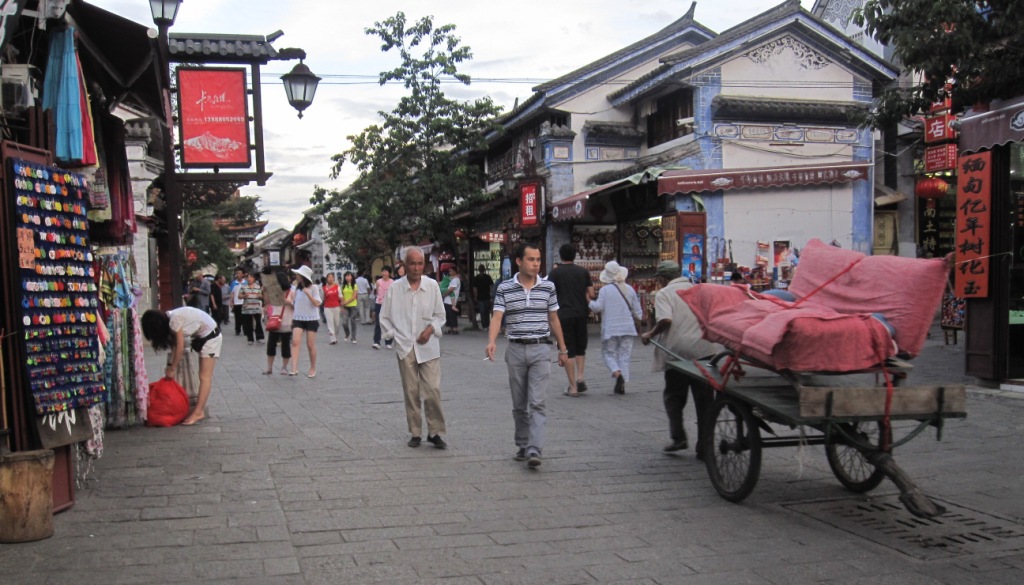
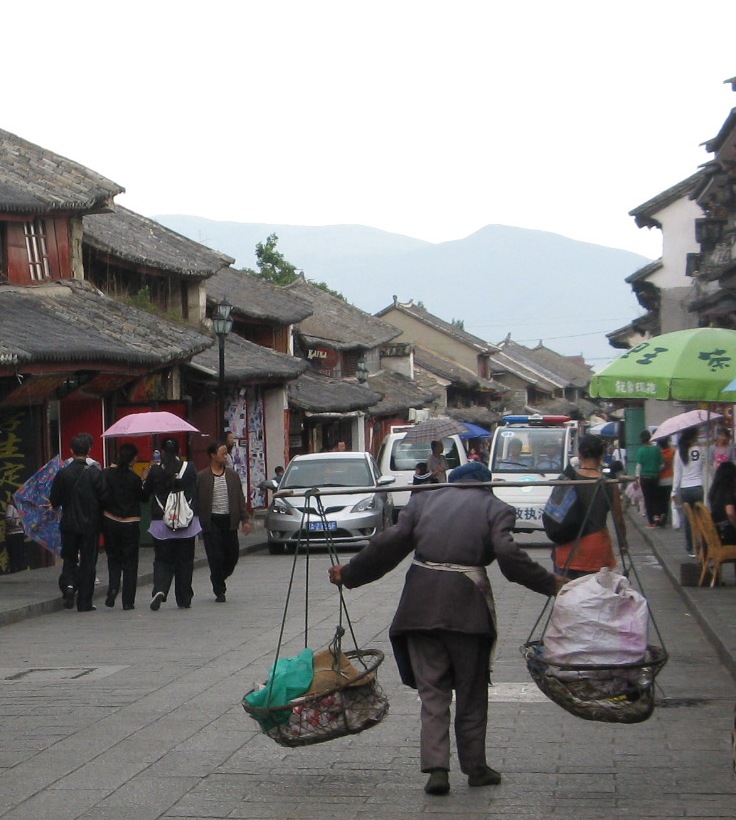
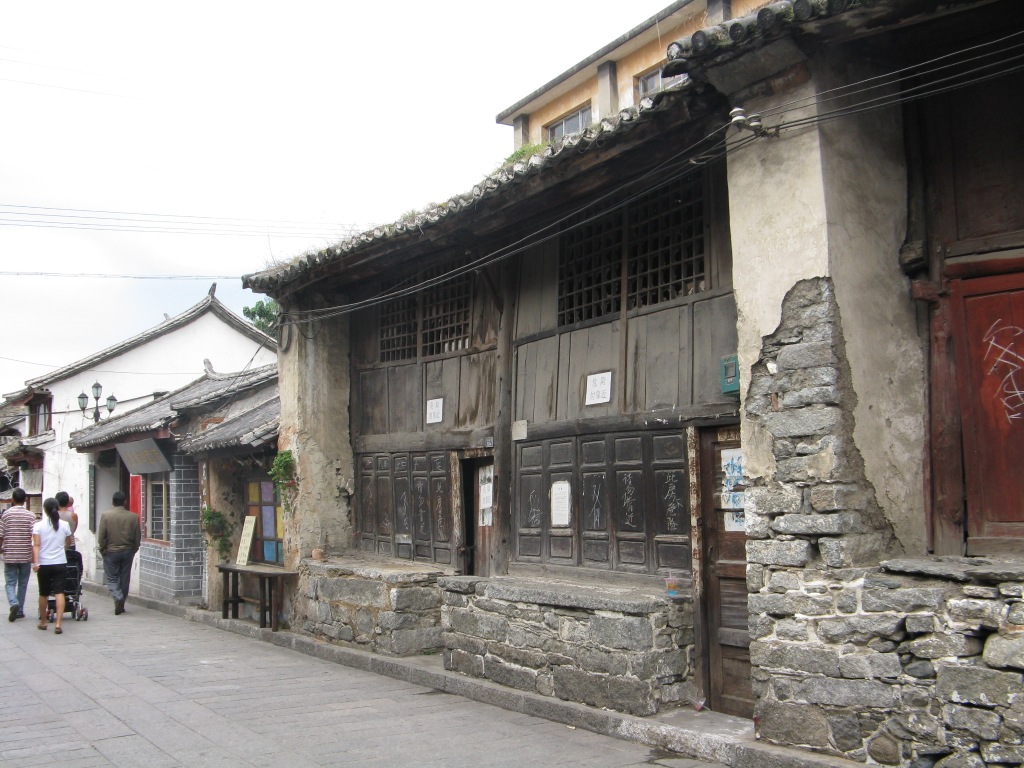
This is an interesting part of town. Buildings which seem abandoned sit beside alternative type shops and businesses.
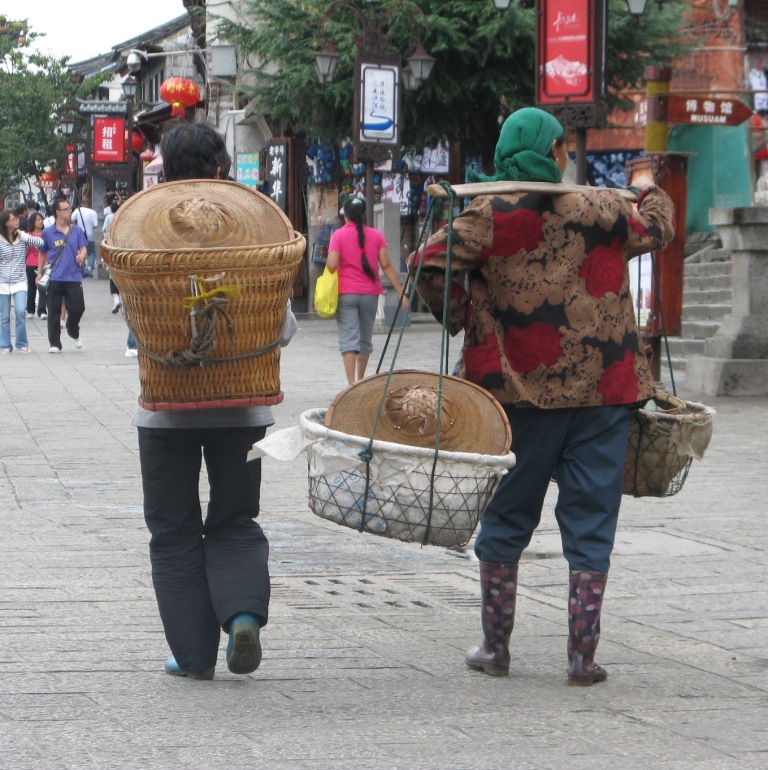
It is still quite common in many parts of China to see people carrying items using the pole over the shoulder method.
Dali is well known for its pagodas and Chongsheng Temple which was rebuilt in recent times.
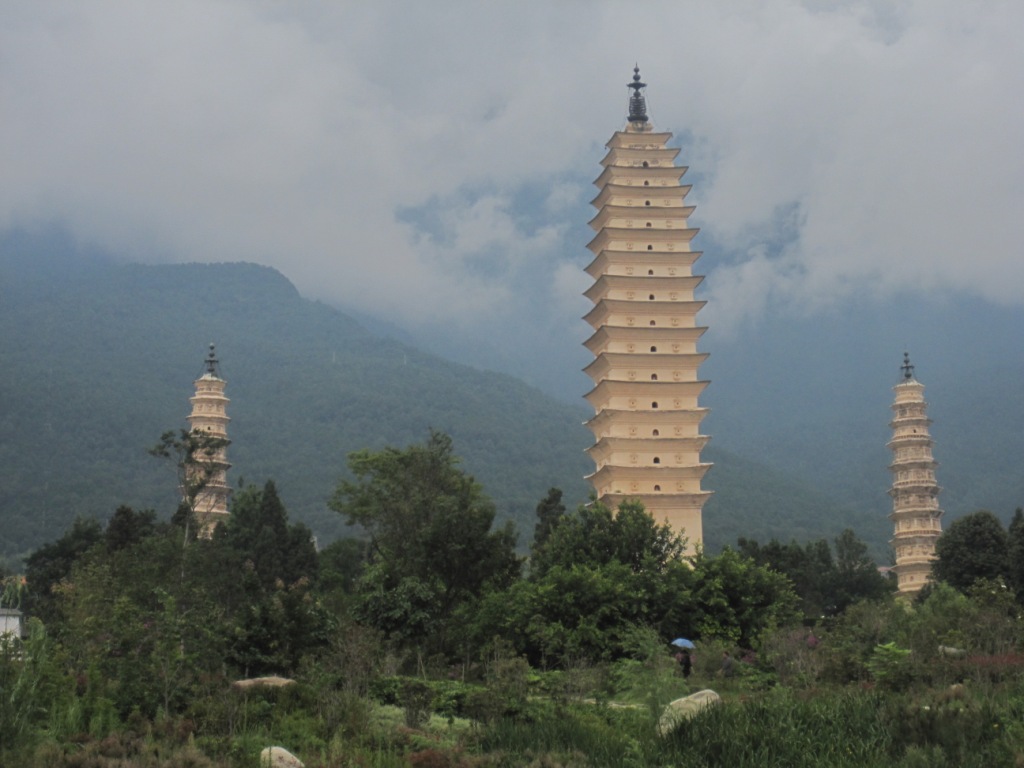
Three Pagodas
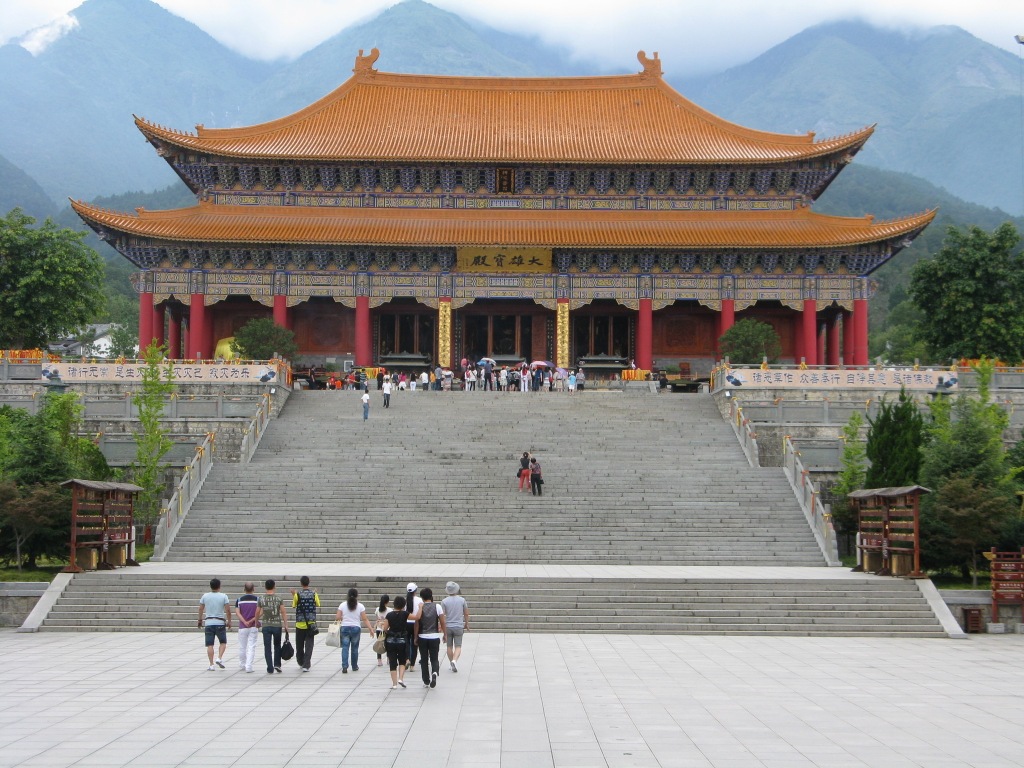
One of the many temples at Chongsheng Temple complex. It took me about 5-6 hours to walk around it all.
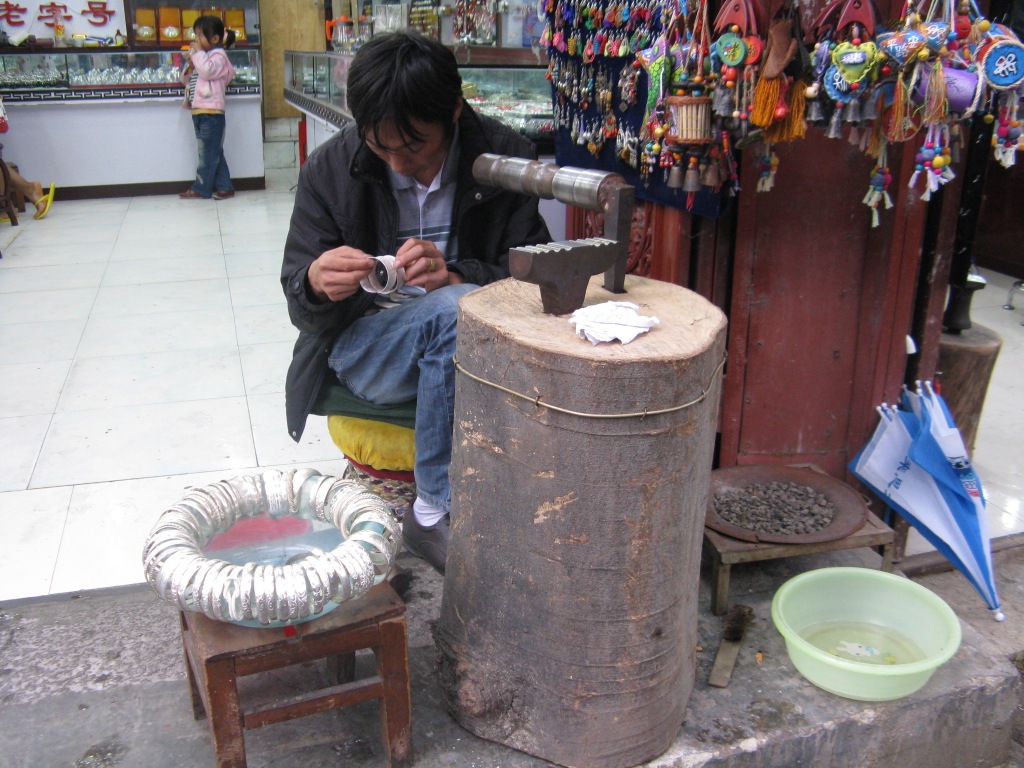
Like Lijiang, silver is a common with silversmiths hammering away at the front of shops in addition to numerous shops selling clothing and nick knacks made from fabric.
Batik made from indigo in the traditional blue and white as well as other colours is very common. I have seen the material being knotted and some dye vats but no dying yet.
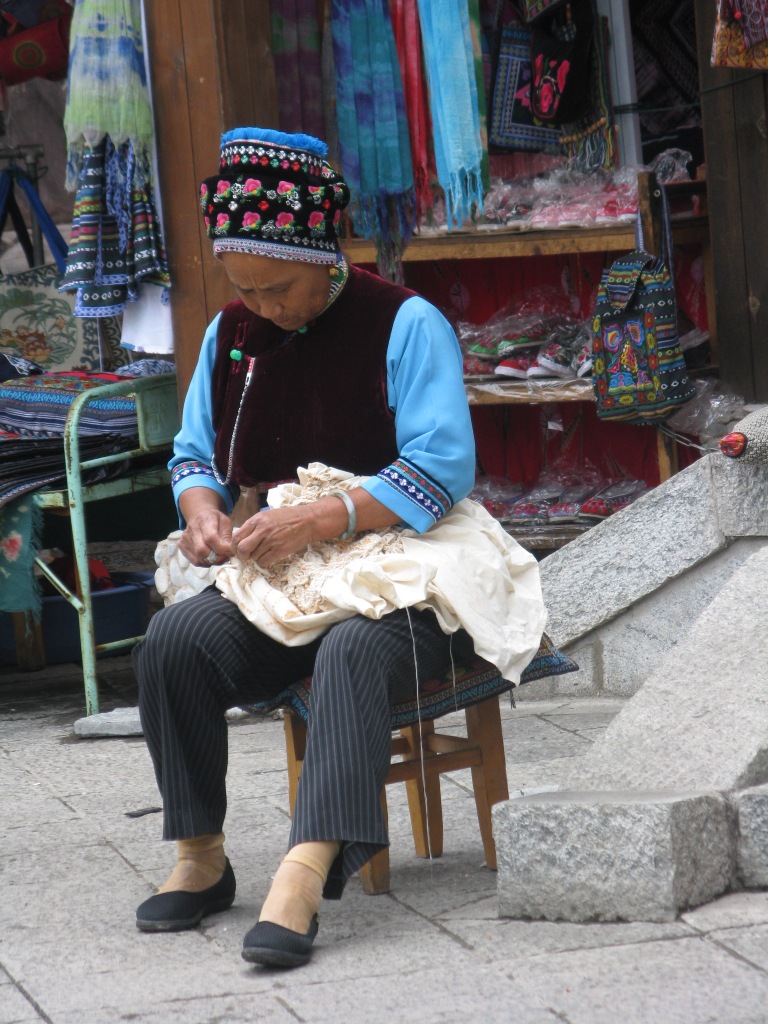
Knotting the material to reist dye and provide the decoration.
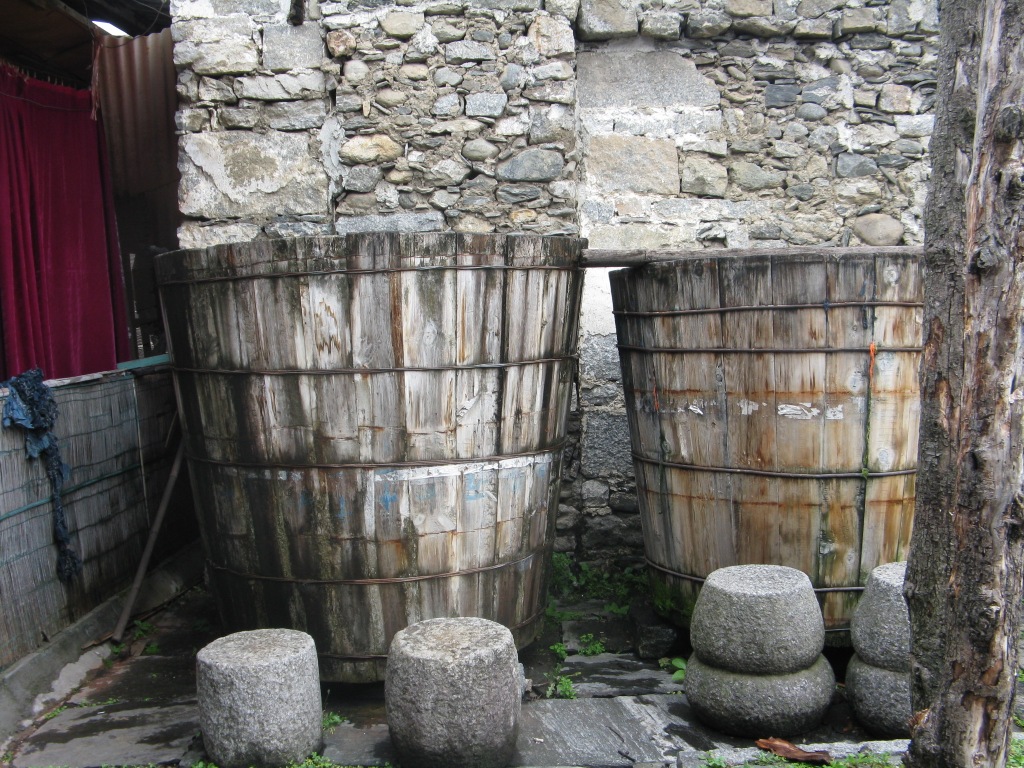
Dye vats
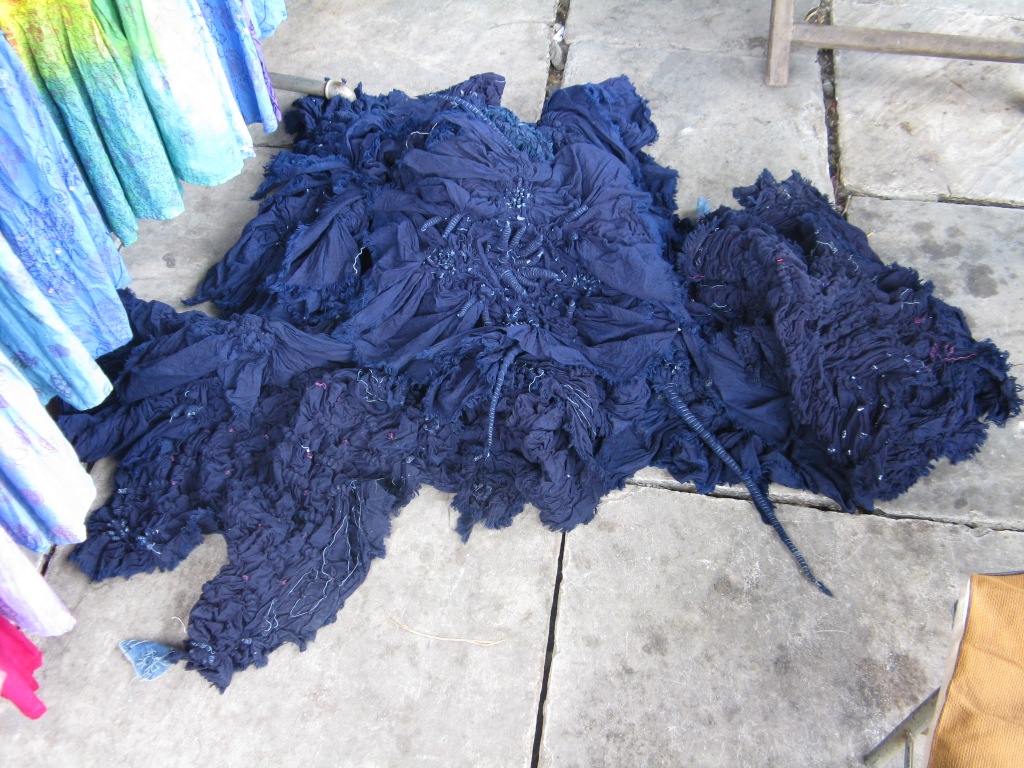
Dyed material with the knots still in.
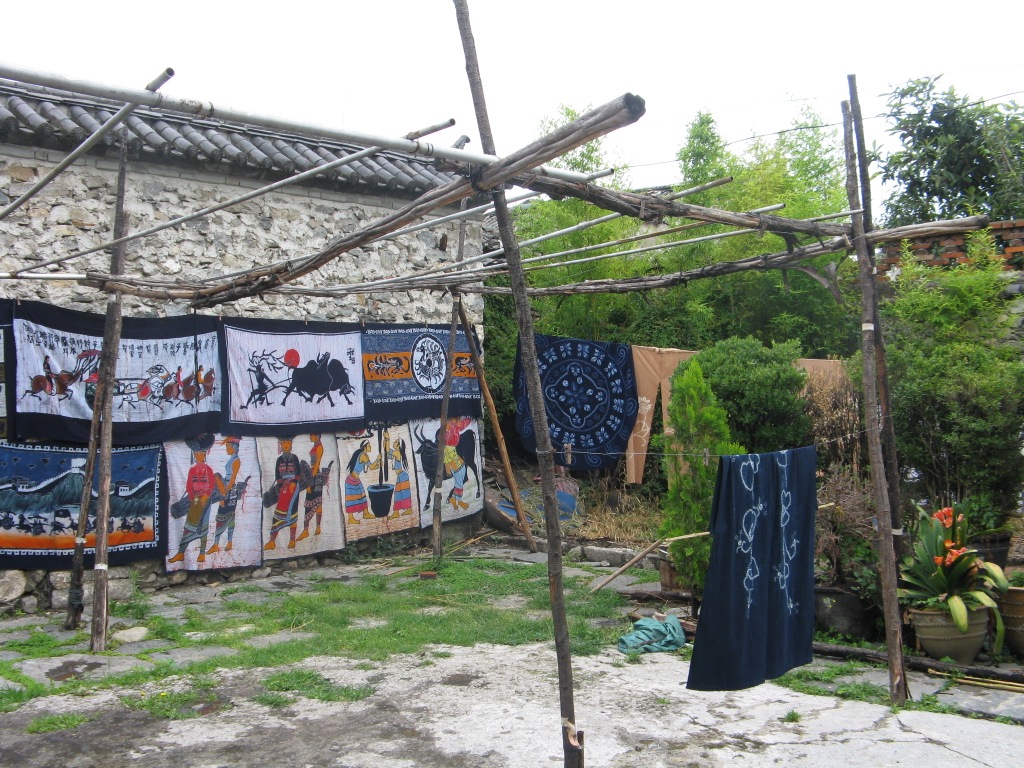
Racks for hanging dyed material. I’m not convinced much dying stil happens at that place.
As in Lijiang, local shopkeepers are required to wear ethnic dress, even if it’s only a vest.
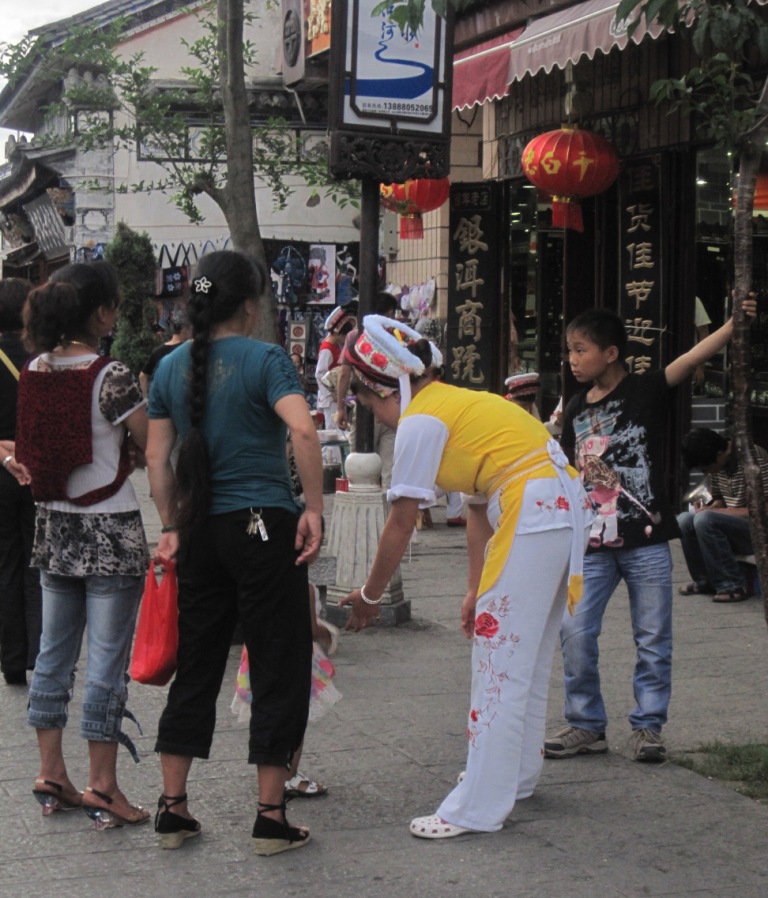 More commonly this outfit is seen in the colour of red and pink.
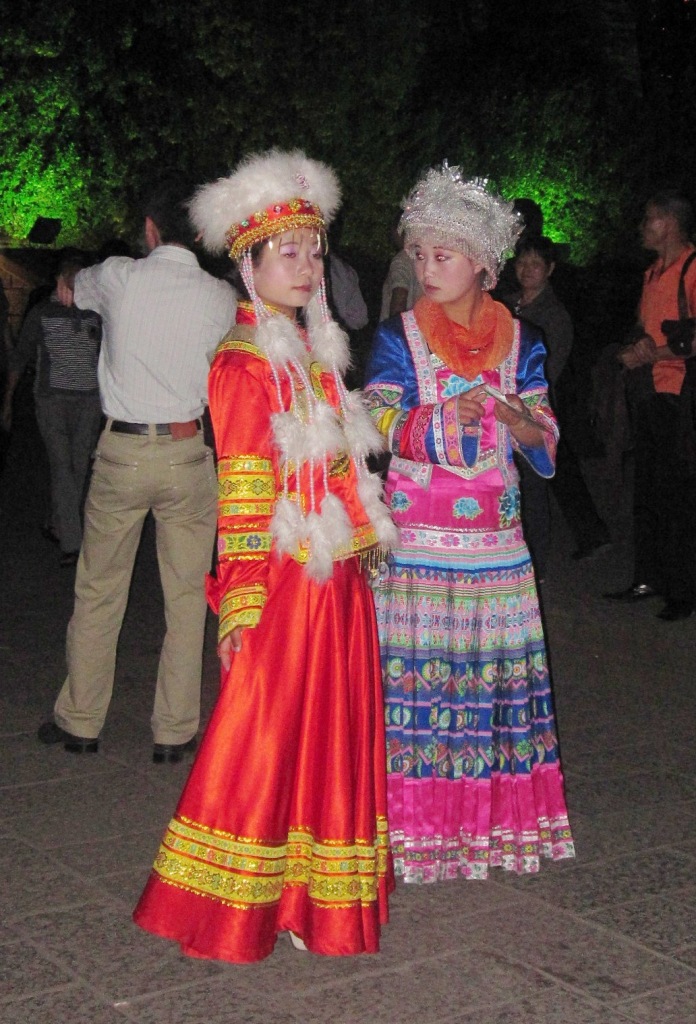
Or these two are providing photo opportunities, for a price.
However, many others seem to wear ethnic clothing as a matter of course, especially in the local villages. Unfortunately, my visits to the villages have coincided with rain & it’s a bit hard to see much when people are obscured by umbrellas and sometimes raincoats. The women in this area, unlike Lijiang & Lugu Lake wear pants instead of skirts. Much more practical. Almost all at the market were wearing gumboots of various styles.
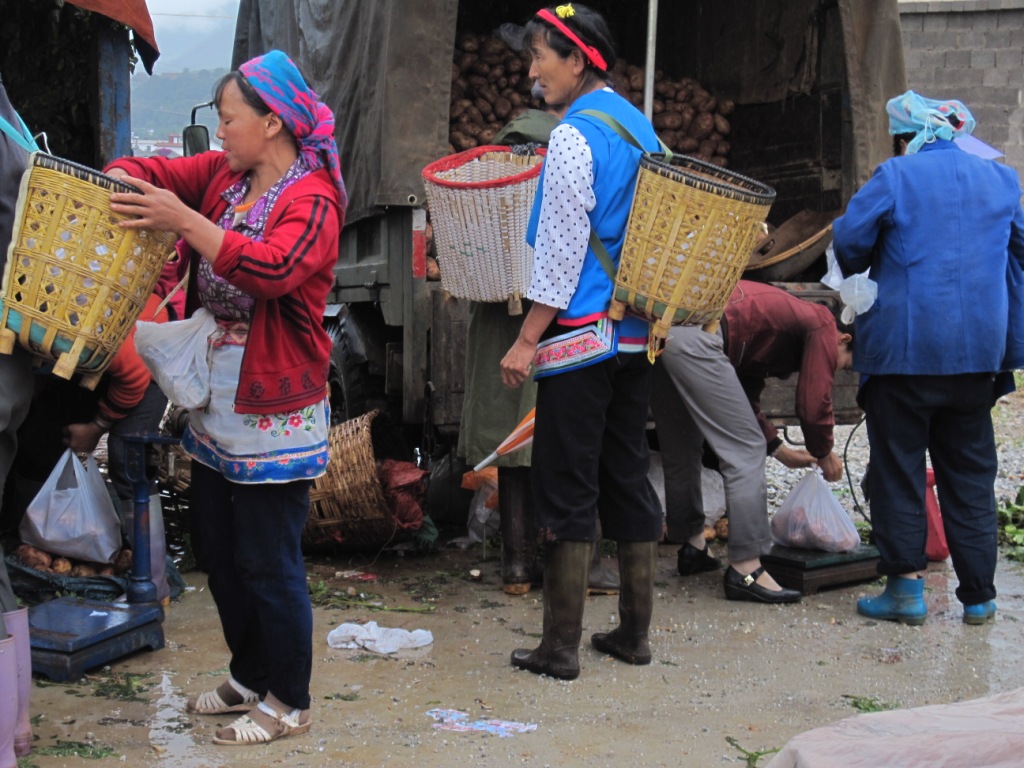
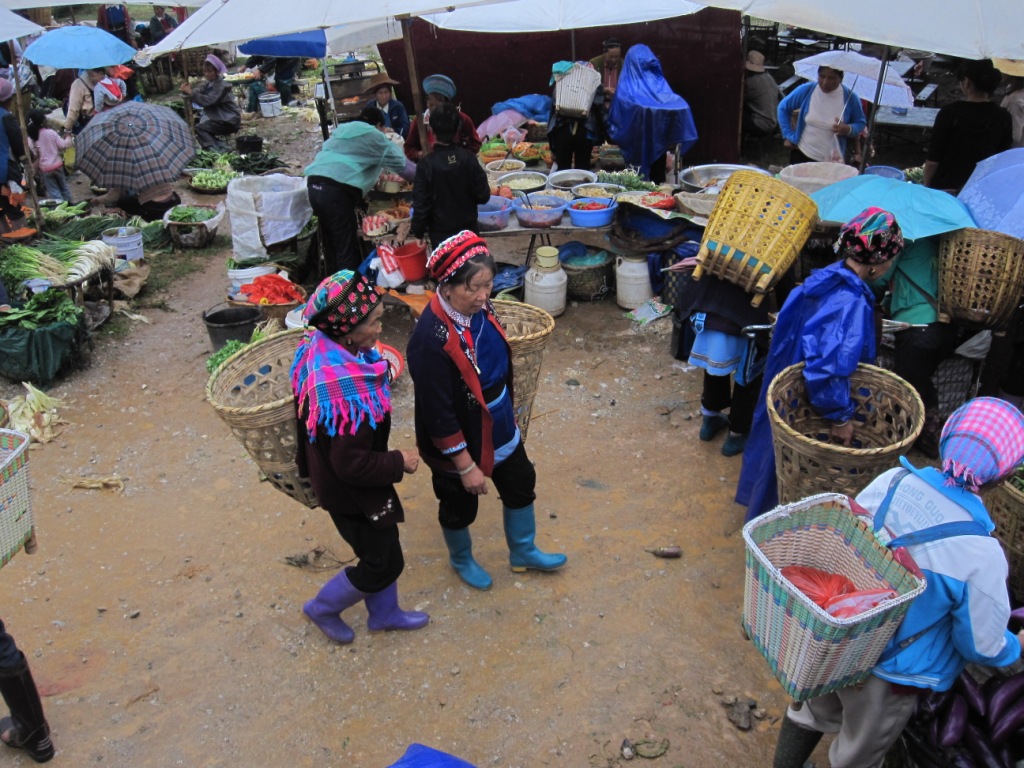
I took these photos at Shaping market after the rain abated for a while
Many of the restaurants have their ingredient options; plant and animal, alive and dead, laid out at the entrance and you choose what you want.
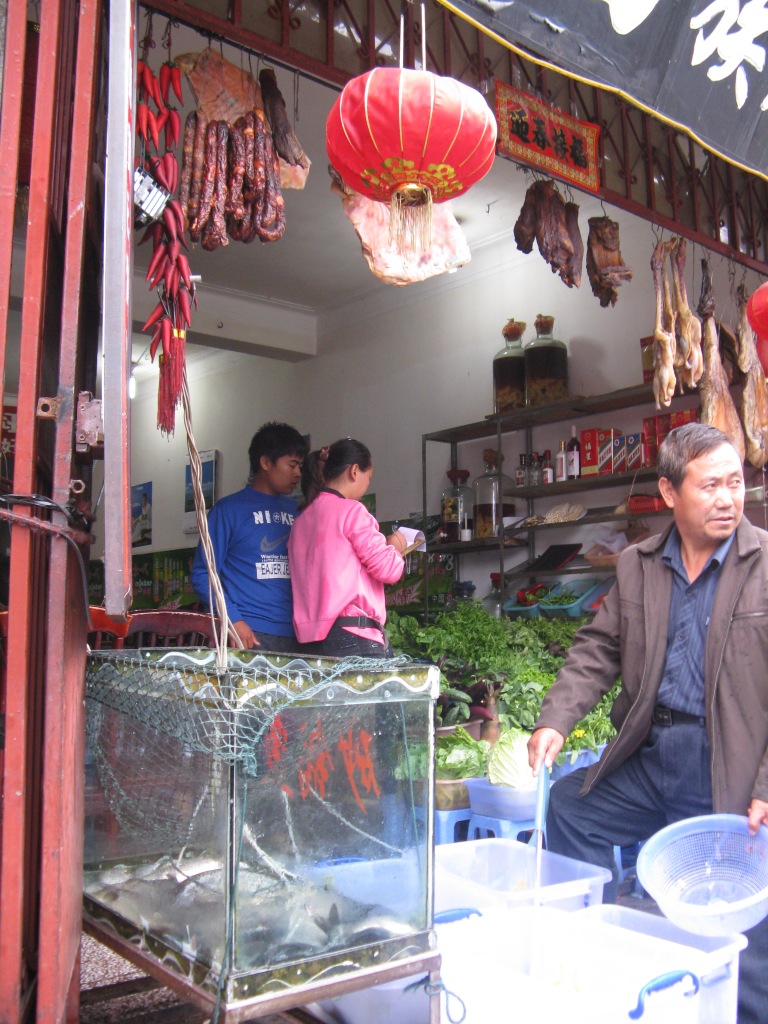 The fish are having something done to their water and meat is hanging above
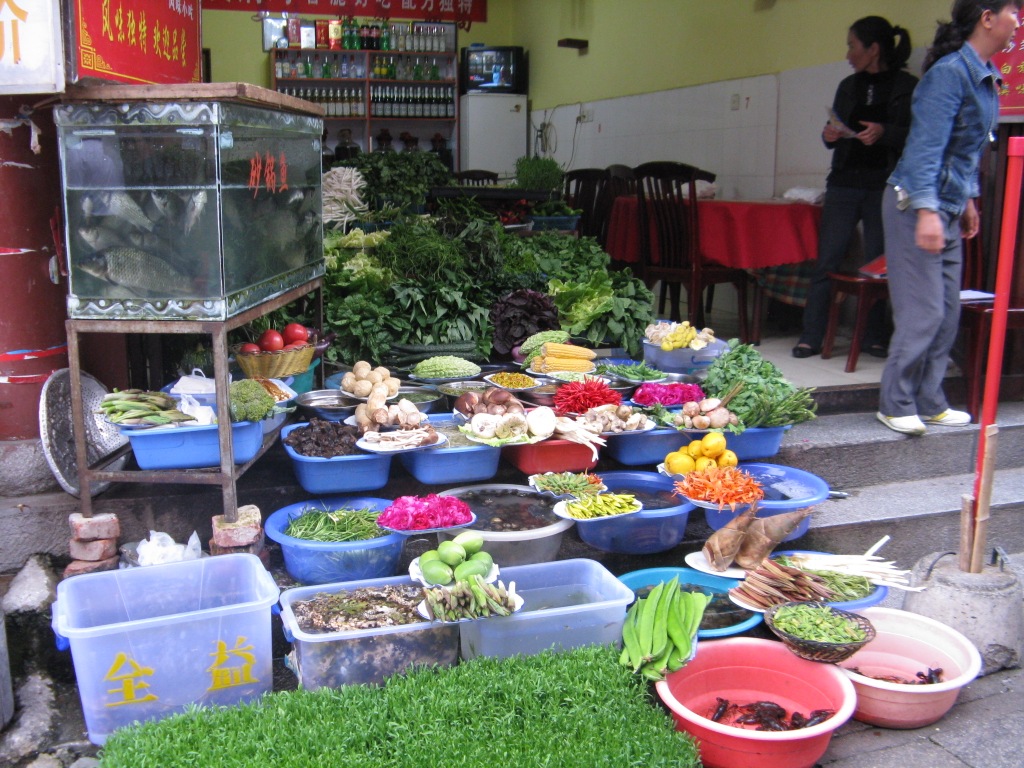 Colourful array of vegies and edible flowers
I have yet to try that. Now I know how it’s done I’ll do the usual pointing and see what I end up with. When I was in need of food from one of those places the cook was cooking fried rice so I ordered that as a safe option. It tasted better than fried rice I’ve had other places.
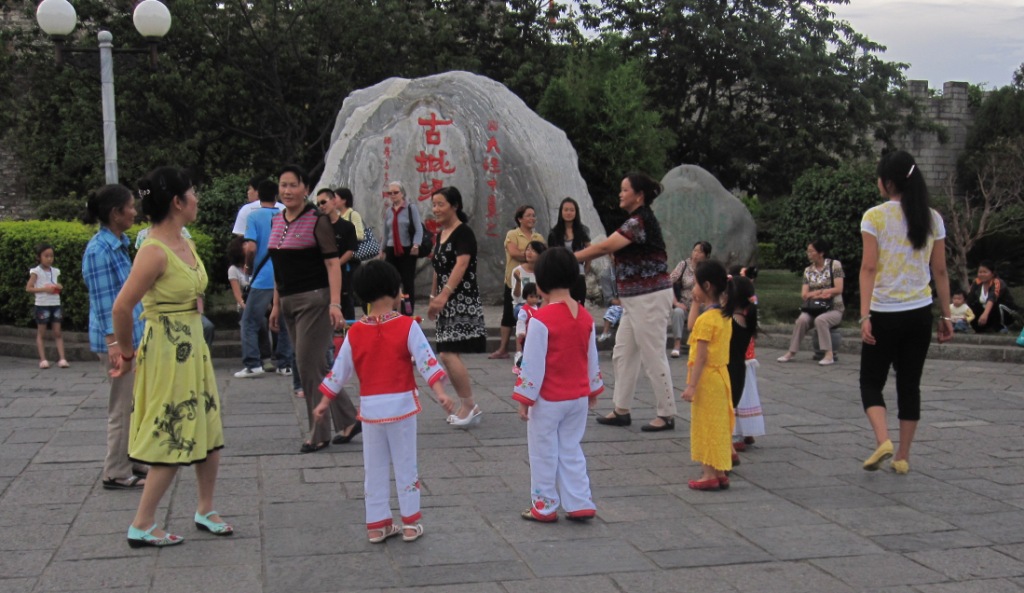
These women and kids were dancing outide the South Gate the night I arrived. The next night there were more of them and they wwre dressed in ethnic costume.
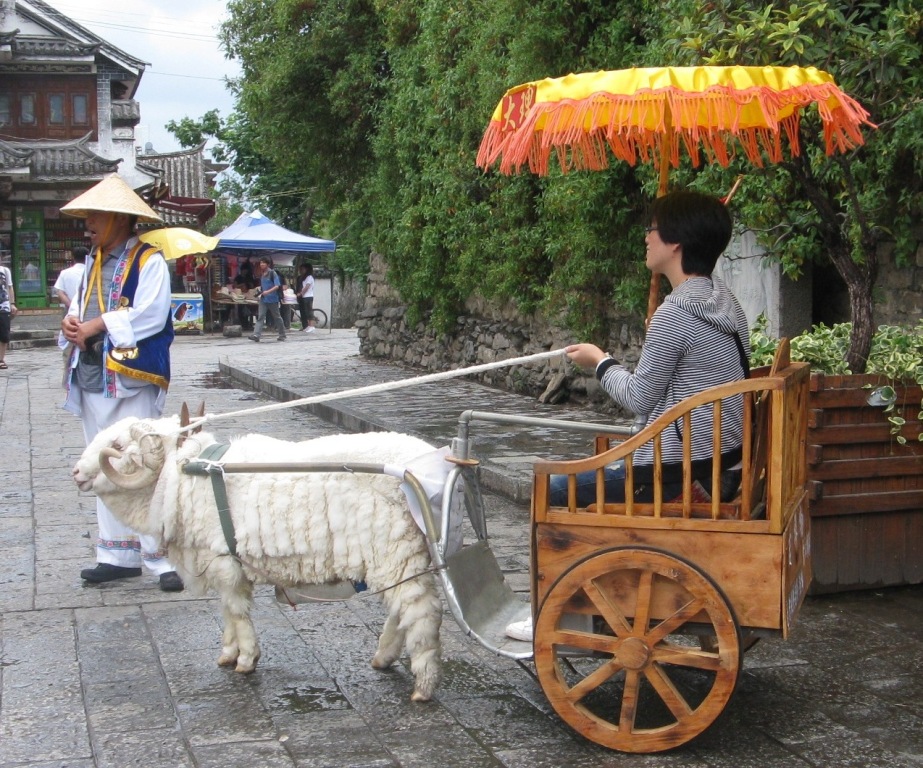
This sheep is a photo opportunity for a price. It’s the only sheep I’ve seen in China and its fleece is unusual to say the least. Look under its stomach to see something even more unusual. I’ve seen more than sheep urine in the streets of China, but Dali must have restrictions.
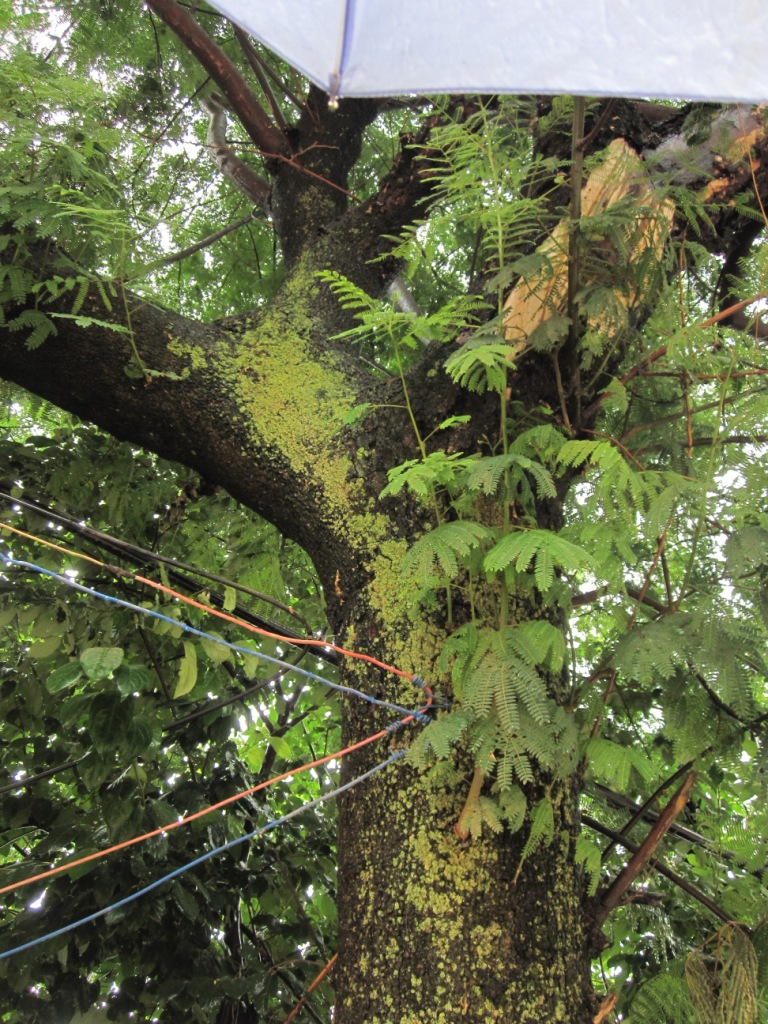
This tree was photographed in Shaping where I had trouble getting any decent photos of people because of the rain, rather than lack of interesting opportunities. It and the trees around it had lots of lichen. It is not the first tree I’ve seen doubling as a power pole.
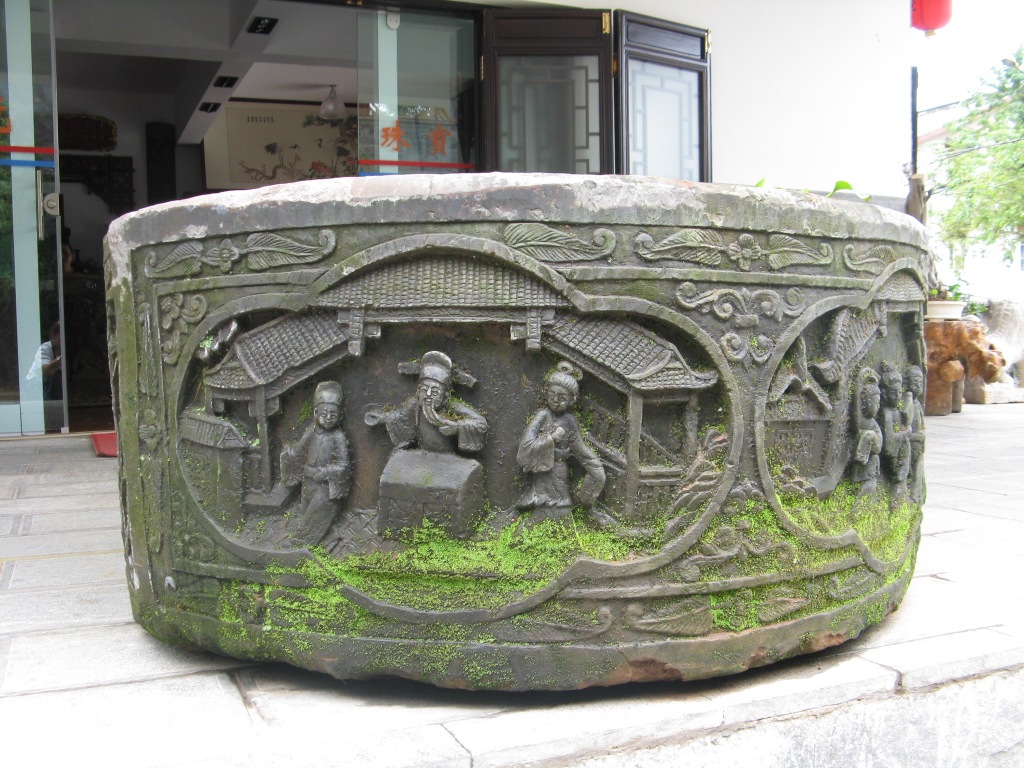
This was outside one of the many antique shops I visited in several areas in Dali. Some of them had interesting items for sale and were unlike the tiny, dusty places I’ve sen elsewhere.
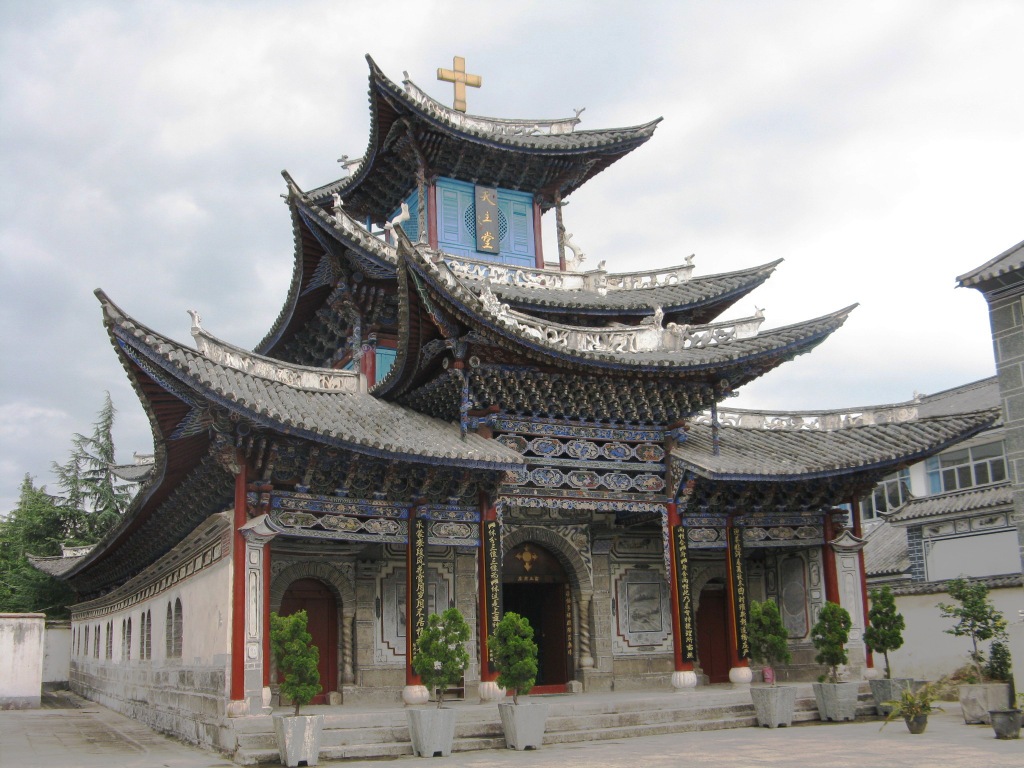
This is the Catholic Church in Dali. It was built in 1929. According to the blub inside the church it is responsible for about 80,000 catholics, covers an incredible territory and has next to no priests. There is some sort of new seminary attached to it.
There is another christian church in the city but it was locked up and it wasn’t clear if it is still in use. There is a mosque too.
