Recently one of the students took me to visit a village constructed from stone. One of my students had been, enthused about it, showed me photos and so I wanted to go. Stone villages are uncommon in my experience and while I had been to Lijang it was a different kind of stone . We set off early on the first cold day of the season and while we were not uncomfortably cold another couple of layers would have been beneficial. I seem to specialize in sightseeing on grey days so there is no sun or light in my photos.
The trip involved a taxi to a bus terminus serving rural areas, bus to a small town and then the village taxi which was a small van containing a double seat leaning against a side and tiny wooden stools around the remaining perimeter of the van.
There is no map as I don’t know where we went and I can’t find it on the internet. We headed west, turned off the main road and headed south west, I think. We were supposed to have a 2 hour bus ride but the jack-hammering of a bridge and the need to wait for diversion added about 20 minutes. We had to wait at the town for about 20 minutes for the village taxi to collect us. A Chinese man from the bus was also intending to visit the village so we teamed up to travel and to wander around the village together.
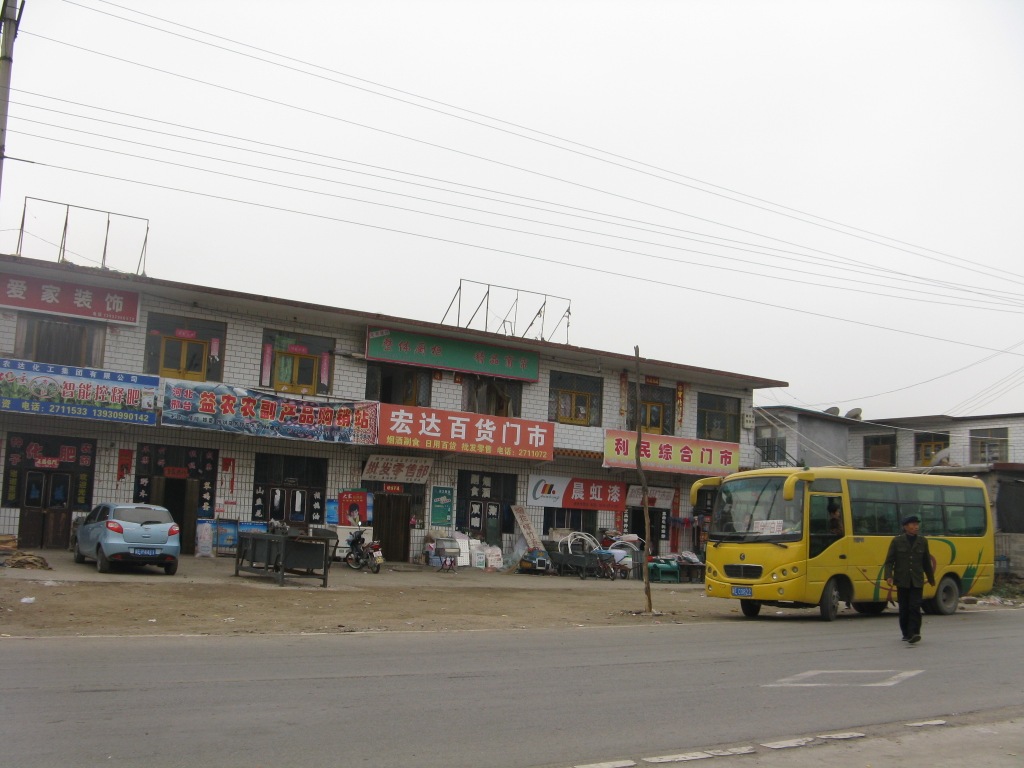
That’s the town bus stop and the bus we returned on. The metal contraption in front of the shops had something to do with removing chestnuts from their burrs, outer casings. There were open fields to the left of the photo where numerous bags of corn cobs were piled.
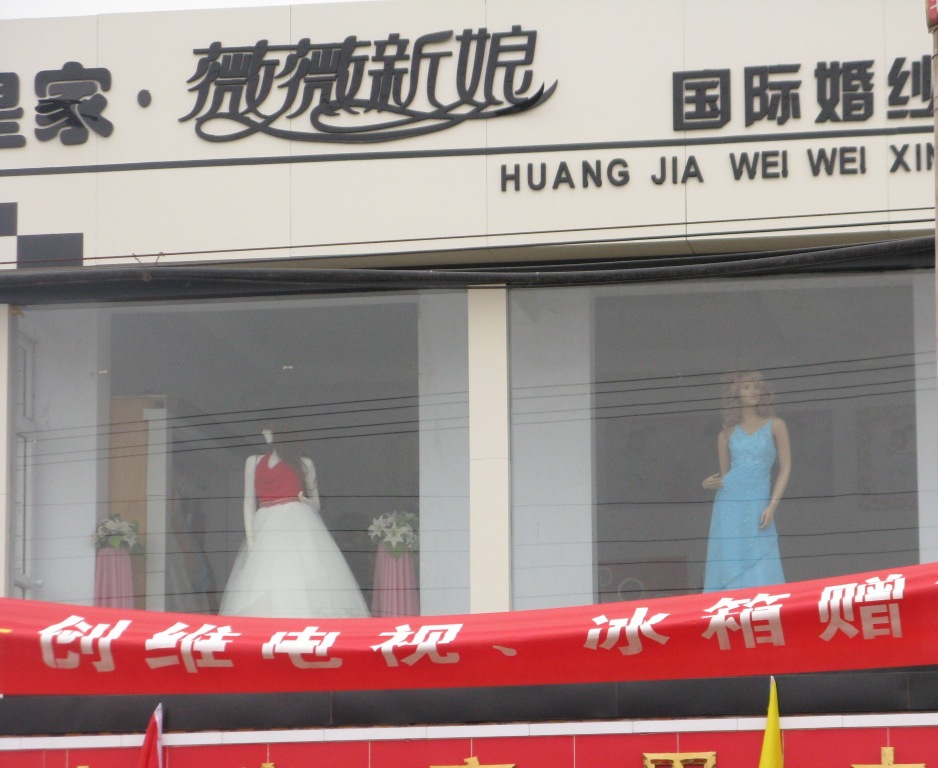
This is the second small village/town displaying such clothing. Maybe they have money and a social life not evident to me.
Once we reached the hills the village was not the only construction from stone, but it certainly stood out. The village had reached the modern age with an entry fee for all visitors. Different figures were bandied about and I suspect the presence of a pink face increased the days takings. The village was said to be about 600 years old.
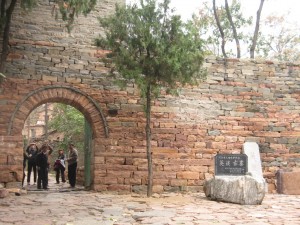
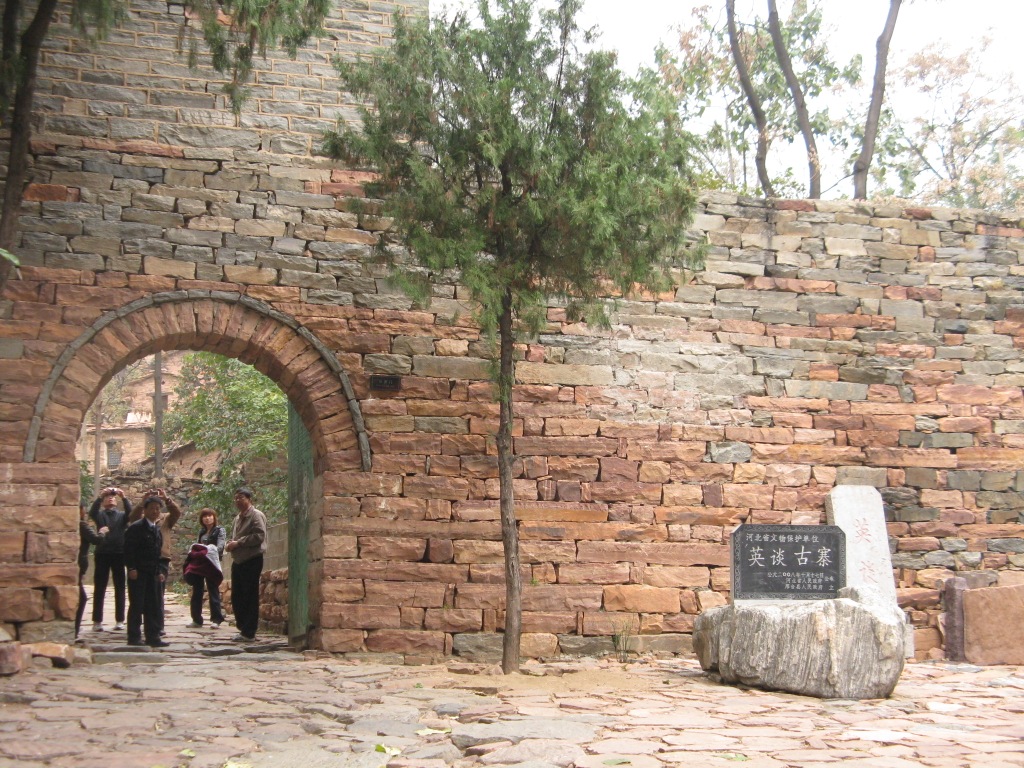
One of the village gates.
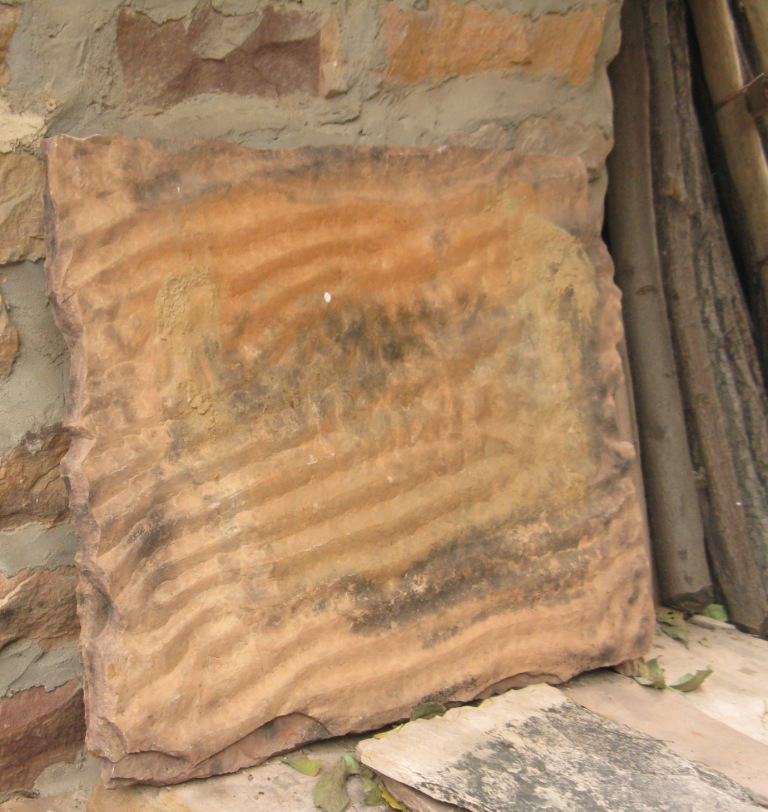
One of the dominant features of the village was the type of stone. Most of it appeared reddy/pinky/orangey coloured. There were many slices of stone of various sizes just leaning against walls and so on such as this one. Many had unusual patterns on them. This looks like rippled sand frozen in time and there were others with similar characteristics. Others were of an inexplicable colour and pattern and I was informed that they were not man made. I can’t find anything useful on the internet about the geology of the area and don’t know anyone who would know.
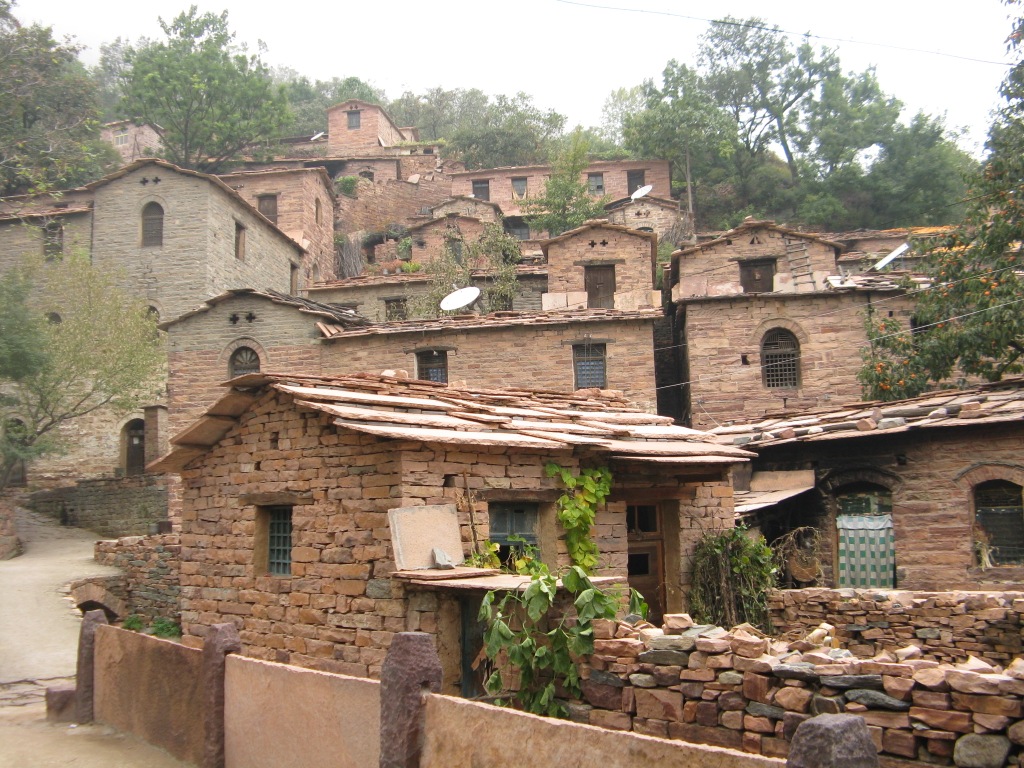
Some of the village from near the base.
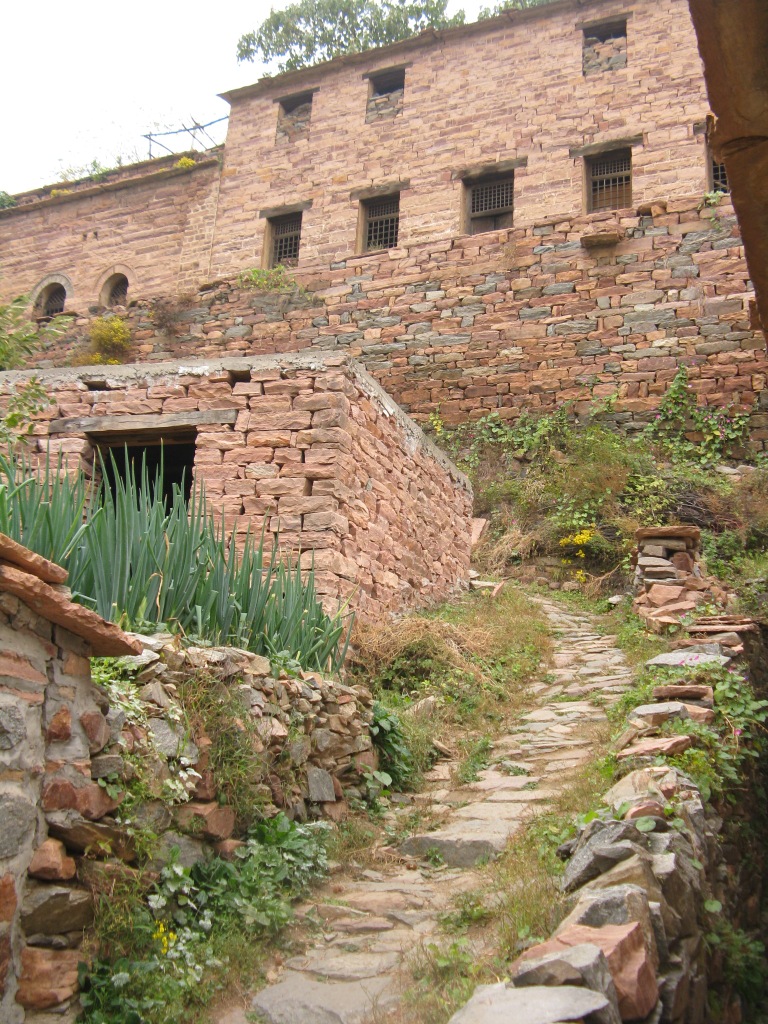
Another looking uphill with a glimpse of a vegie field.
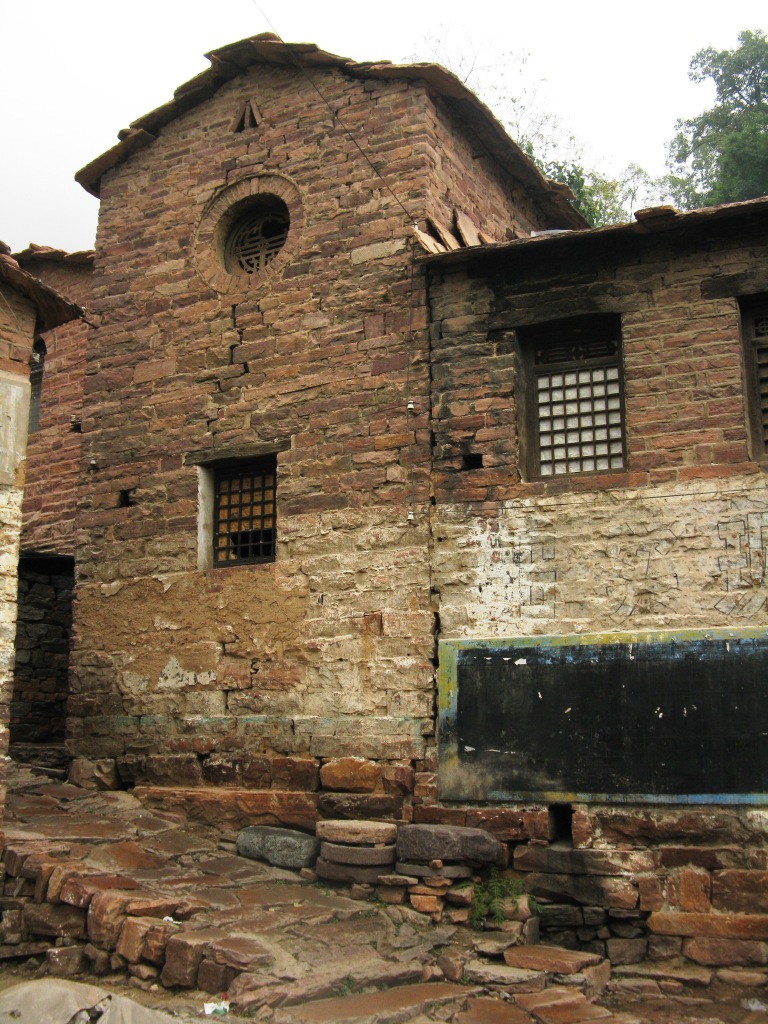
From inside a courtyard. The village is unusual for its number of round windows and those with a curved top. Houses consisted of 2 storey buildings arranged around a courtyard which was usually internal. There were several different building styles.
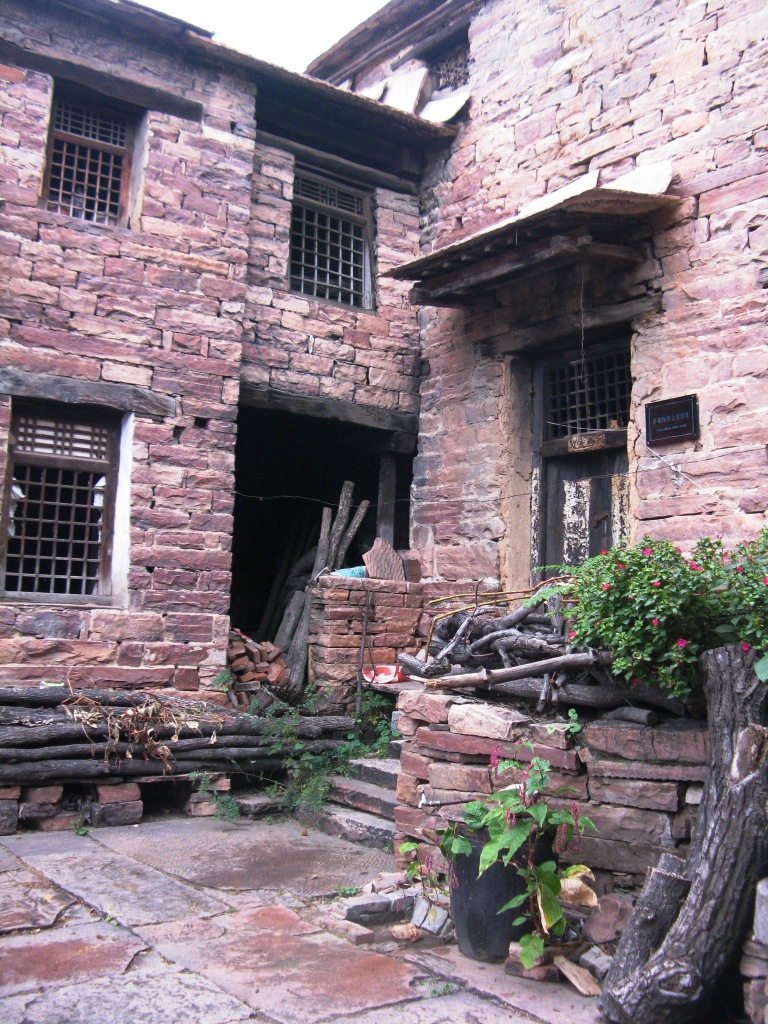
Another courtyard.
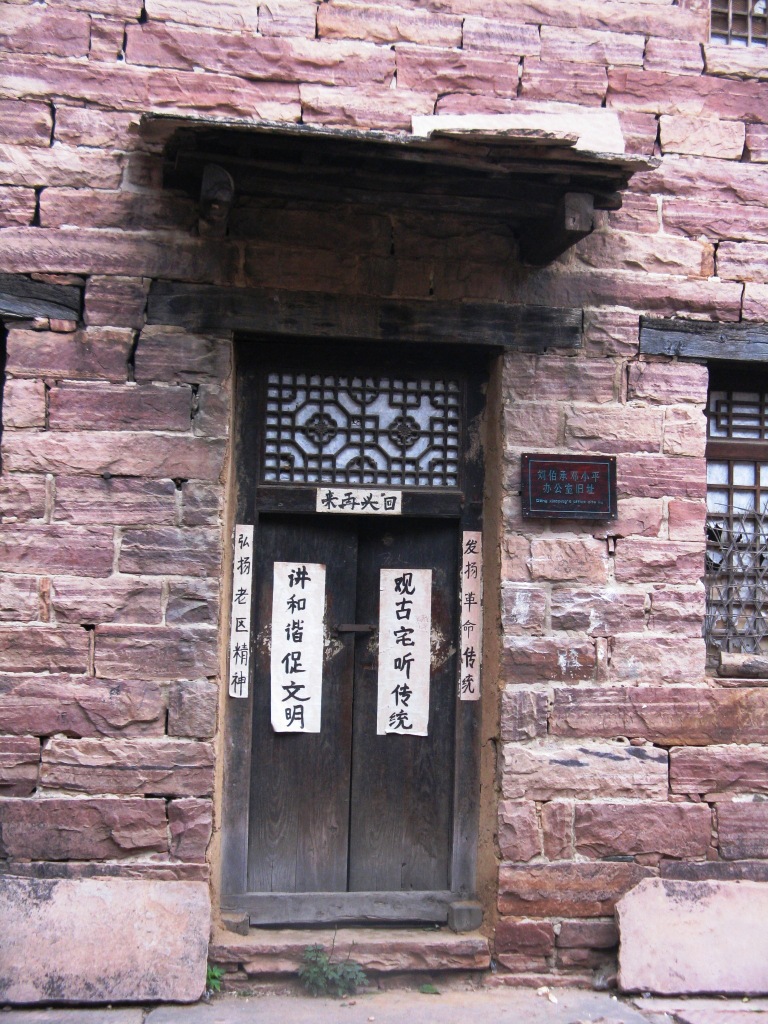
The sign states that the room was Deng Xiaoping’s office. There were many signs on walls signifying the presence of the communists. I’m not sure if they visited when they were fighting the Japanese or afterwards during the civil war with the Kuomintang.
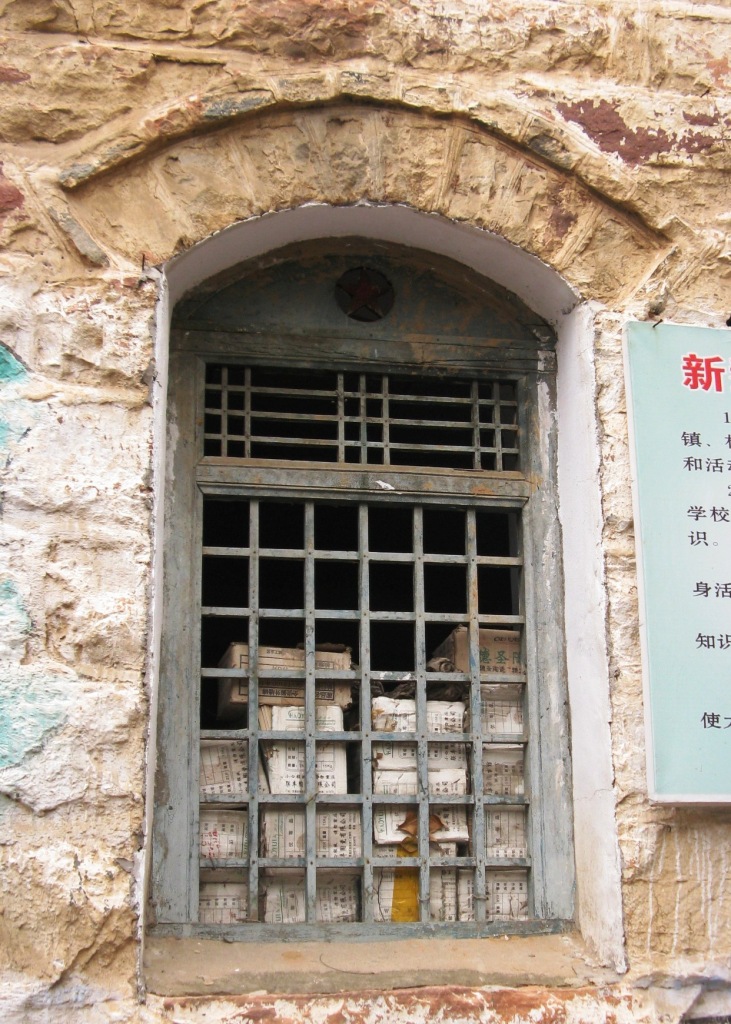
The window has a red star under the arch. There were a few windows like that.
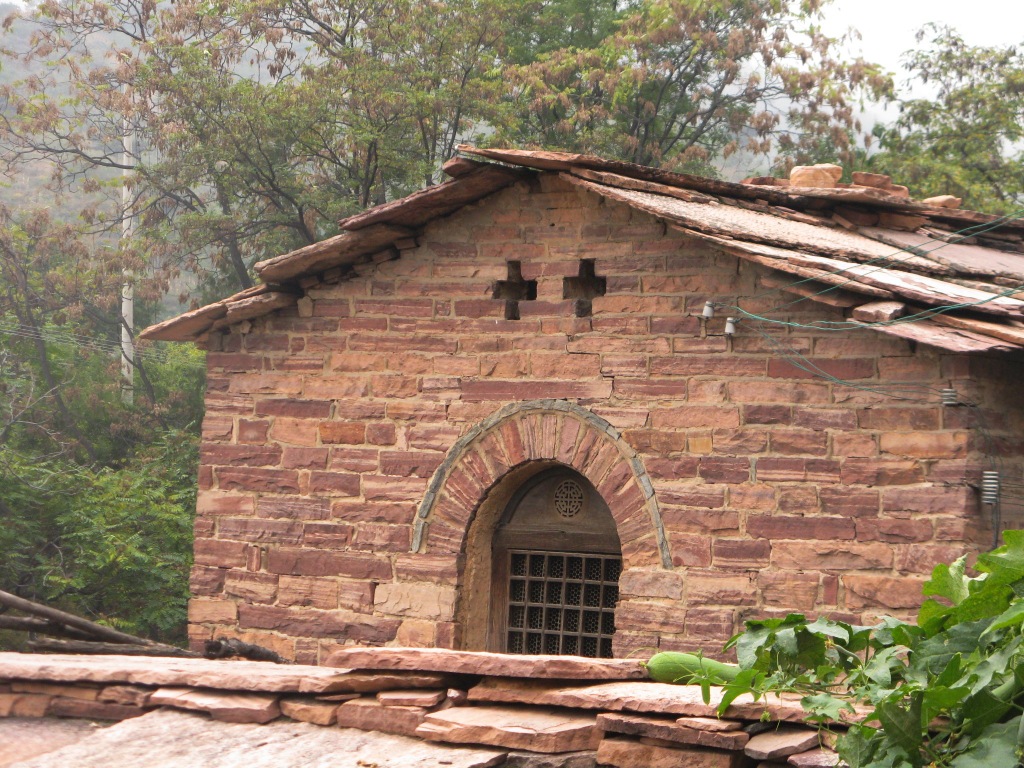
Another window. Some of the buildings had the decorative opening near the roof line.
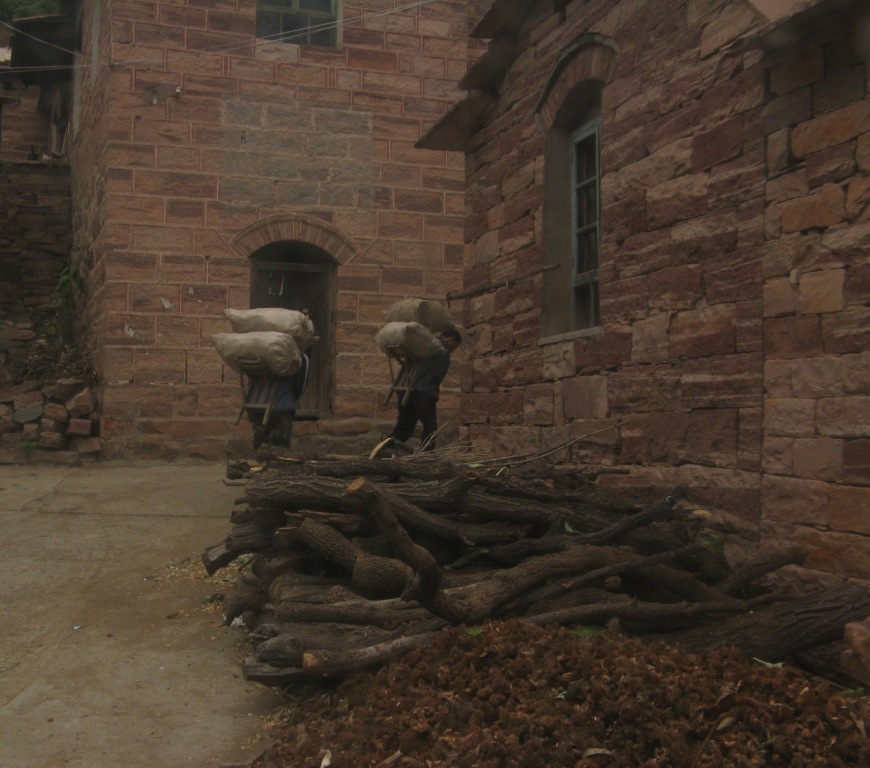
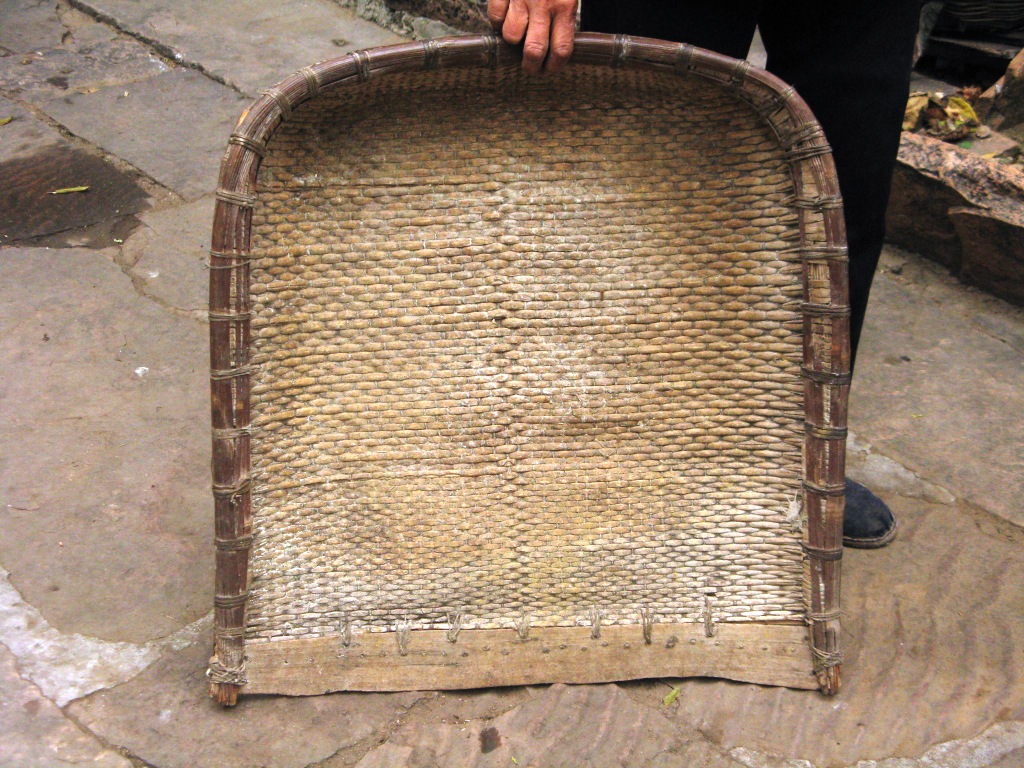
The village version of a backpack.
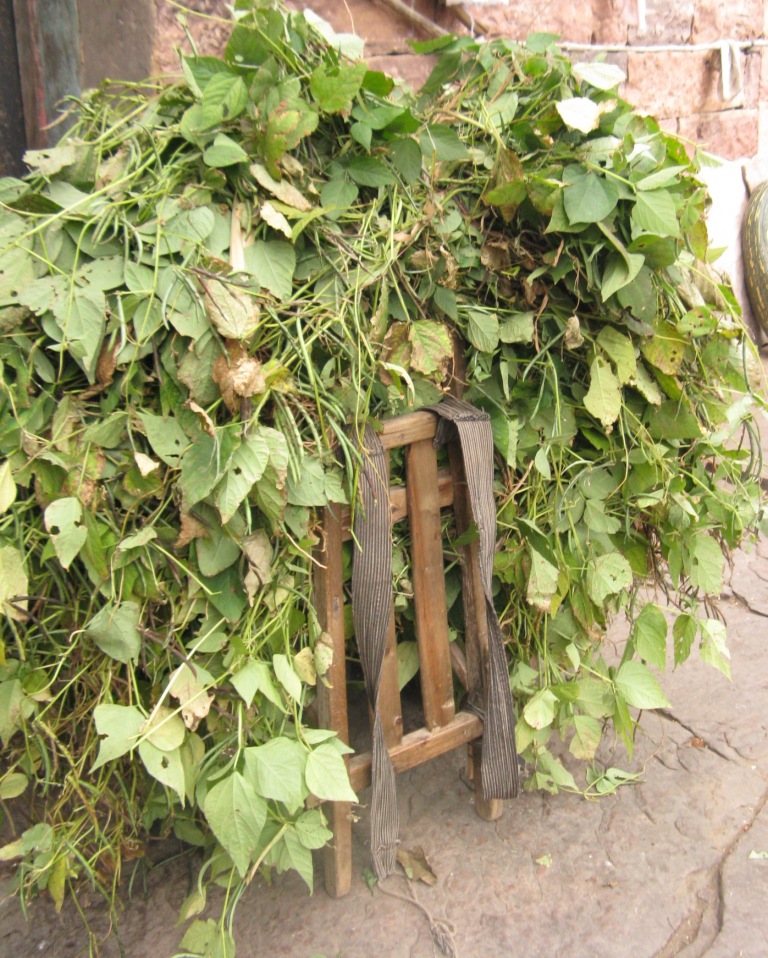
Here’s one with what I think is soy bean as I saw a woman detaching soy bean pods from greenery with the same appearance.
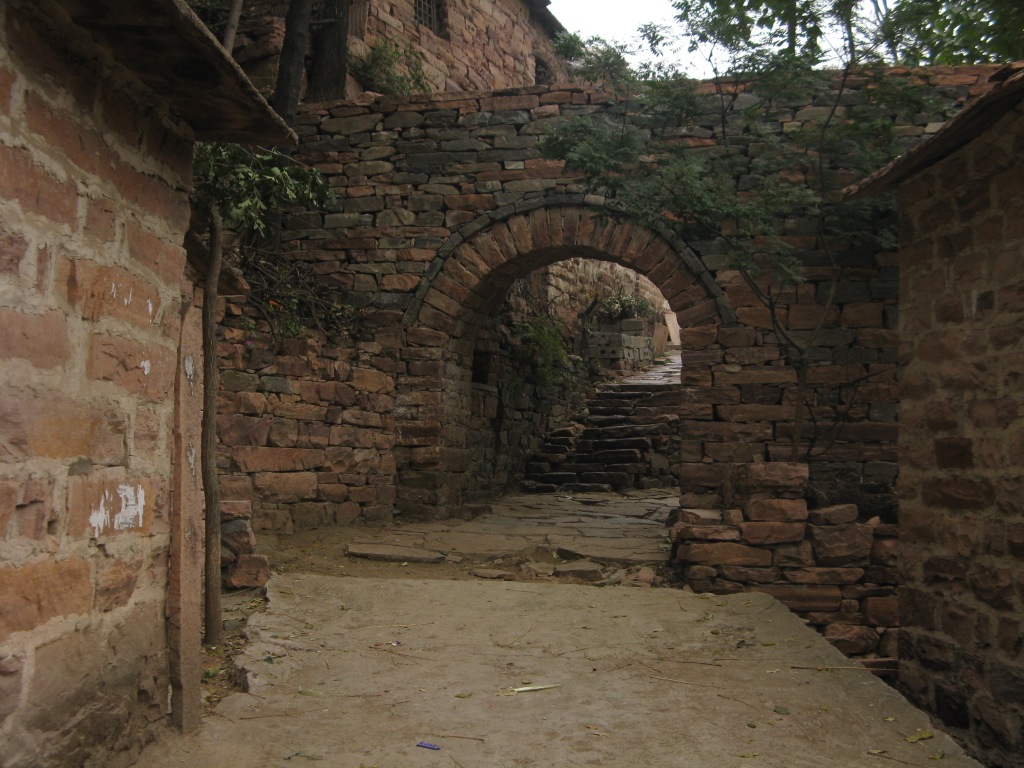
A wide village street.
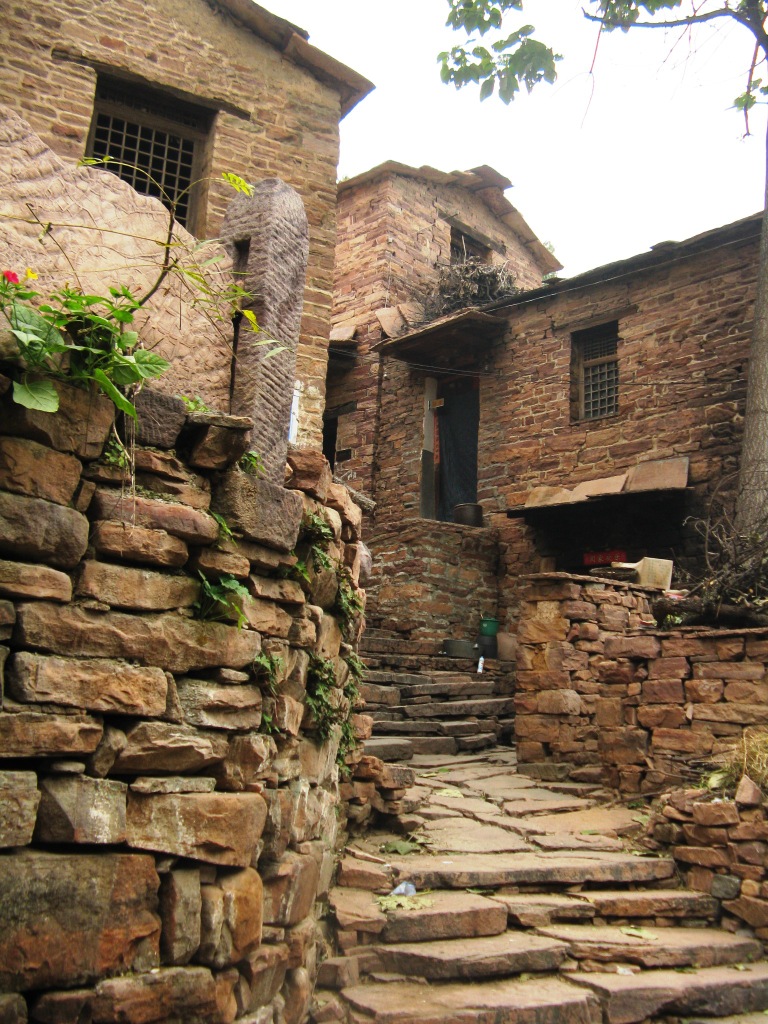
Another one. I don’t remember seeing any street lights. Definitely not the kind of place where you want to be wandering about after dark unless your torch, eyesight and balance are impeccable.
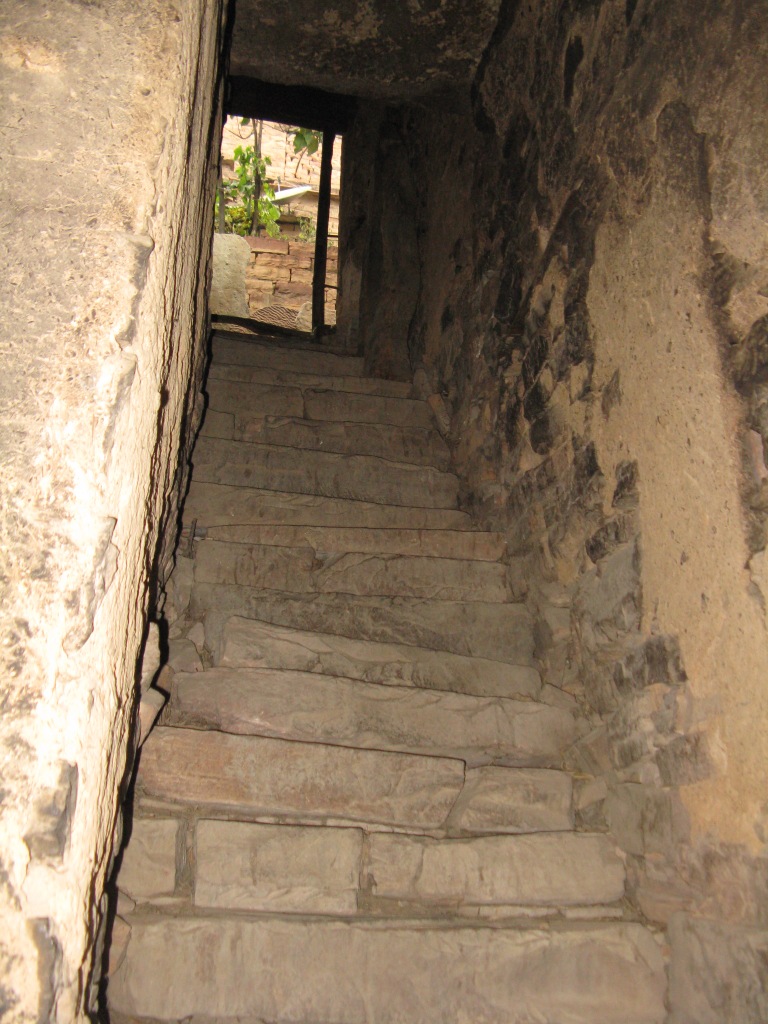
Another traverse from one level to another. We returned via a more meandering route.
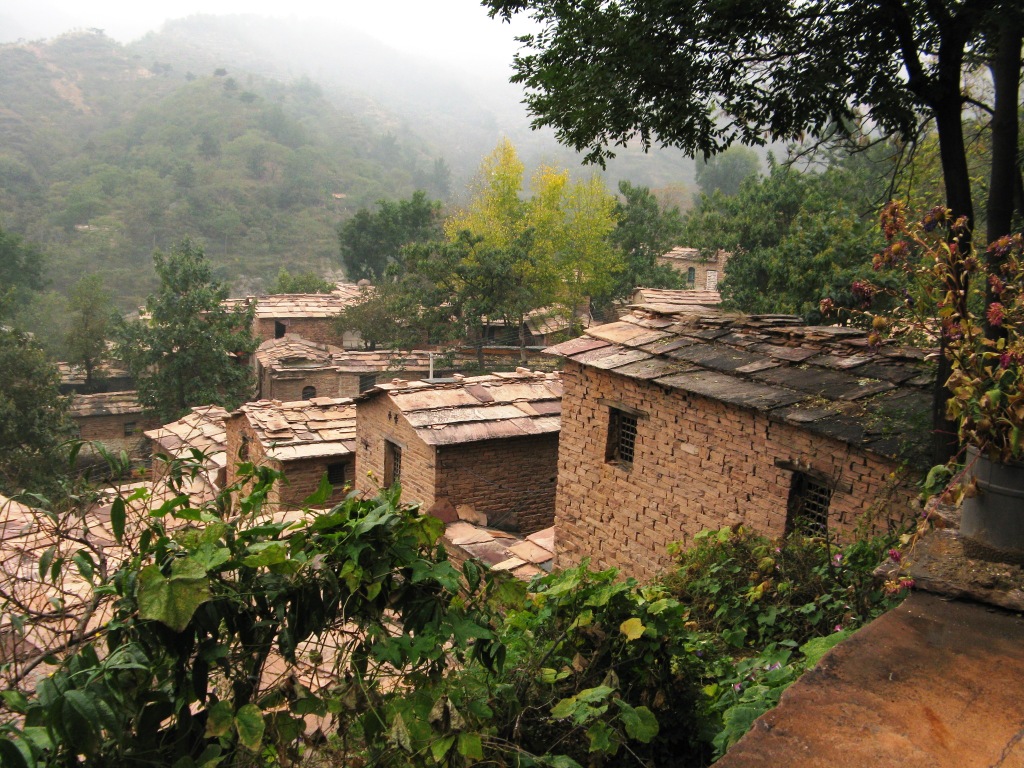
View from the top. The couple who owned the courtyard I took the photo from had a good spot.
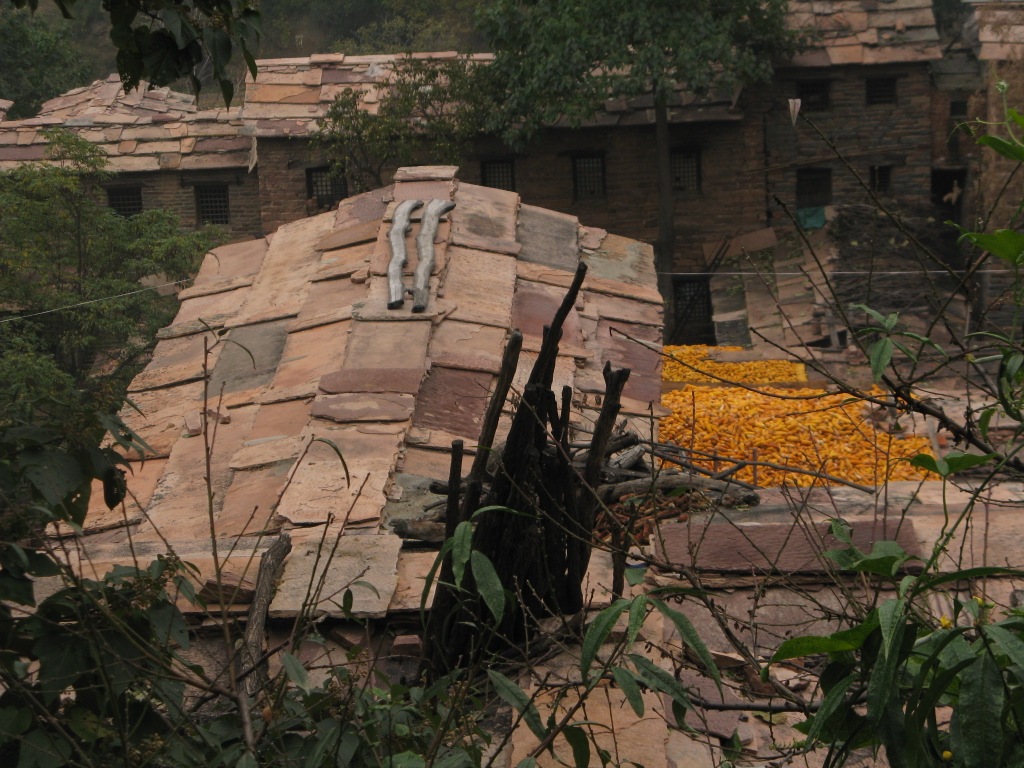
Stone rooves and ubiquitous corn.
A good looking hand shovel thingy no doubt useful with corn. Some of the ones available in hardware shops and stalls are now made from metal.
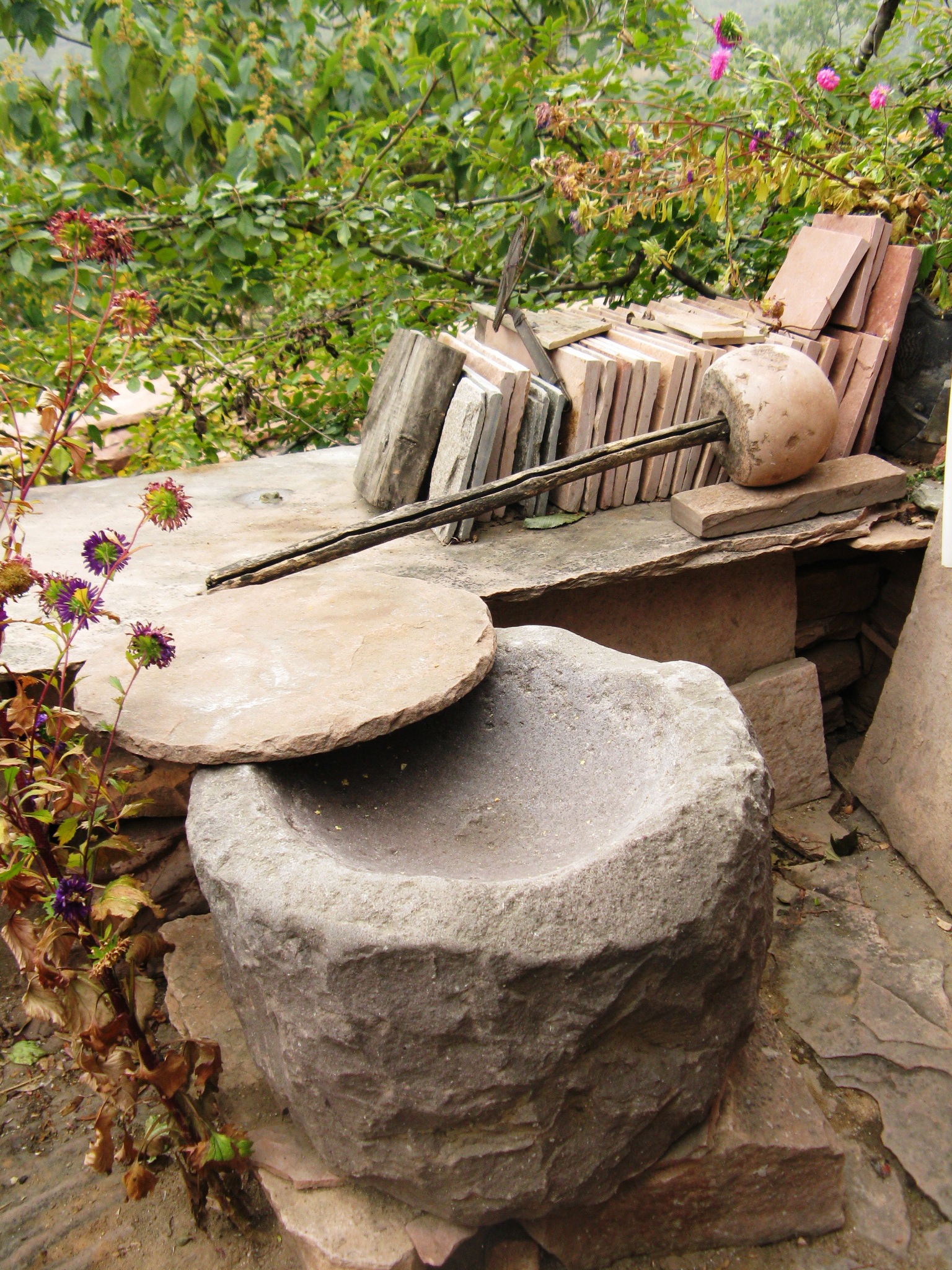
A form of mortar and pestle. Used for pulverising soy beans and there was a faint trace of soy in it.
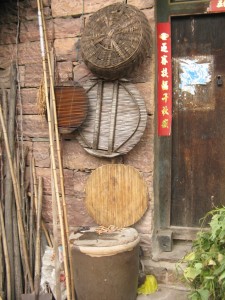
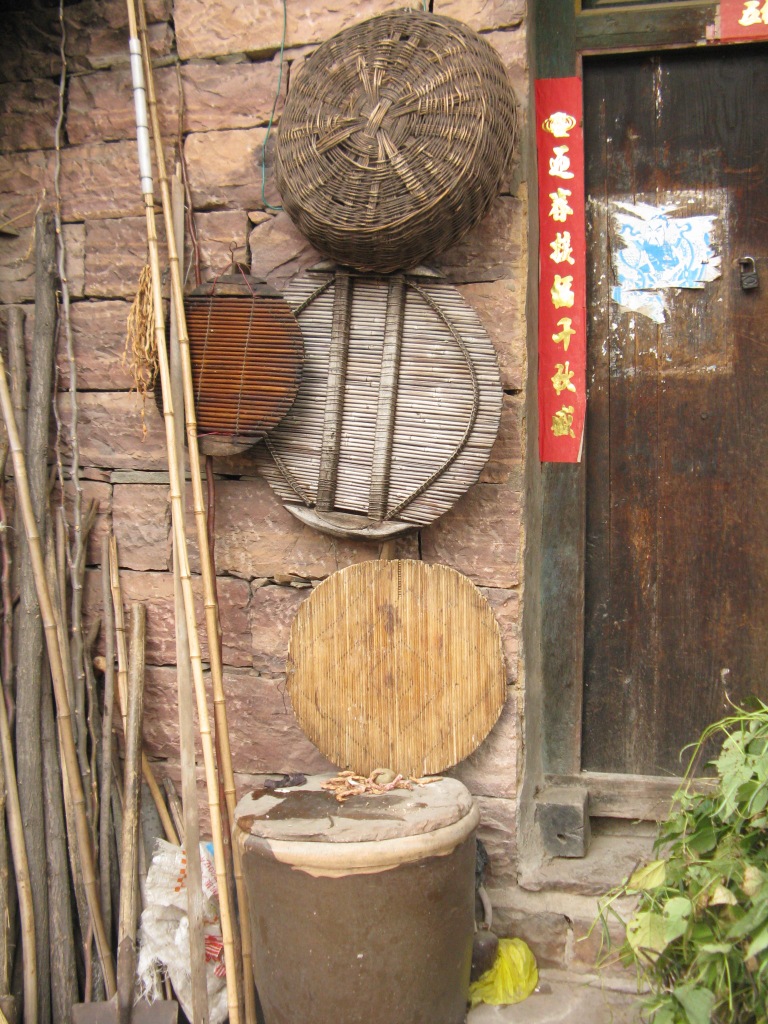
Various lids and a pottery container.
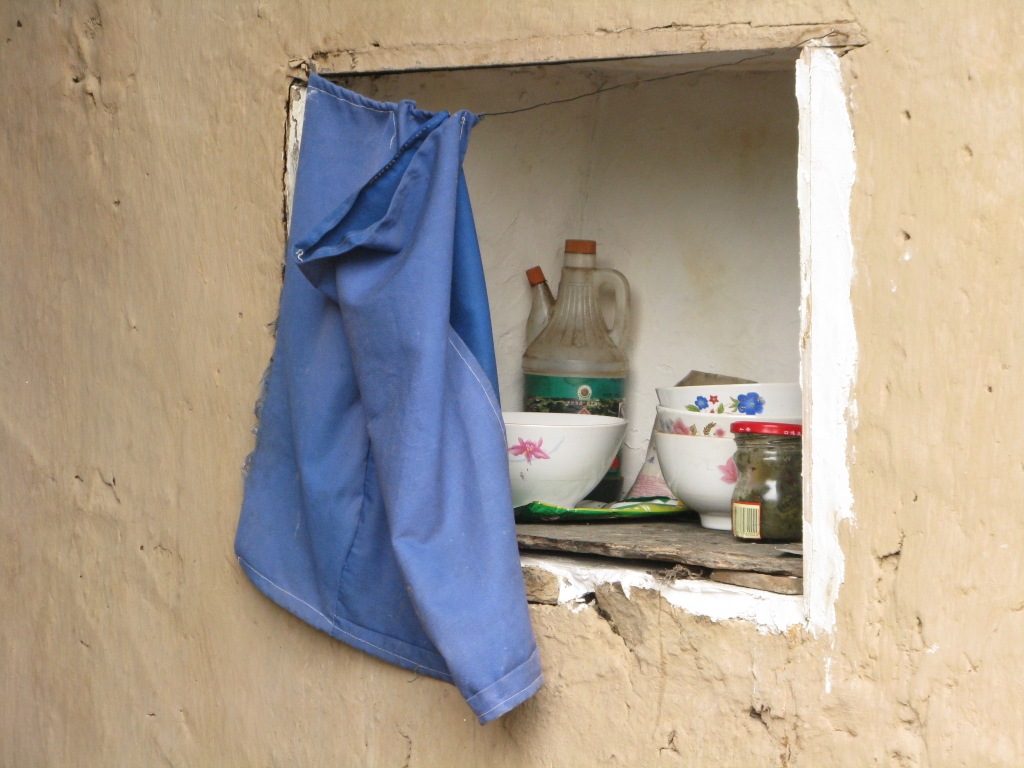
Some one’s cupboard in a wall in a courtyard.
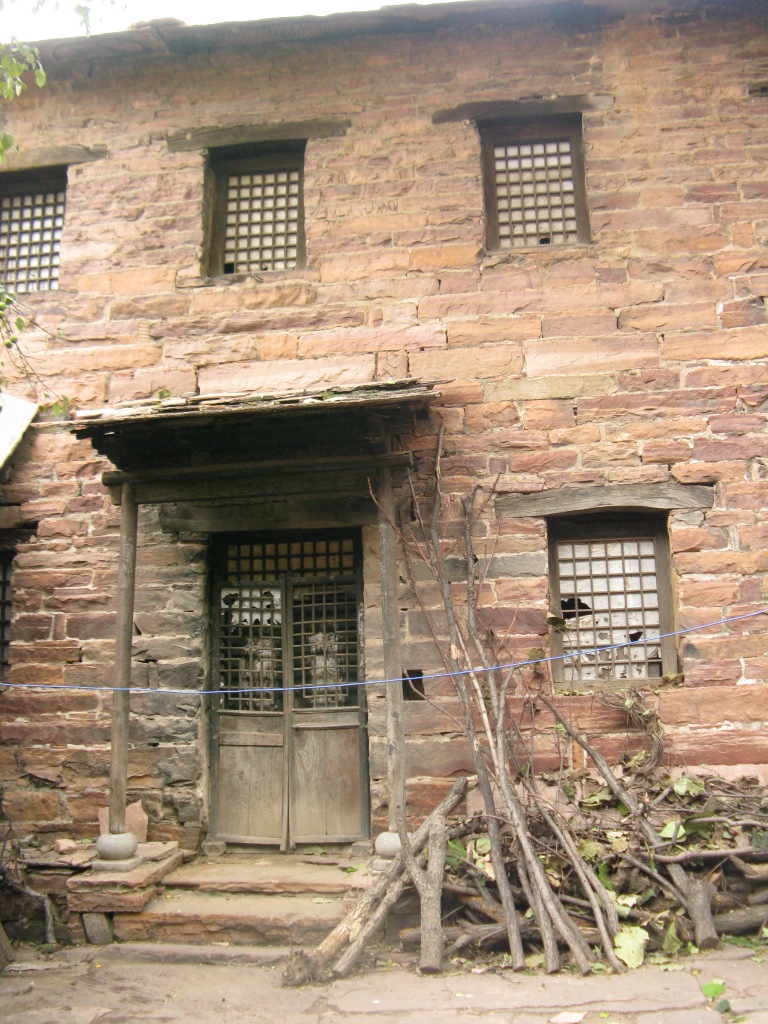
Another courtyard with some firewood prepared. The paper in the windows was damaged. Many of the courtyard houses seemed too big for the current population and locked doors were not uncommon.
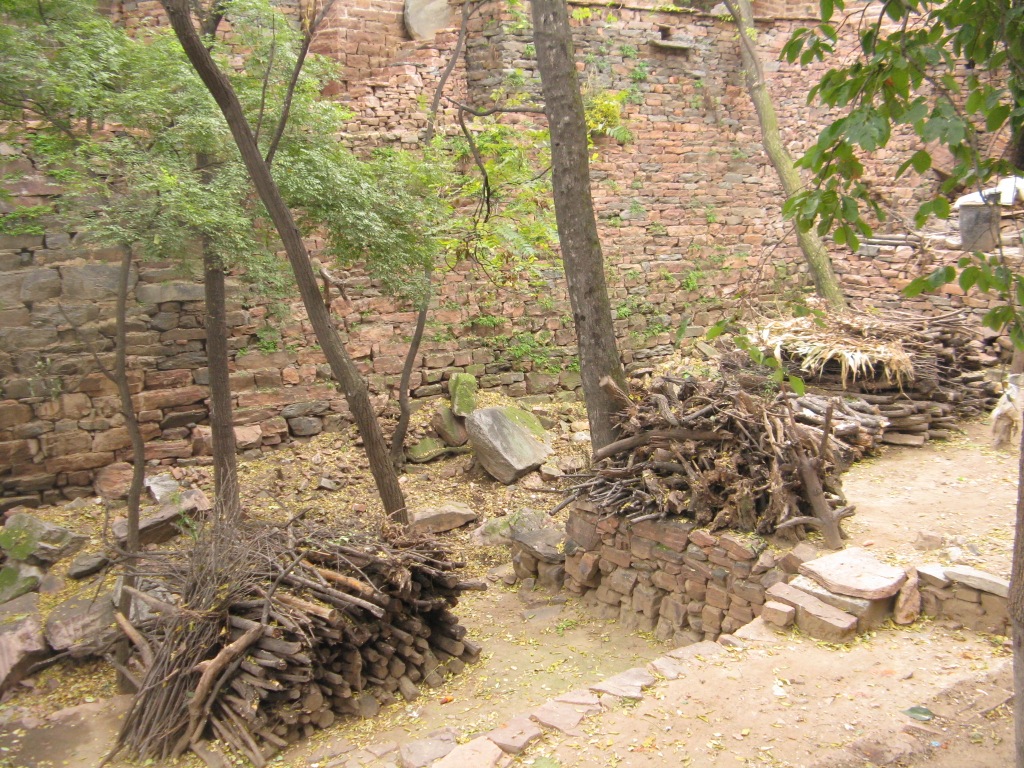
More piles of firewood.
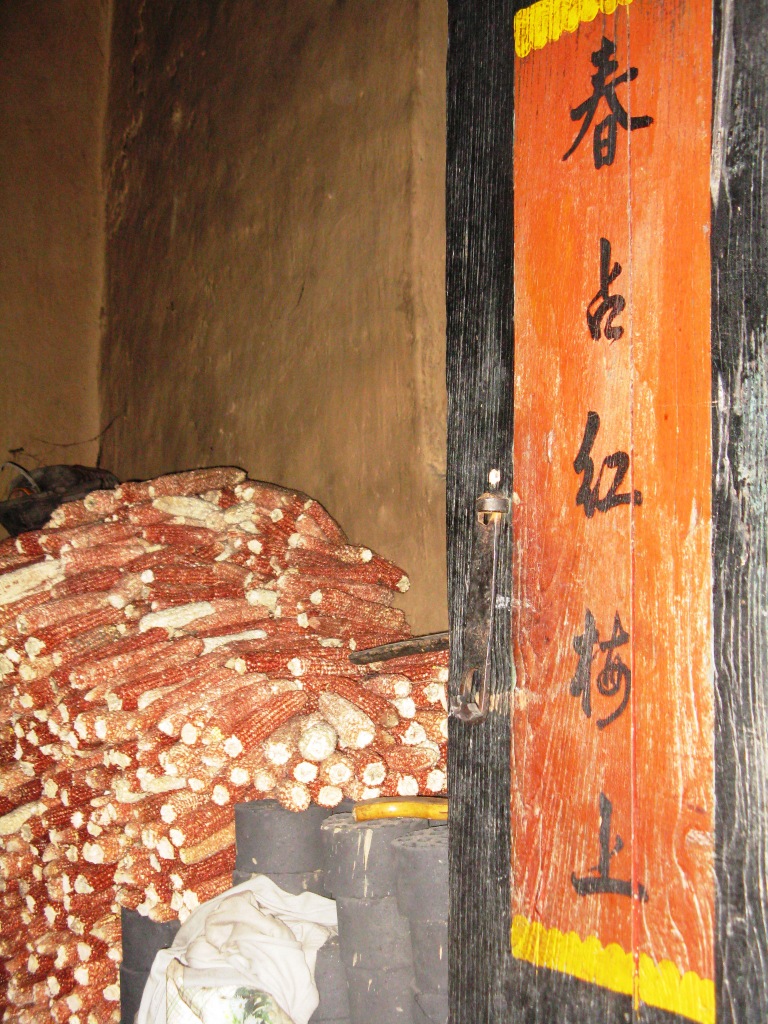
Corn cobs as fuel and the black/grey mass between the corn cobs and the red on the door are briquettes for fuel too. A stove is out of the picture to the right.
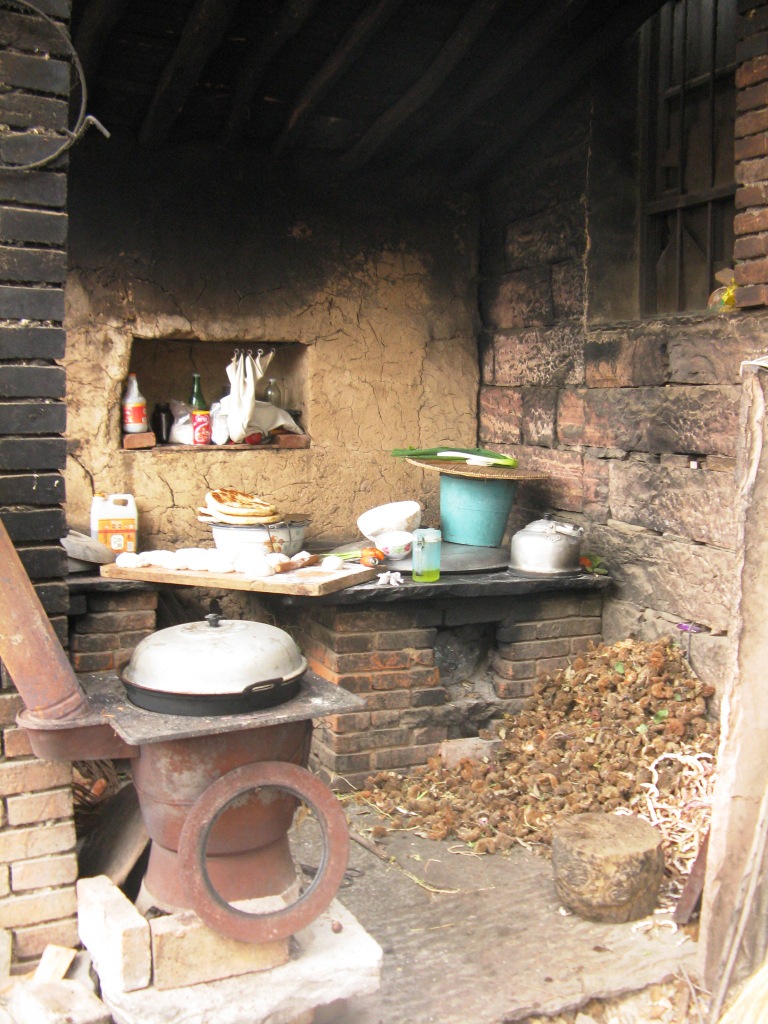
An outside kitchen containing 3 stoves one of which is out of view. The brown pile alongside the wall are chestnut burrs, the outer layer, and is used as fuel. The front stove was soon used to cook large thick flat buns on a hot plate with oil. We had some thrust on us and they were delicious unlike the steamed bread, mantou, we had for lunch which I’d once had from the canteen and is just plain boring. Don’t think I finished either one.
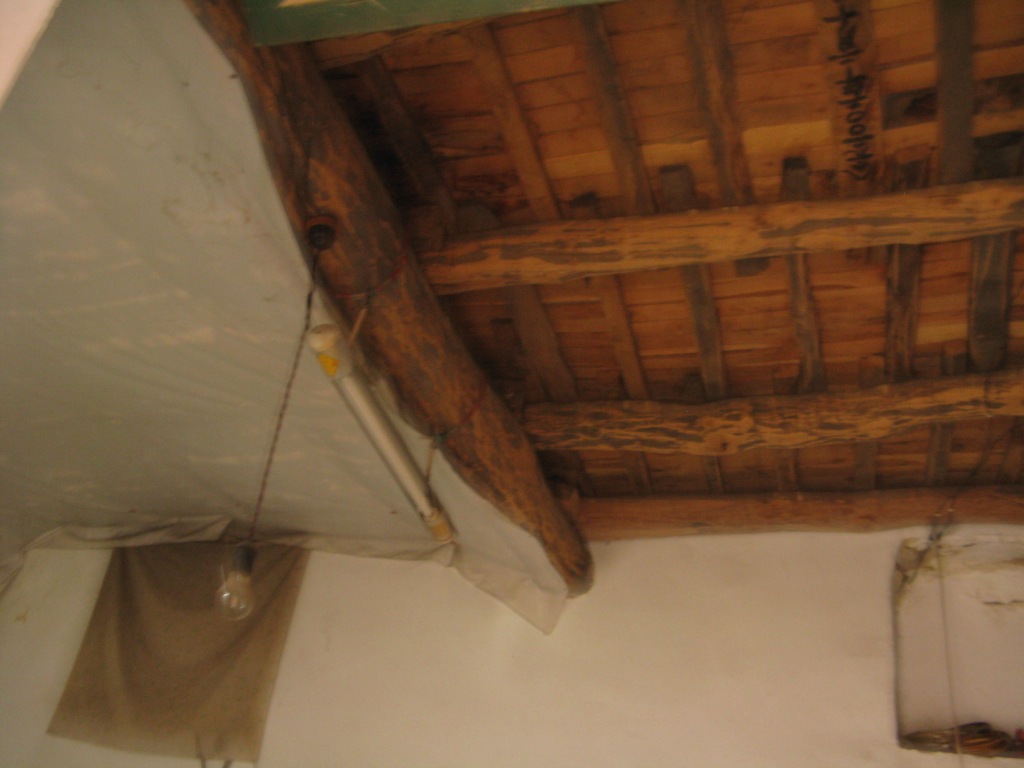
We ate lunch under this ceiling looked on by Chairman Mao who gazed on us from on an enormous poster. We were served a bowl of vegetables and clear noodles rather lacking in flavour. A plate of tofu and vegetables was more tasty.
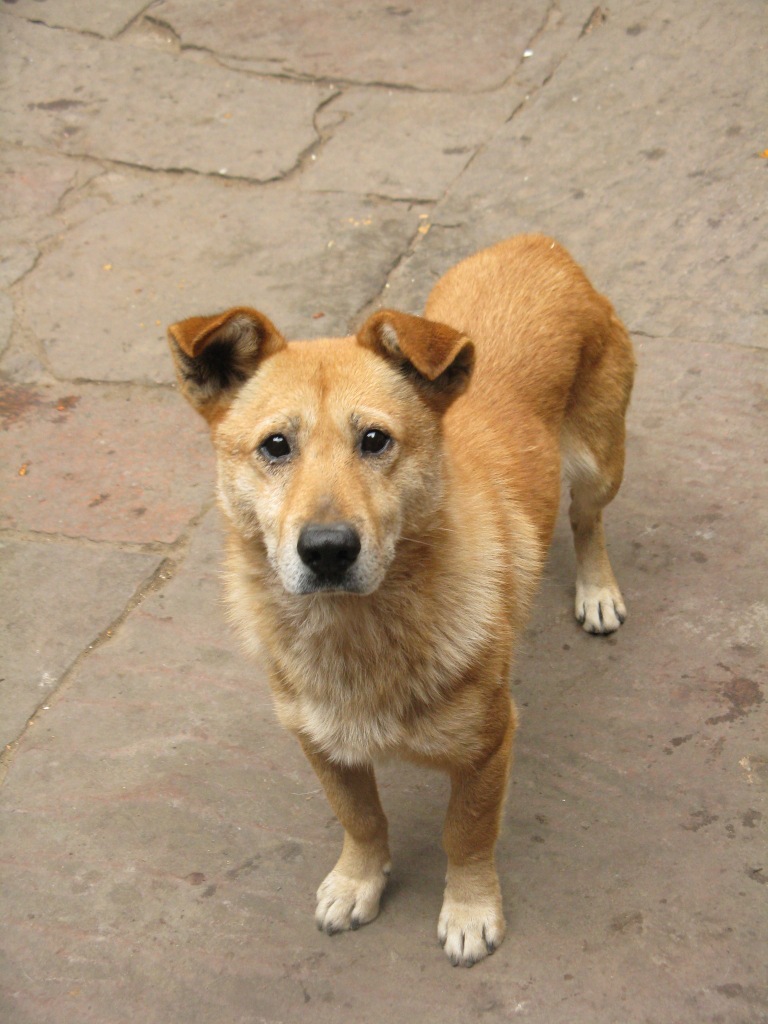
One of the family wanted to enter but unlike the kitten who got thrown out by the owner, he knew his place and just looked wistful.
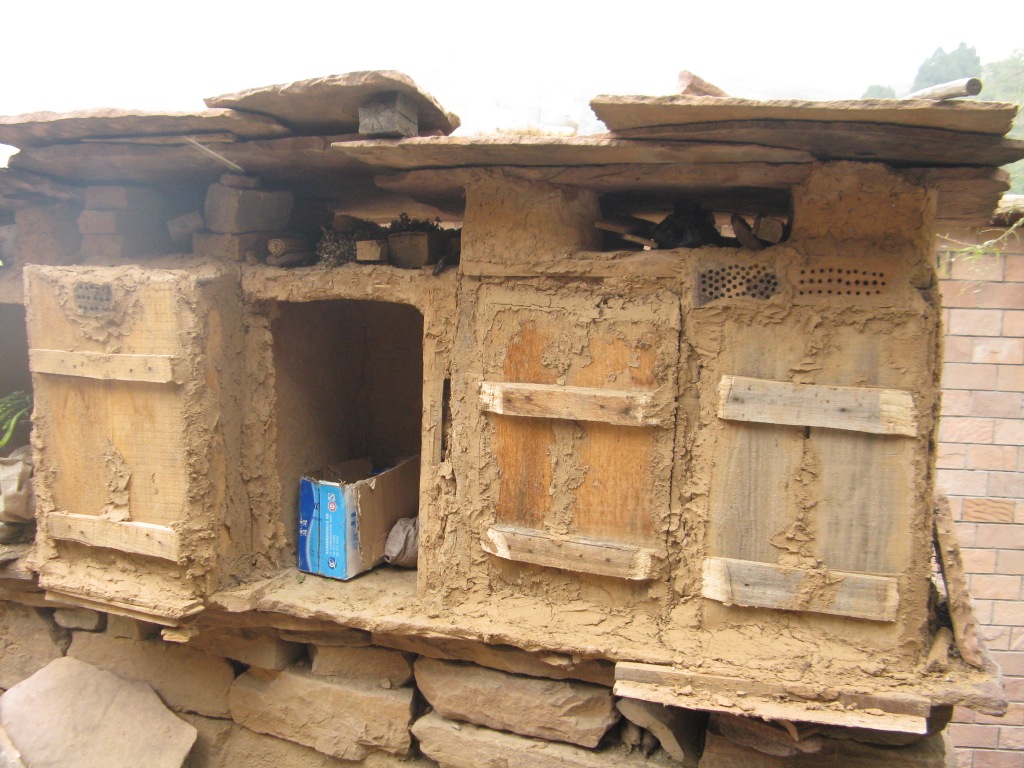
Bee hives in a courtyard.
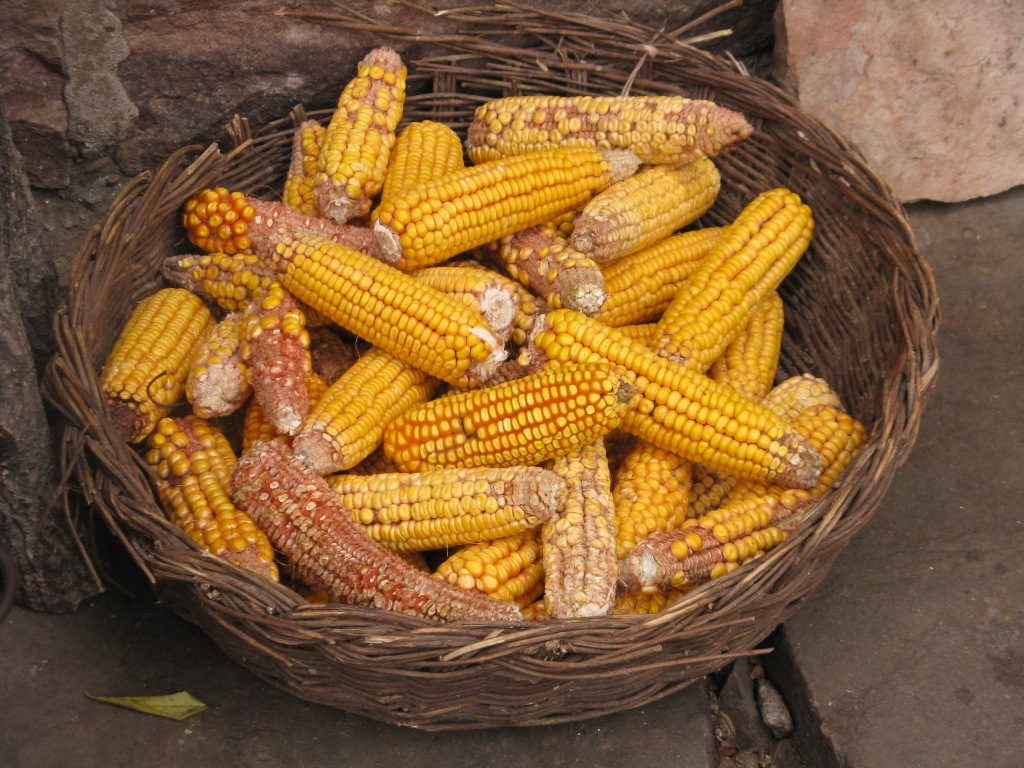
Basket of corn.
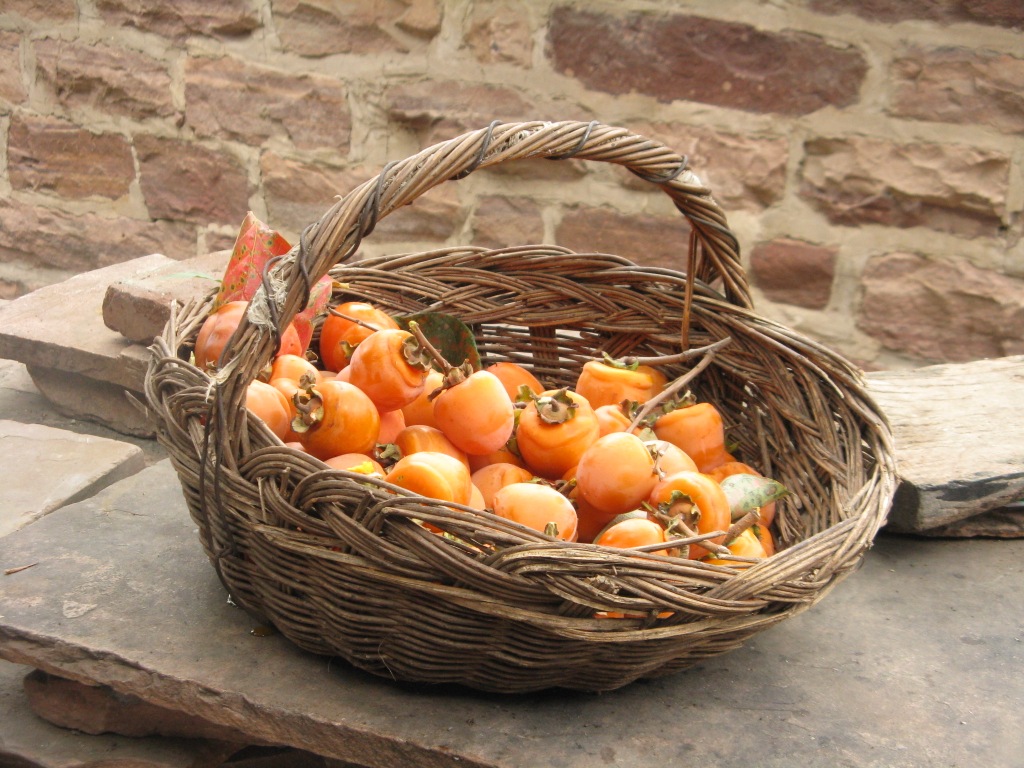
Basket of persimmons. We bought some and discovered they were very ripe. The persimmon trees were enormous. Many were still sporting orange balls which I suspect will never be picked. There is a long handled contraption available to snare persimmons yet the tree size would require some tree climbing agility too to reach ones higher up. I saw few younger people and I don’t know if they were occupied elsewhere, at boarding school or nonexistent.
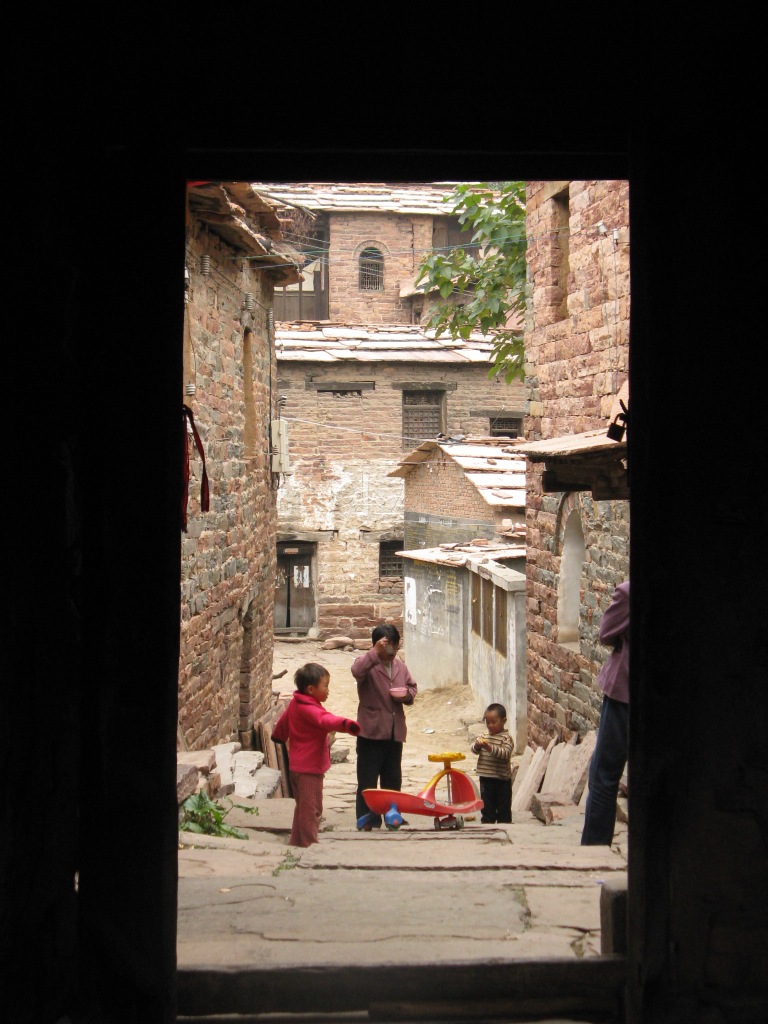
Scene through a doorway.
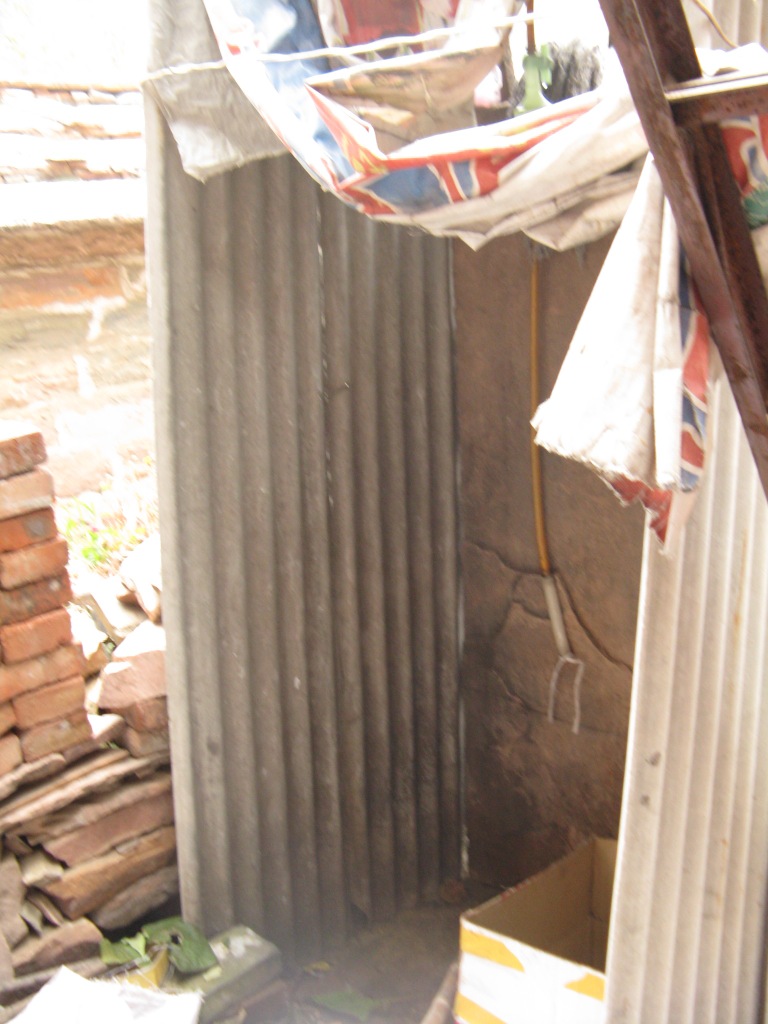
An outside shower consisting of 2 sheets of corrugated sheeting with a back of solid stone and a plastic shower attachment. No evidence of hot water.
Bringing in the corn and having a chat.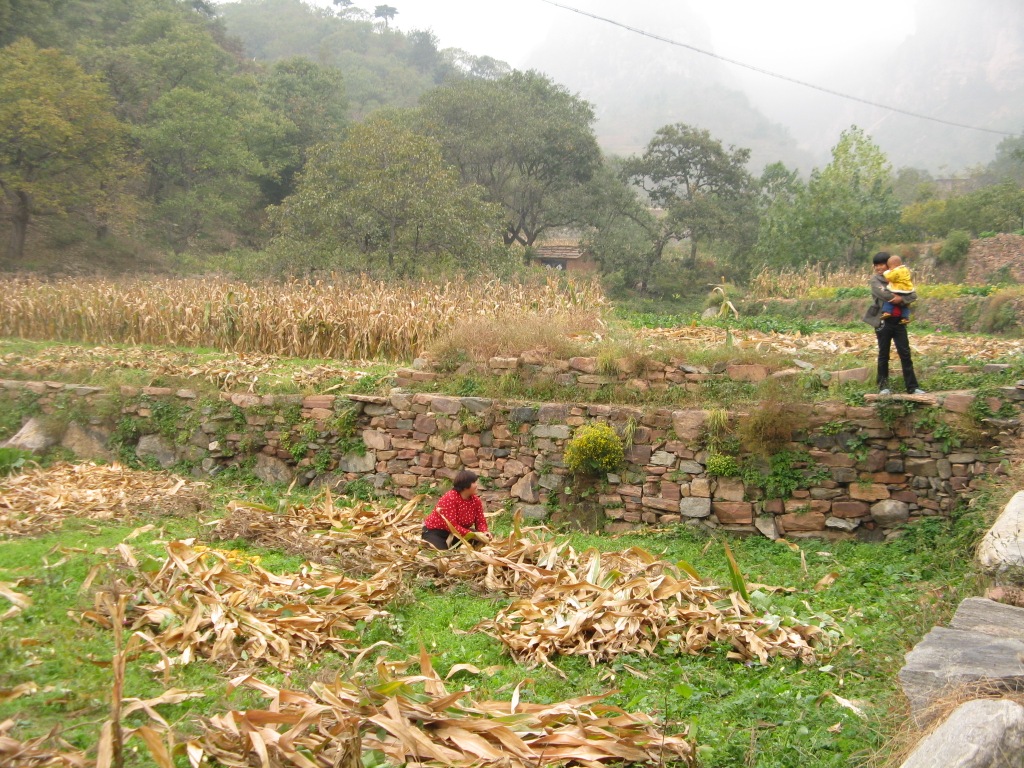
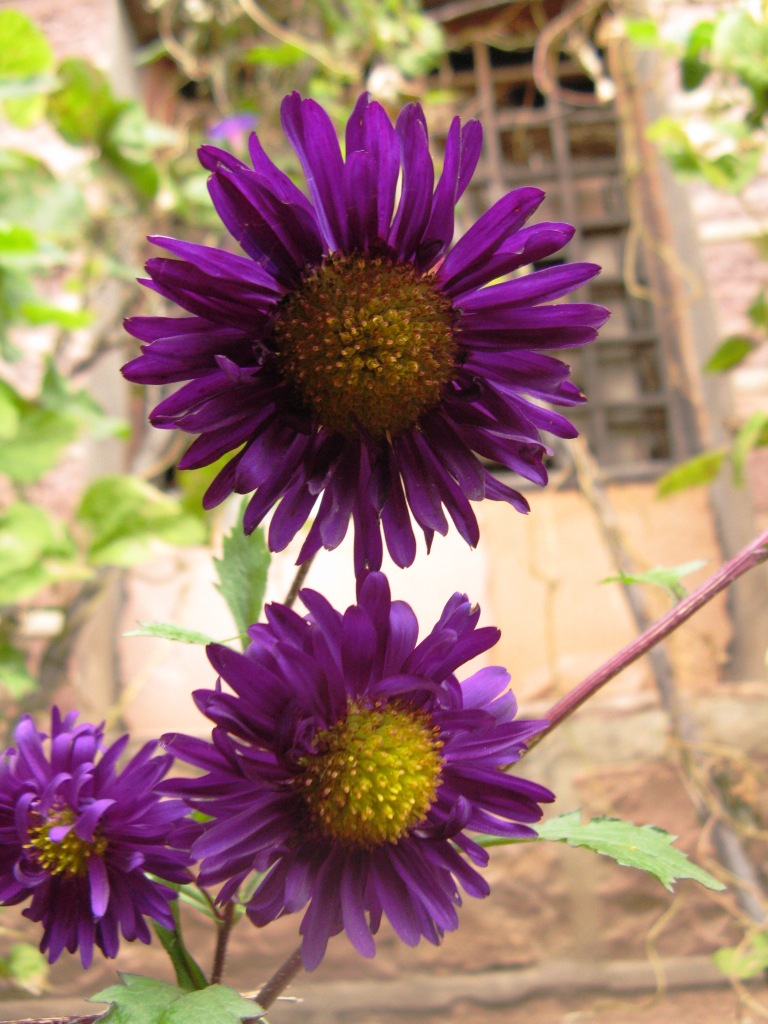
Purple flowers.
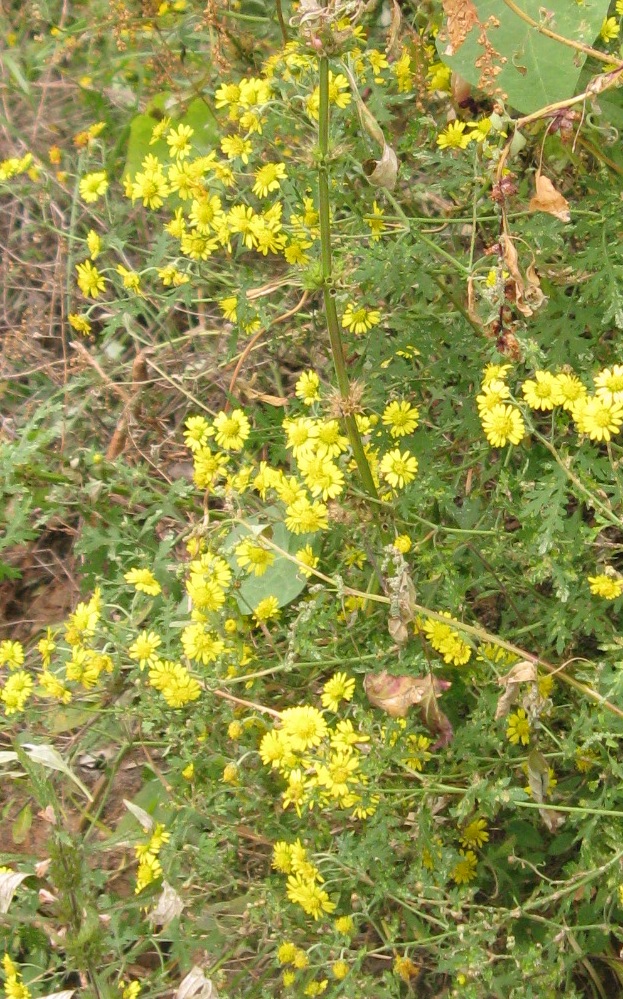
These yellow flowers were very common on the hillsides.