• Home
  • About
  • Work
  • Contact Me
  • Blog Visitors

Kerry's Blog

Feed
  • Hello and Welcome

    Hello and thanks for visiting my blog. Please have a look around, and if you would like to leave a comment on any posts please click HERE to register.
  • Subscribe


  • Recent Comments

    • sandra mosley on The Update
    • sandra mosley on The Carpentry and the Return
    • sandra mosley on Two onto One does Go
    • sandra mosley on Spring has Sprung
    • grazer on A singing waiter and a travelling cat
  • Pages

    • About
    • Work
    • Contact Me
    • Blog Visitors
  • Categories

    • Abbot's Leigh
    • Animals
    • Australia
    • Beijing
    • Brecon
    • Bristol
    • bunbeg
    • Castle Carey
    • Chaddesden and Breadsall
    • China
    • Churches
    • Clifton Bridge
    • Copenhagen
    • Culross
    • Dali
    • Derby
    • Easton in Gordano
    • Edinburgh
    • Elmore
    • Family History
    • Gloucester
    • Home
    • Inverkeithing
    • Jinghong
    • Kent
    • Kunming
    • Lake Lugu
    • Ledbury and Colwall
    • Lijiang
    • London
    • Lydney Harbour
    • Melbourne
    • Other
    • Portbury
    • Qingdao
    • Tadcaster and Newton Kyme
    • UK
    • Uncategorized
    • Wells
    • Work
    • Xingtai
    • York
    • Yunnan
  • Favourite Websites

    • David's Blog
    • Webmail
  • Site

    • Register
    • Log in
    • Entries feed
    • Comments feed
    • WordPress.org
  • Tags

    agriculture animals architecture art and craft Australia baby carriers Behai Park Beijing bus China college computer culture Dali Dashalan dogs Education ethnic minorities Fashion Parade Food games guanxi Health holidays hostels Kumning lake Lake Lugo Lijiang maps markets matriarchial society medicine military training park performance plants Qianmen religion shops taxis teaching temple transportation Xingtai
  • Archives

    • April 2018
    • December 2015
    • November 2015
    • October 2015
    • September 2015
    • November 2014
    • October 2014
    • September 2014
    • August 2014
    • July 2014
    • June 2011
    • January 2011
    • December 2010
    • November 2010
    • October 2010
    • September 2010
    • August 2010
    • July 2010
    • June 2010
  • Transporting Babies and Small Children in Yunnan

    Aug 4th 2010

    By: Kerry

    No comments

    Transporting Babies and Small Children in Yunnan

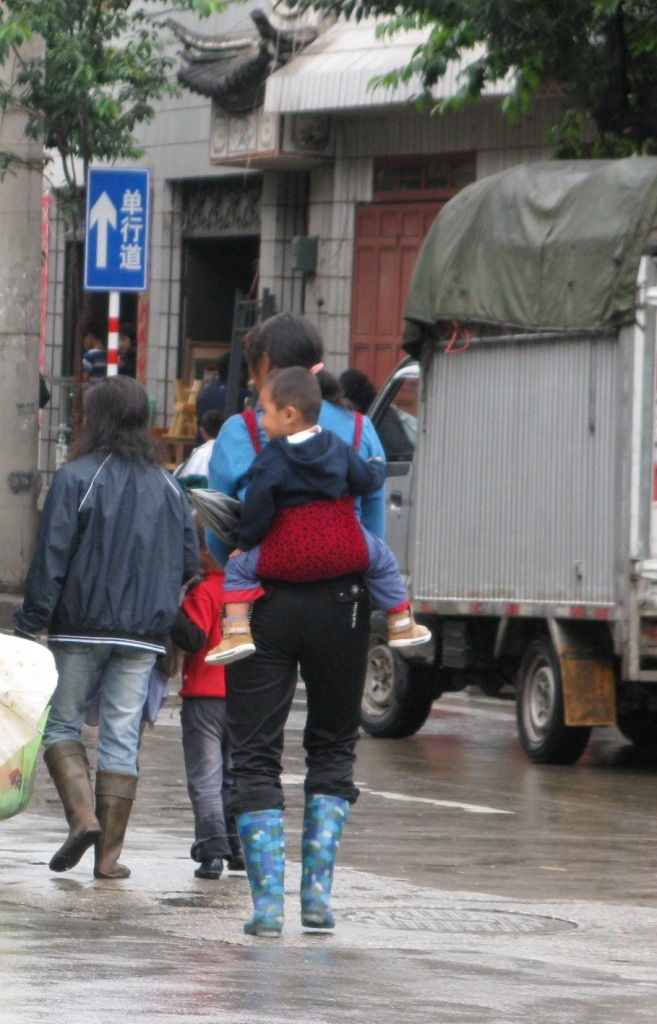
    This is done in many ways. 

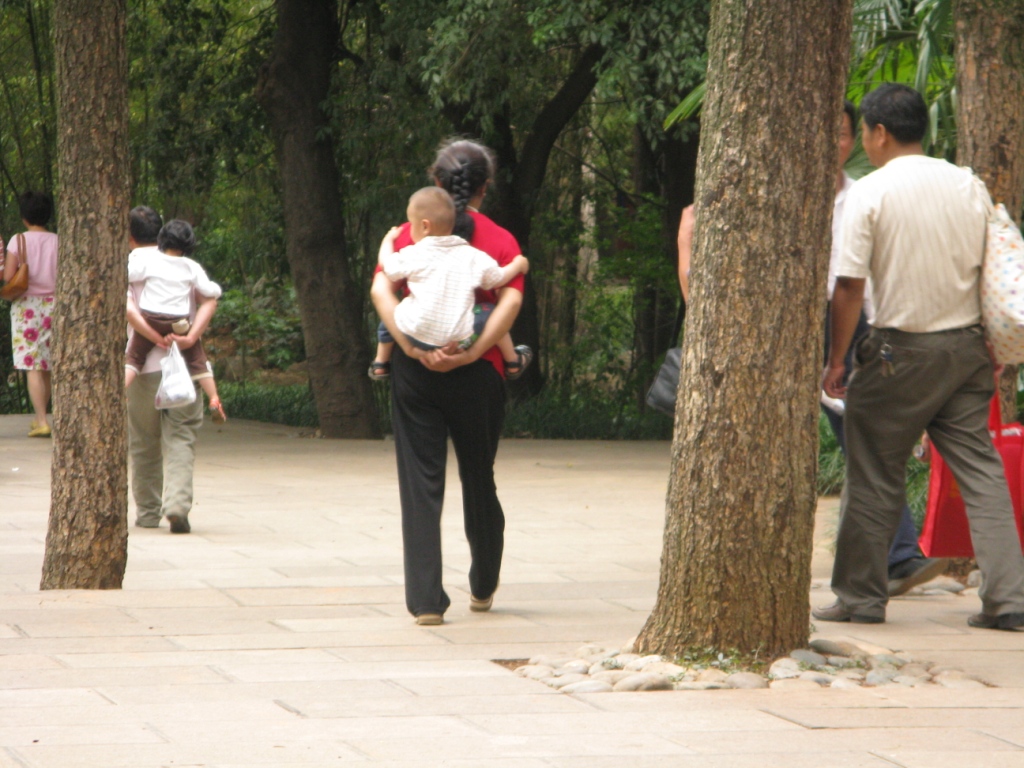
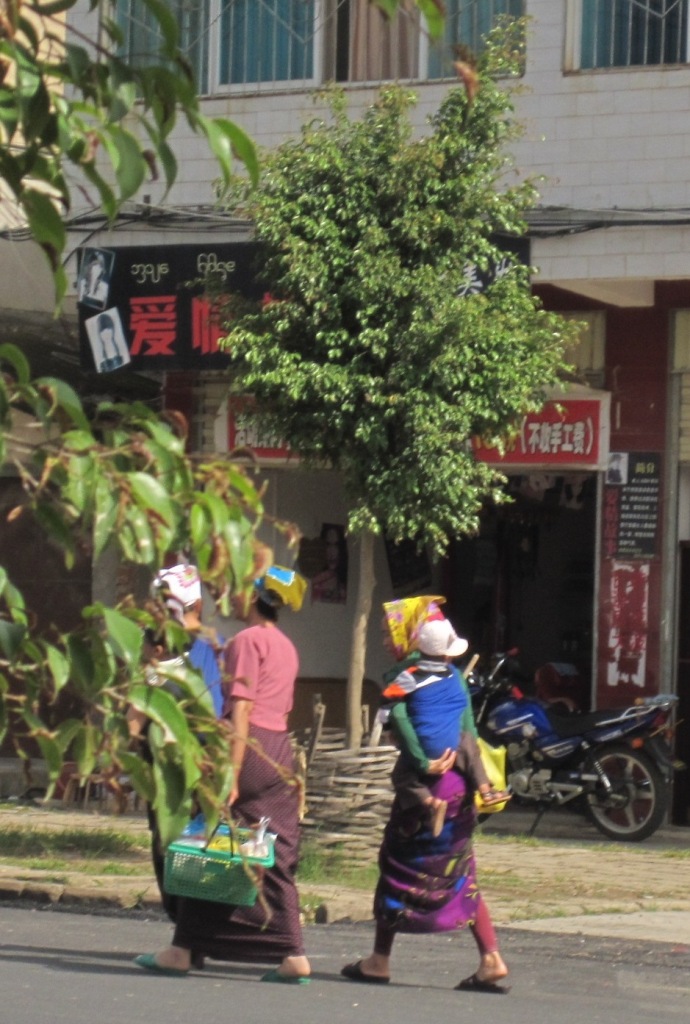
    Two for one, these two were in Kunming.  One is carrying a baby in her arms and the other on her back which is very common in Yunnan.  The usual difference is the embroidery or embroidery style on the baby carrier.

    The newspaper is still put up for general reading in Kunming and Jinghong.  Don’t remember seeing it elsewhere except on old TV  programs of the Mao years.

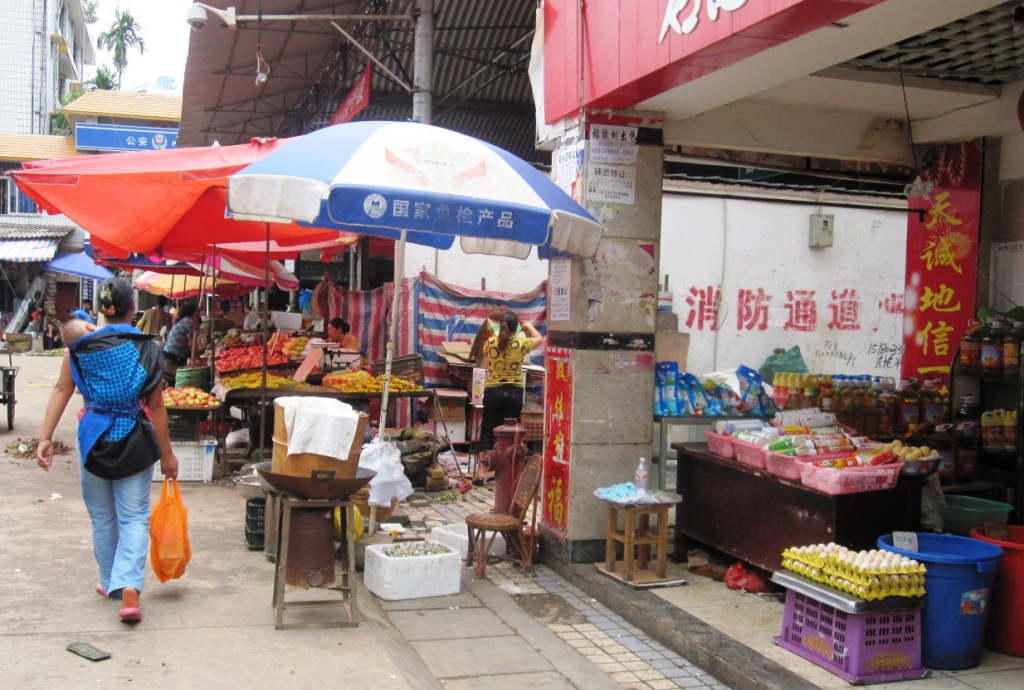
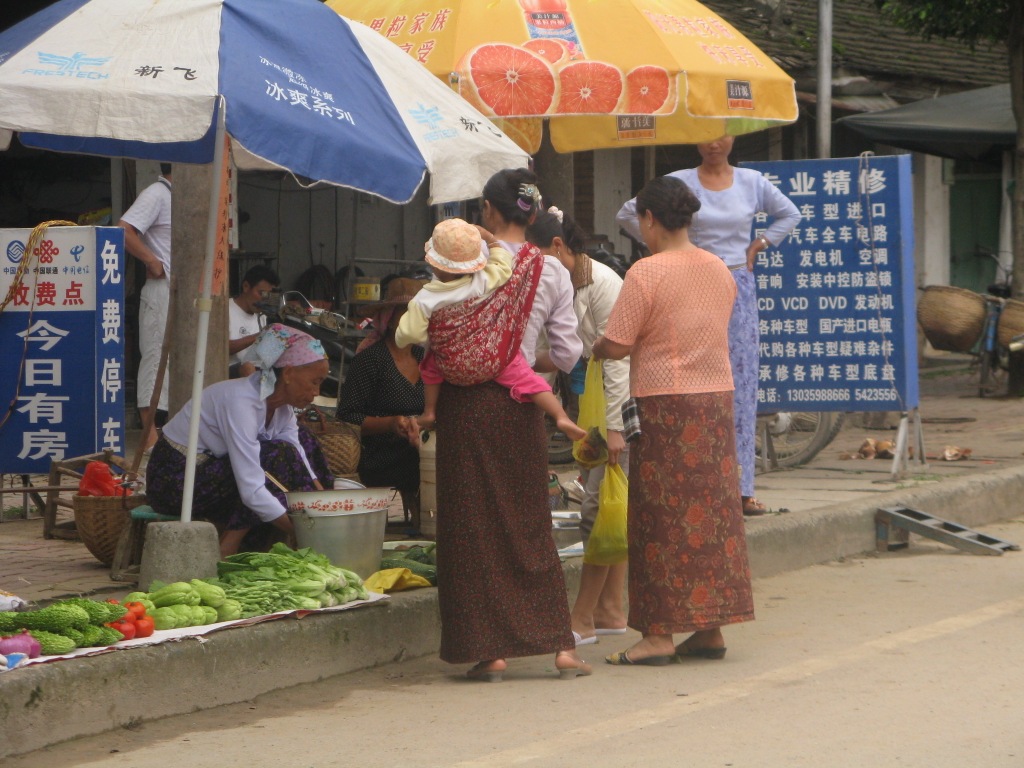
    This womam is doing her market shopping and I caught up with her later in the fjsh section.

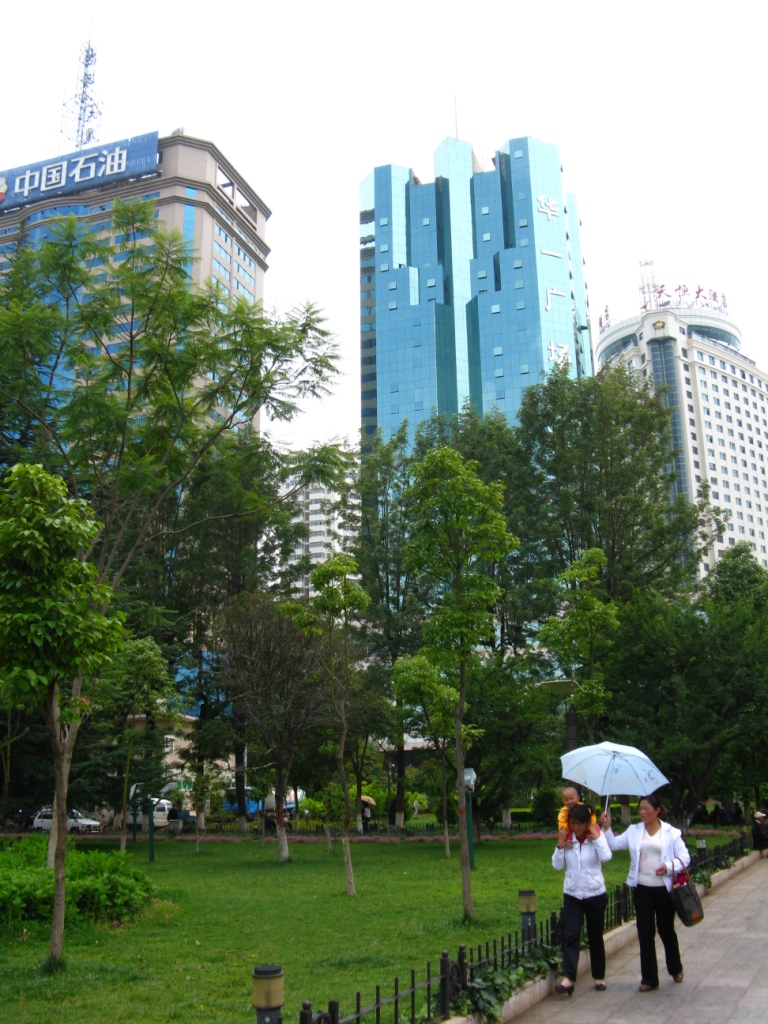
    Kid on the shoulders

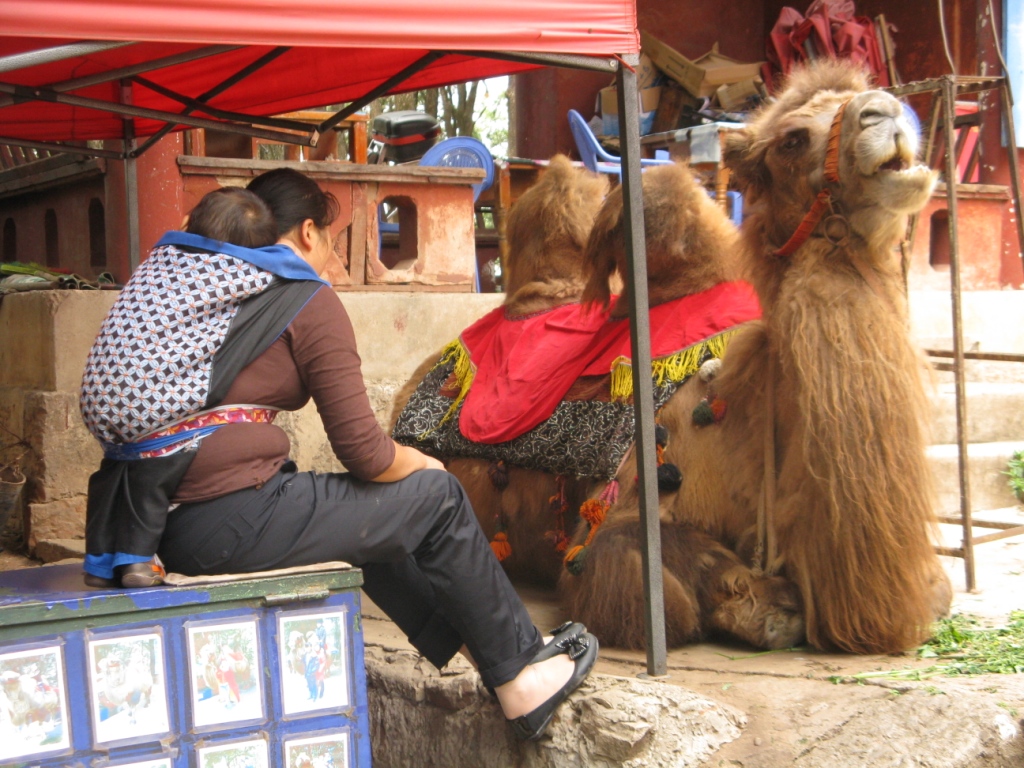
    Minding baby while minding the camel available for tourists to sit on at a temple complex in Kunming.

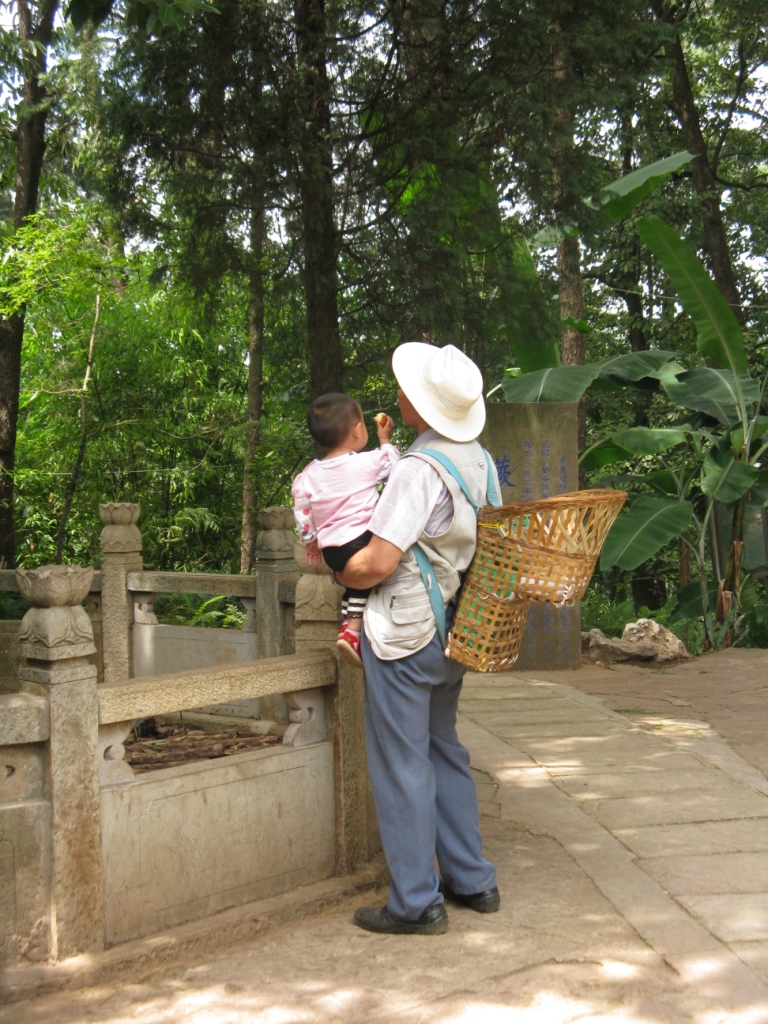
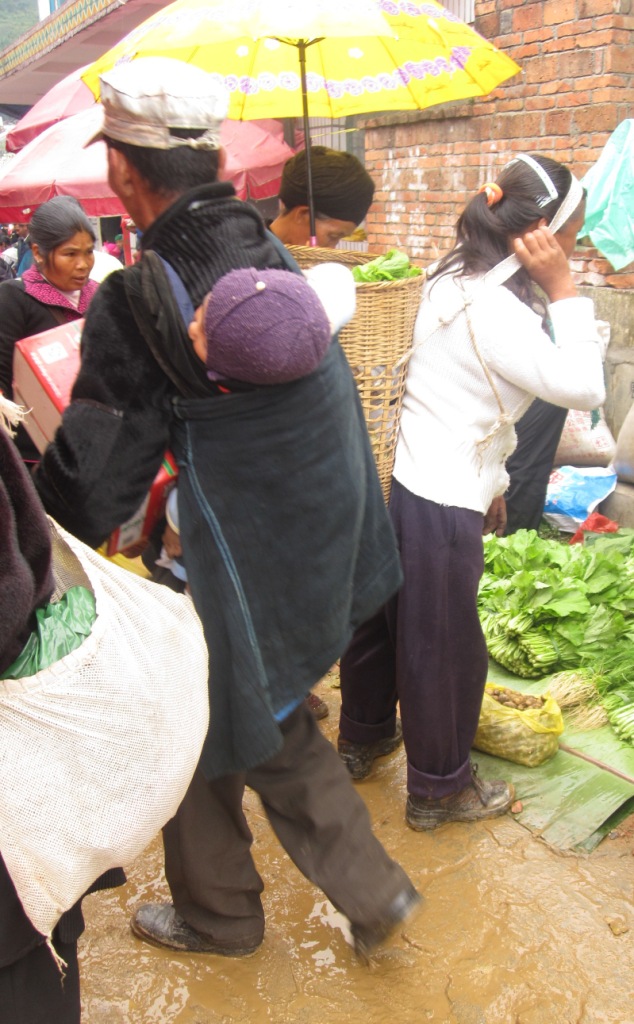
    Grandfather holding kid but with the bamboo kid carrier on his back.  These are sometimes attached to bikes too.  Kunming

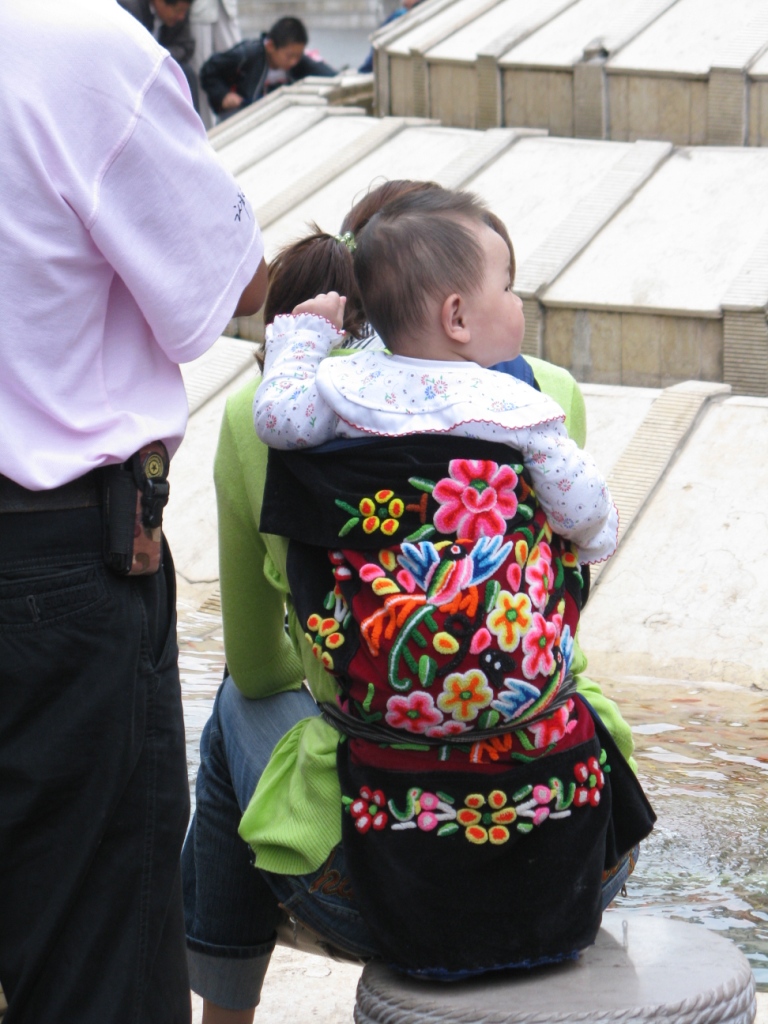
    Closeup of the embroidery on a baby carrier as they watched goldfish fishing in a pond in central Kunming.

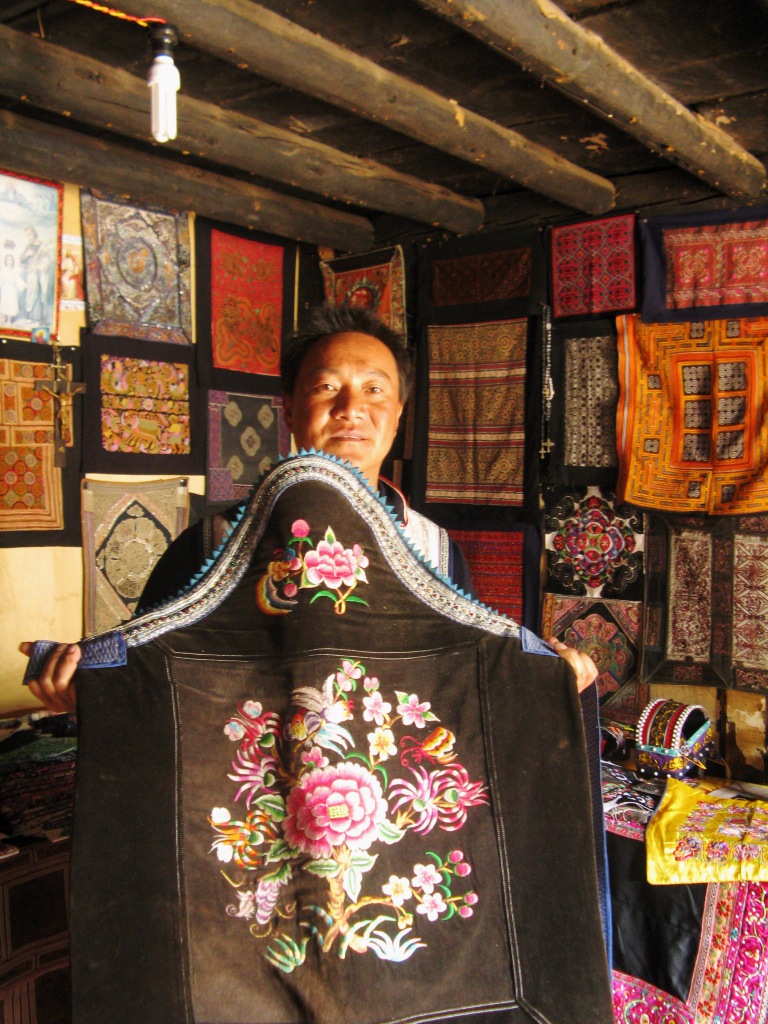
    An old baby carrier from a town outside Kunming.

    Another popular way, piggyback.

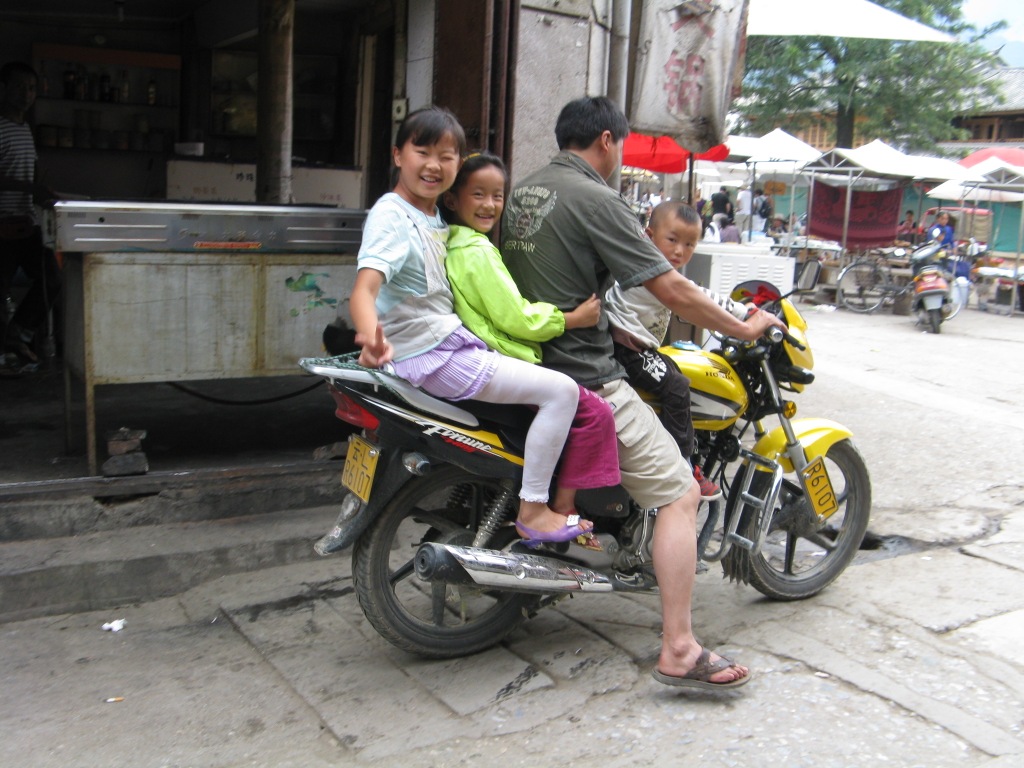
    Four on a bike in Xihou, a village outside Dali. This is not uncommon.  I’ve even seen it on much smaller bikes.

    Much simpler style of baby carrier.

    A man doing baby carrying duties.  I did see a couple.  I saw a statement in Mosuo area stating that baby minding was a man’s job. This photo came from southern Yunnan wheras the Mosuo are predominatly in northern Yunnan.

    Baby carried in a length of material.   Seen in a village in southern Yunnan.

    Another kid carried in a length of material in southern Yunnan, near Jinghong.

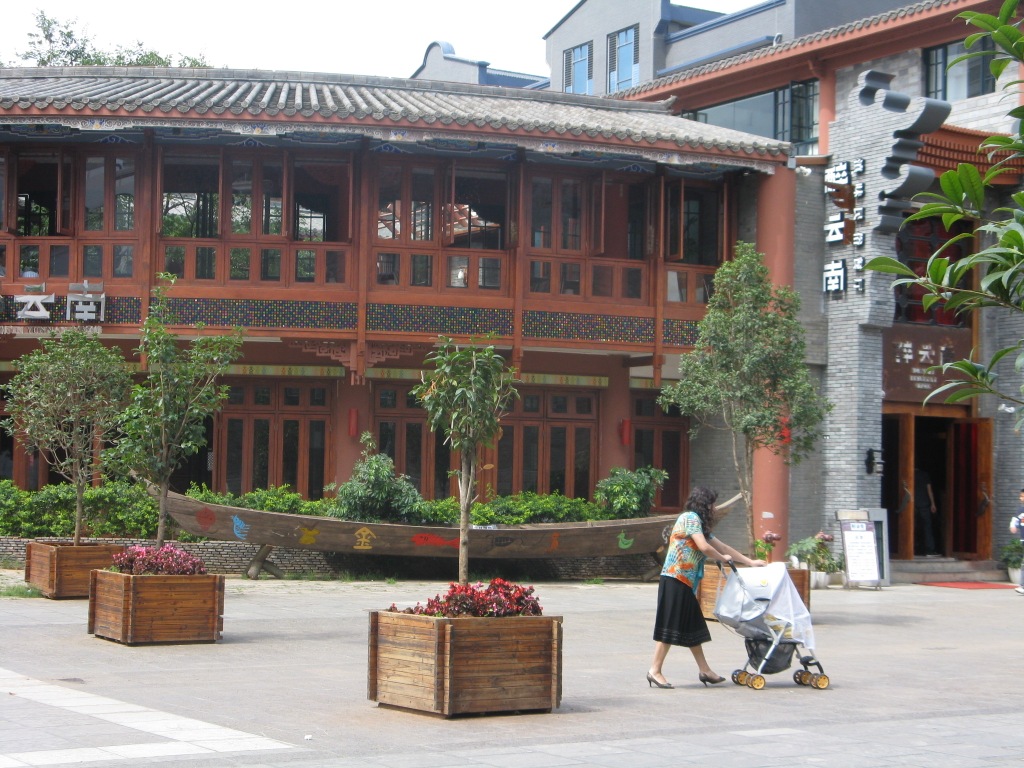
    Most rare of all, a pram seen in Kunming.  I only saw 2 prams during 6 weeks.  They are not common anywhere I have travelled and I don;t think I have ever sen any in my city.

    China, Uncategorized

    art and craft, baby carriers, China, culture, ethnic minorities, Kumning, transportation

  • The Mouog that became a Rabbog

    Jul 27th 2010

    By: Kerry

    No comments

    The Mouog that became a Rabbog

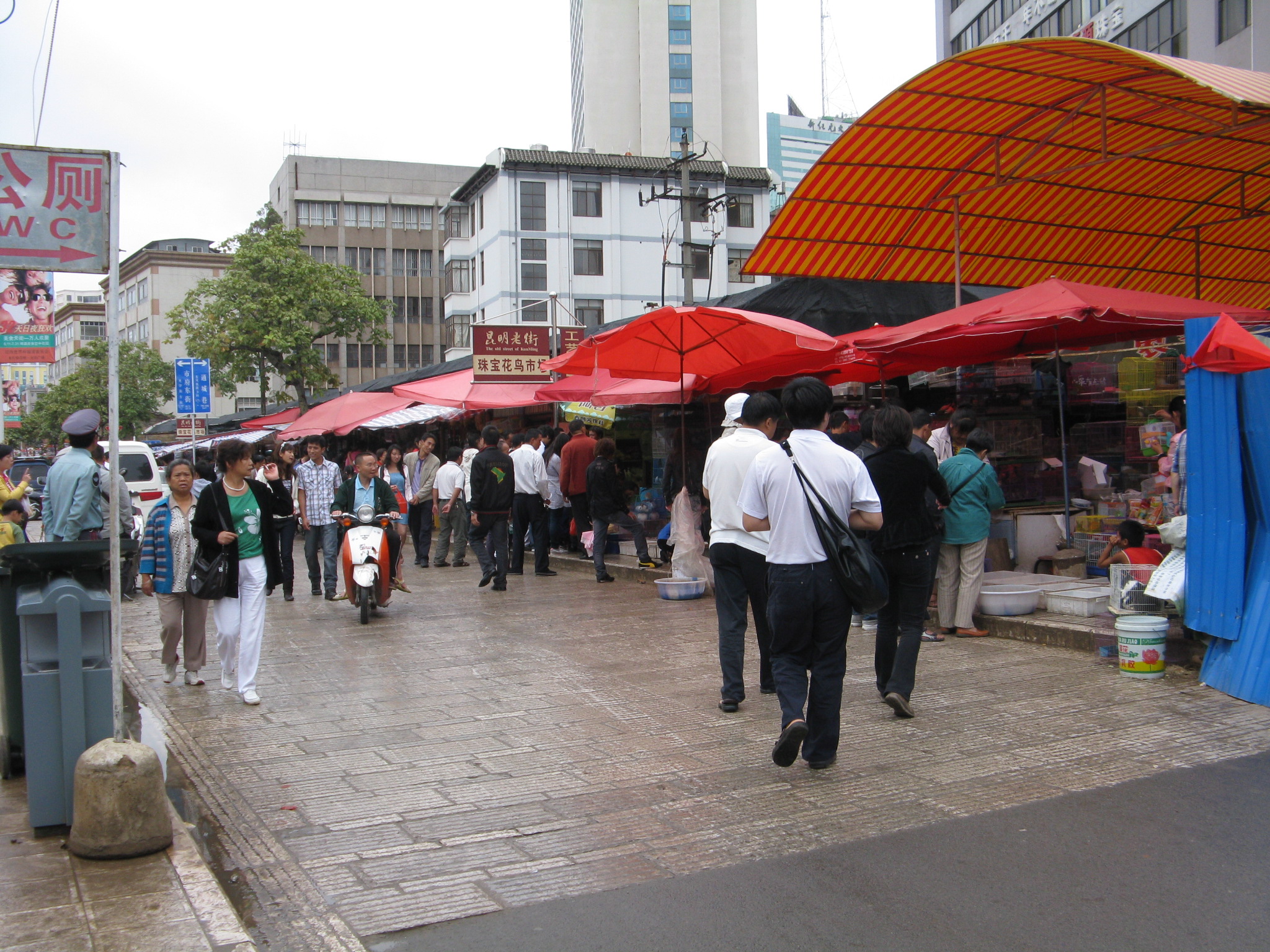
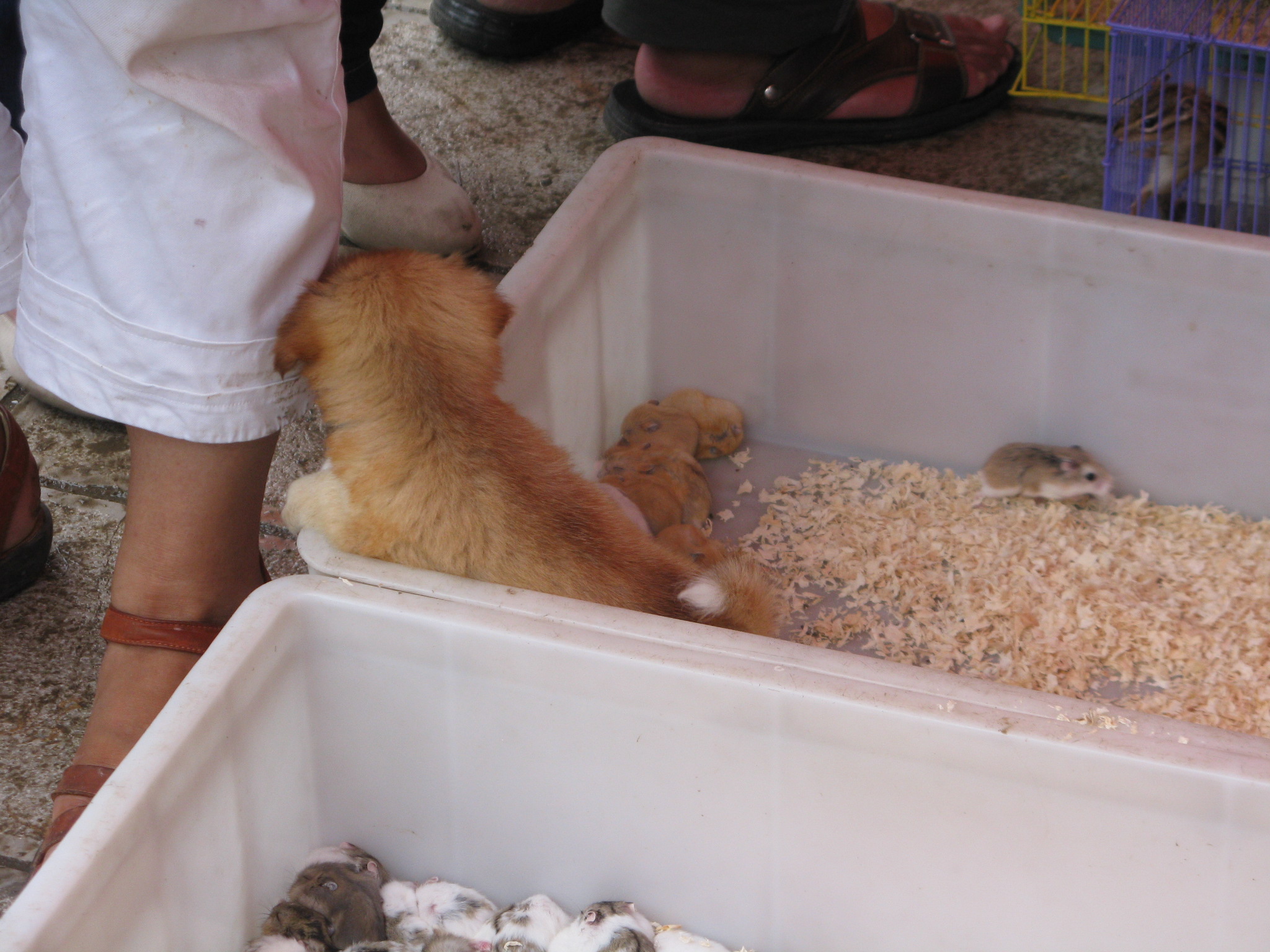
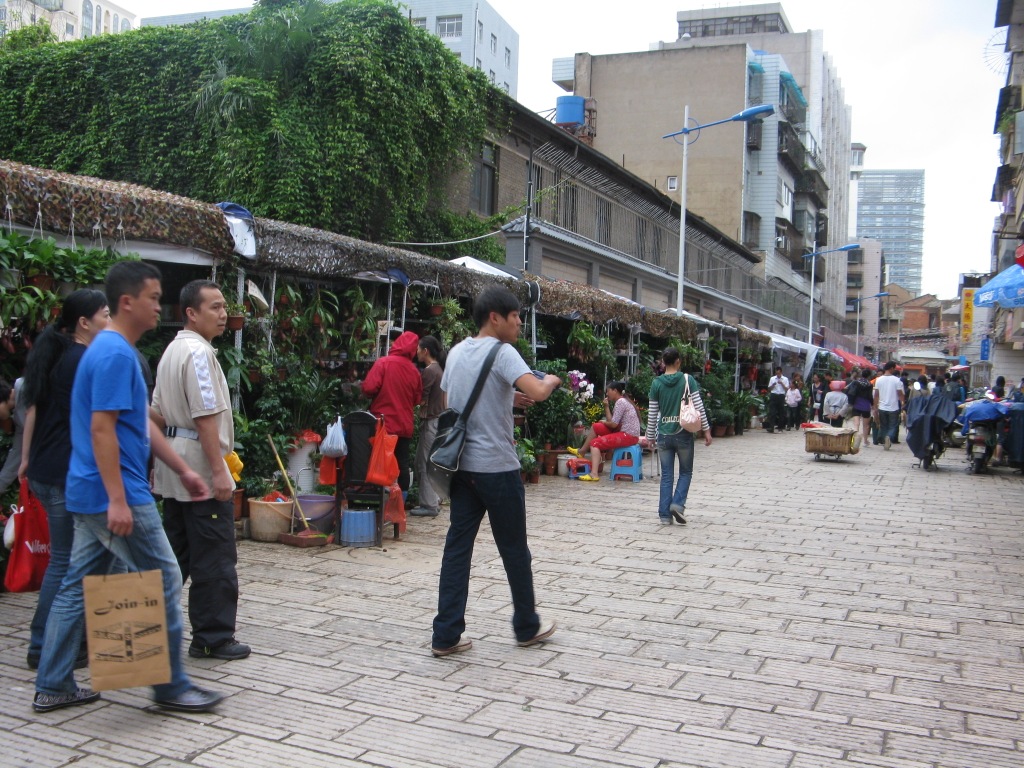
    This was my introduction to the Bird and Flower Market

    I visited the Bird and Flower Market yesterday. Bird Market is a misnomer as it sells much more than birds.  It was extremely congested with both stock and visitors and seeing the critters and getting decent photos was just about impossible. 

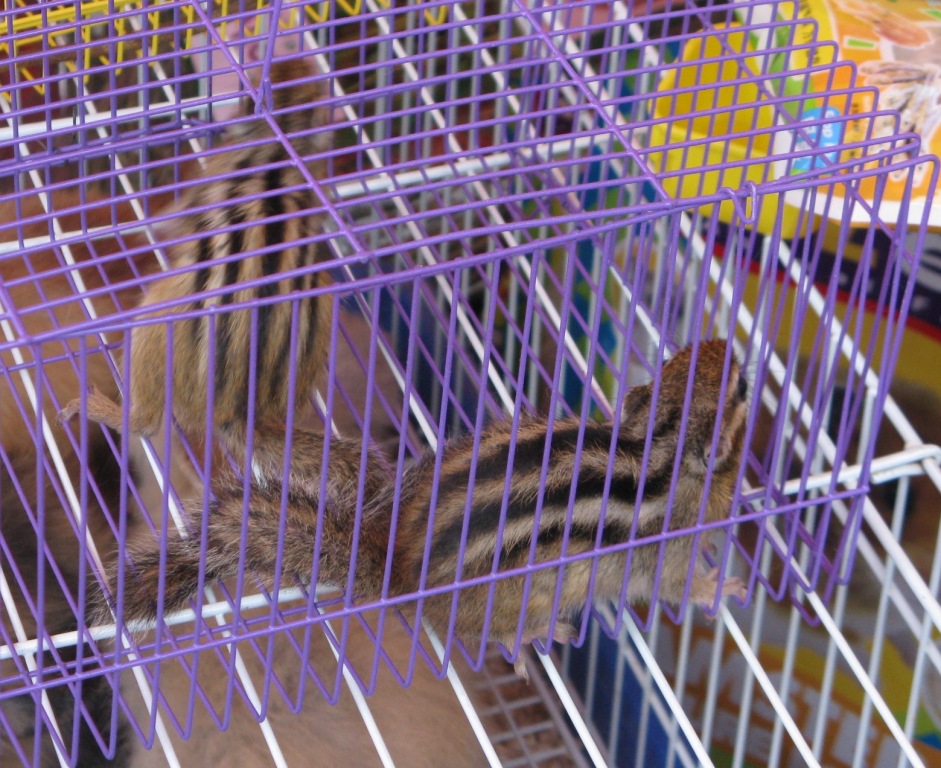
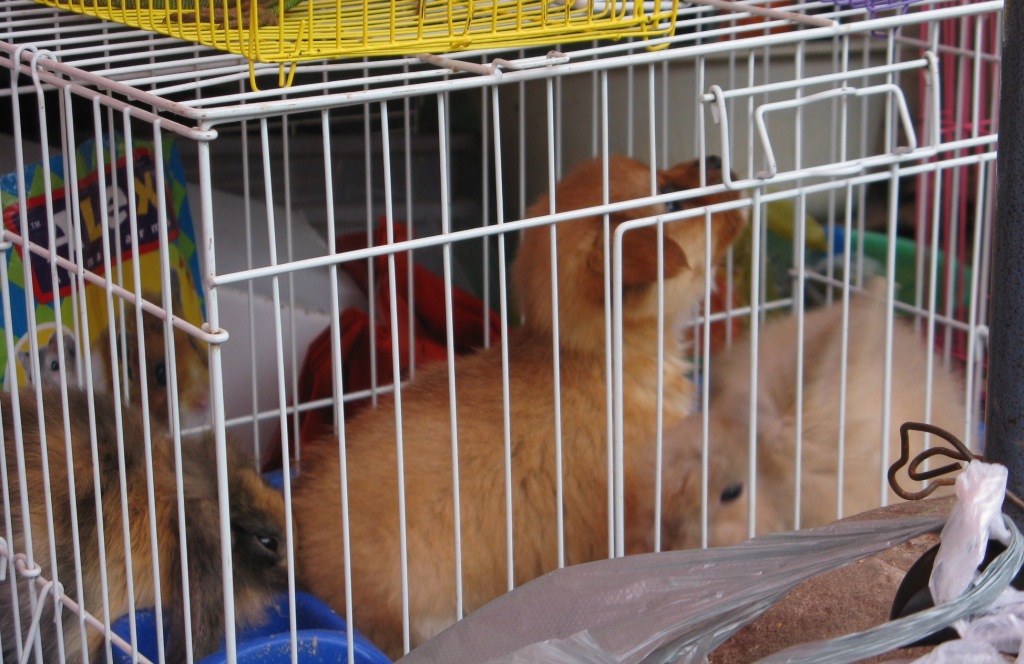
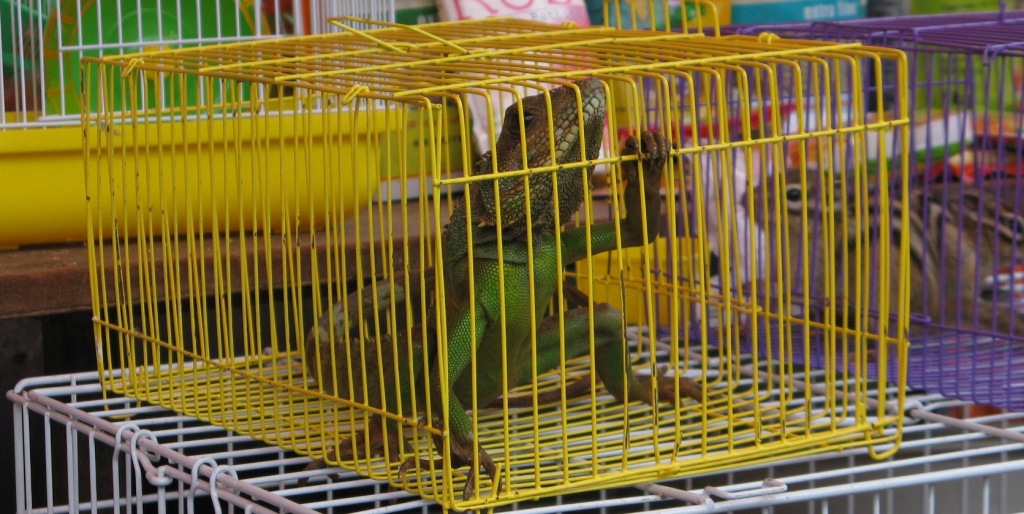
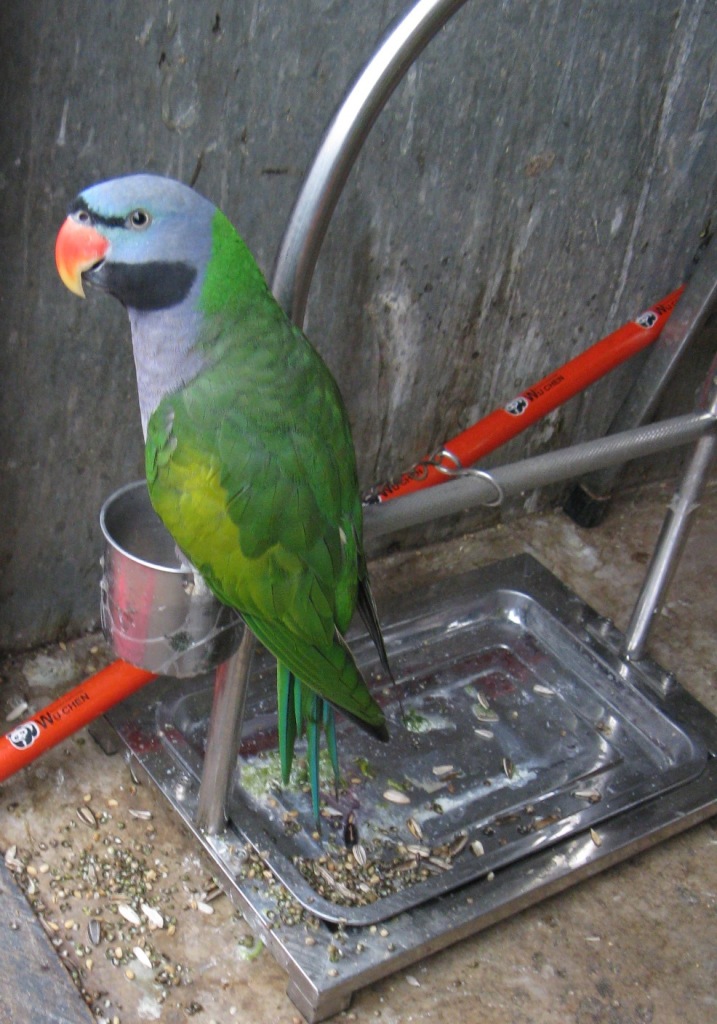
    It had furry critters unseen in Australia plus lots of strange birds.  It even had a furry critter which changed its identity while I watched.  Those with limited space were not forgotten with a range of odd critters available for sale.


    Here is theMouog with his mouse friends

    Some neighbours. There were some very dark coloured squirrels too

    Here he is with some rabbit friends. He was interested in them and they in him.

    This critter which looks like it belongs in a kids toy cupboard was their upstairs neighbour

    The rest of the birds were in small cages and impossible to photograph properly.   Apart from some hoopoes I think they were song birds

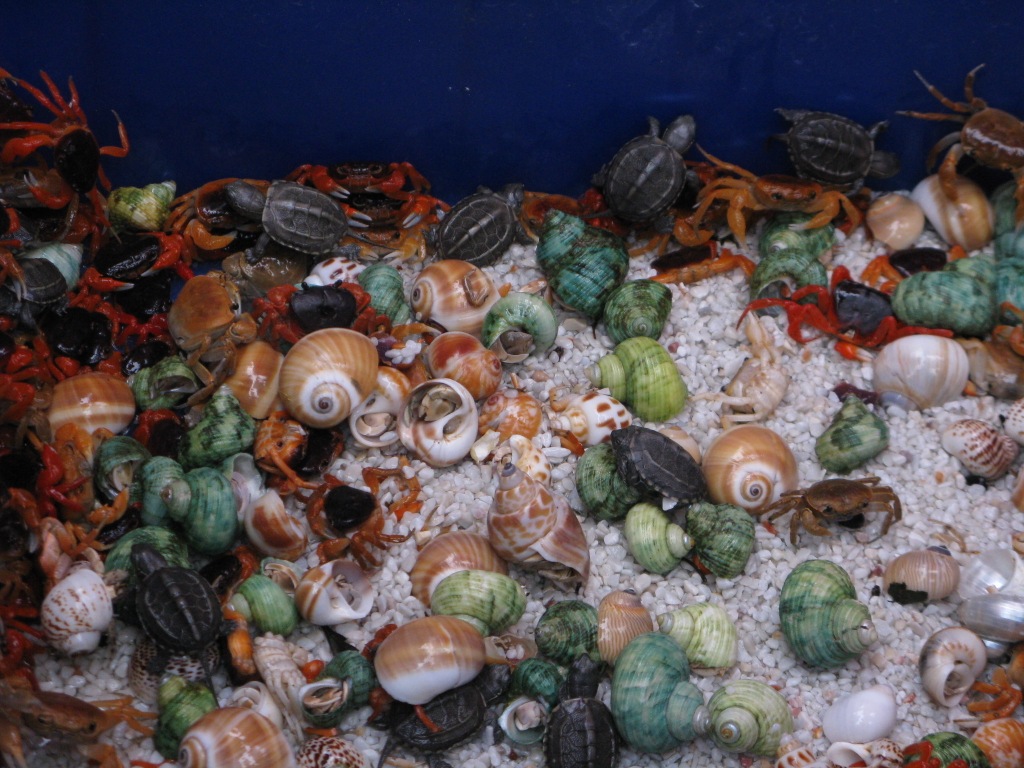
    Tortoises came in a variety of sizes with the really small ones sharing with crabs.

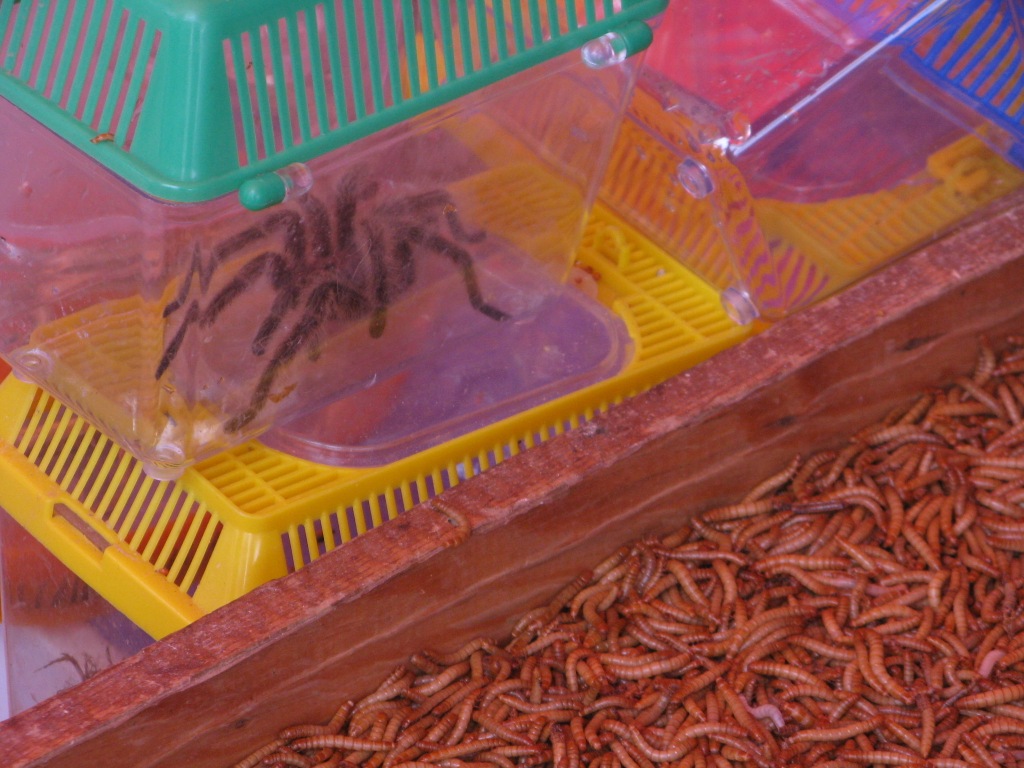
    This was the only spider I saw but its neighbours were very common as were some black beetles.

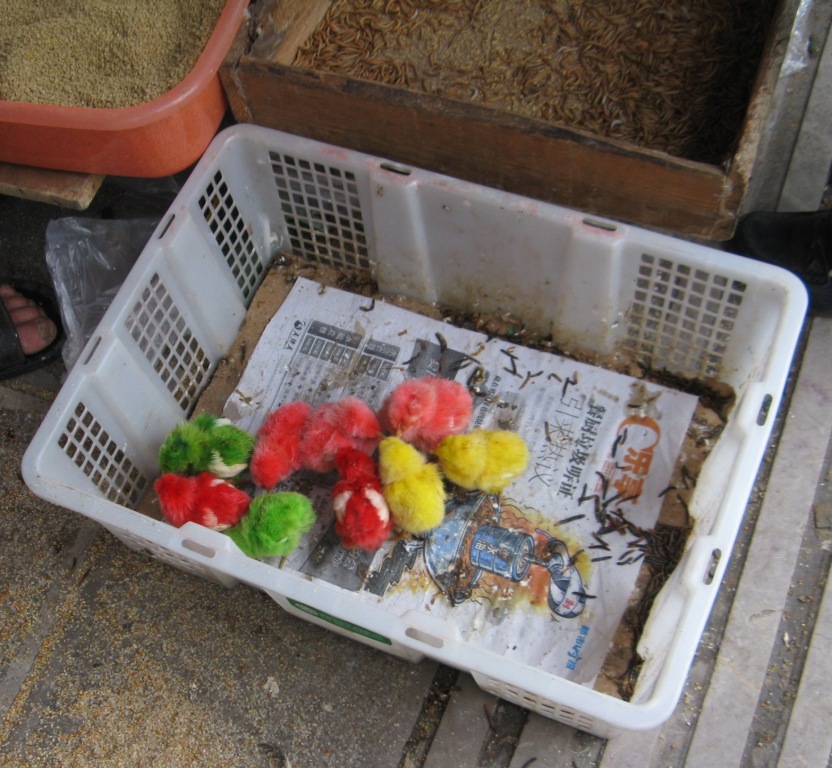
    Coloured chickens

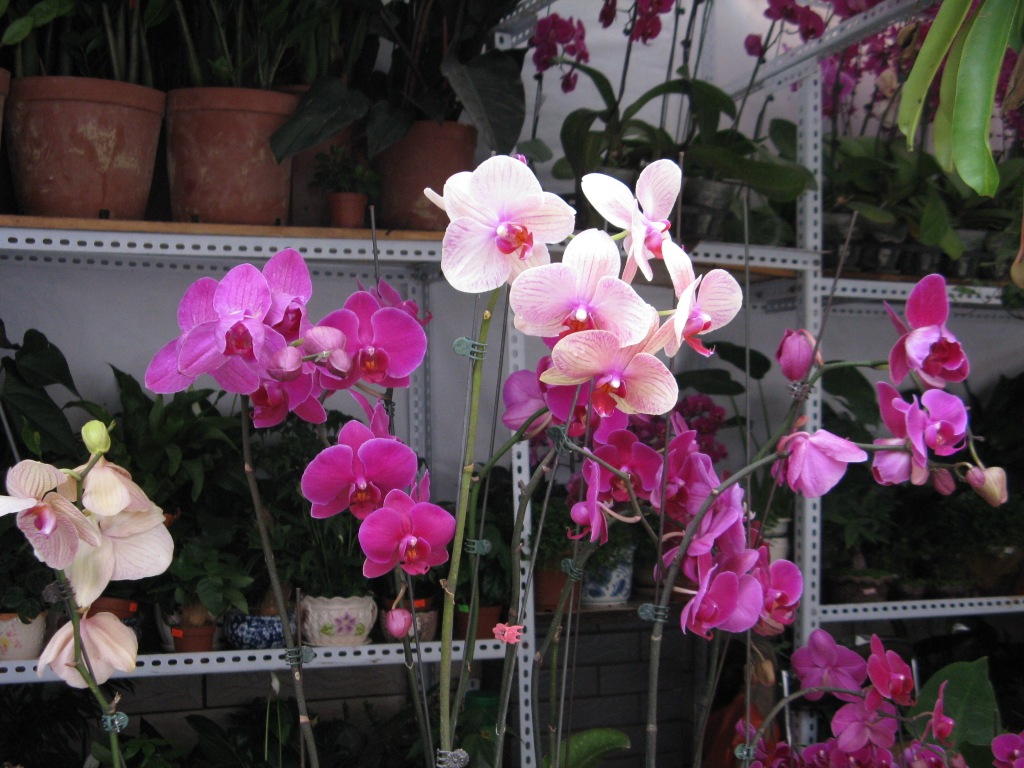
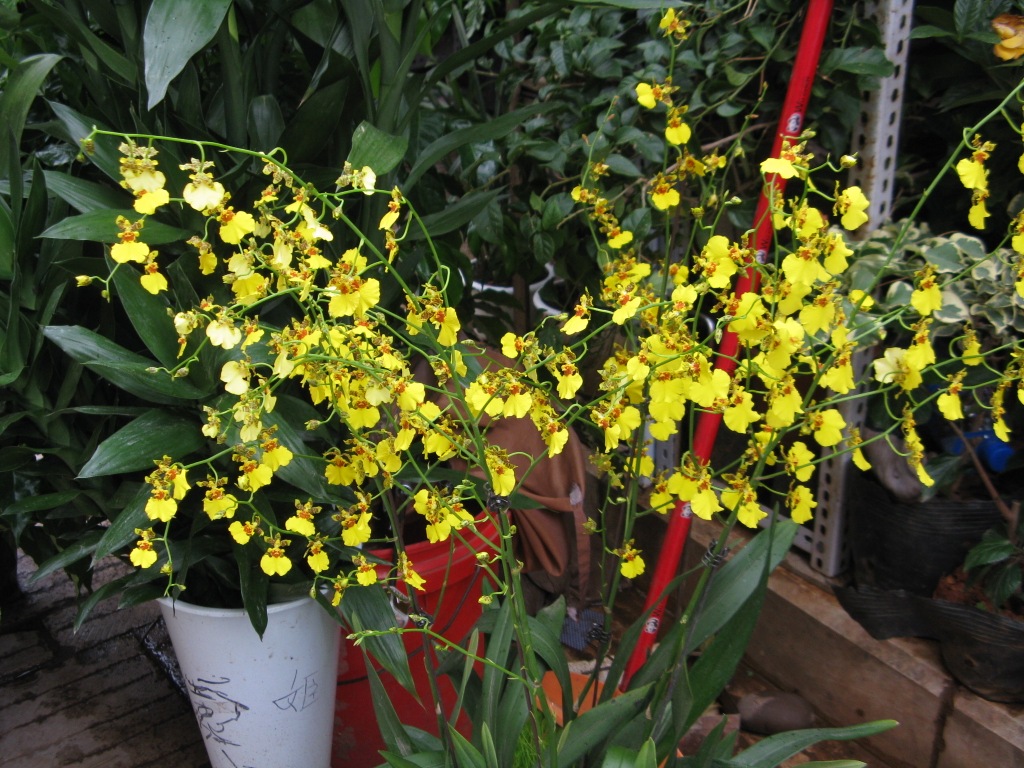
    The bulk of the flower section was not nearly as congested nor as well patronised and I didn’t see anything I’ve never seen before.

    Part of the flower section

    Orchids

    China, Kunming

    animals, China, culture, dogs, Kumning, markets

  • Two New Experiences

    Jul 26th 2010

    By: Kerry

    No comments

    Two New Experiences; a Sleeper Bus and a Chinese Dorm

    I took a sleeper bus from Dali to Kunming on Friday night.  There were no sleeper train tickets available so I decided I needed the experience of a sleeper bus.  What I had heard of them was OK so I wasn’t concerned.  I just forgot that I don’t sleep on moving vehicles.


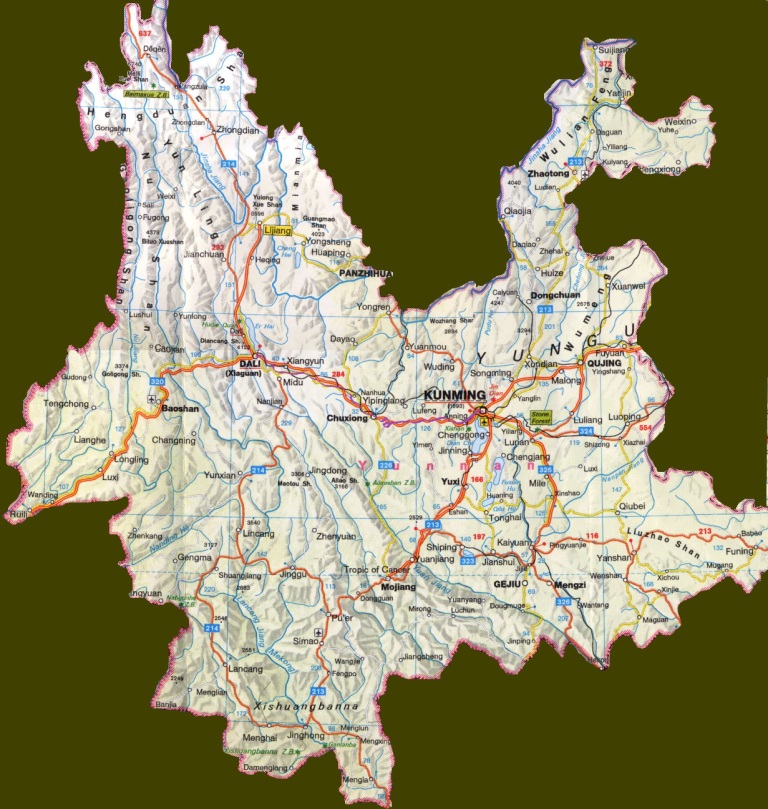
    The purple line shows the route between Dali and Kunming

    I was told to report to the travel agency where I bought the ticket and I would be taken to meet the bus.  I wasn’t too keen on that as the travel agency was in the centre of the old city.  The old city is pedestrian only and covered in cobble stones.  My pull along bag doesn’t like uneven surfaces so it was looking like an ordeal.  Soon after leaving the travel agency I walked past a leather shop and walked out with a new bag which takes cobble stones with ease. It solved the problem of inadequate luggage space and cobble stones, but has created new ones for when I have to lift or carry it.

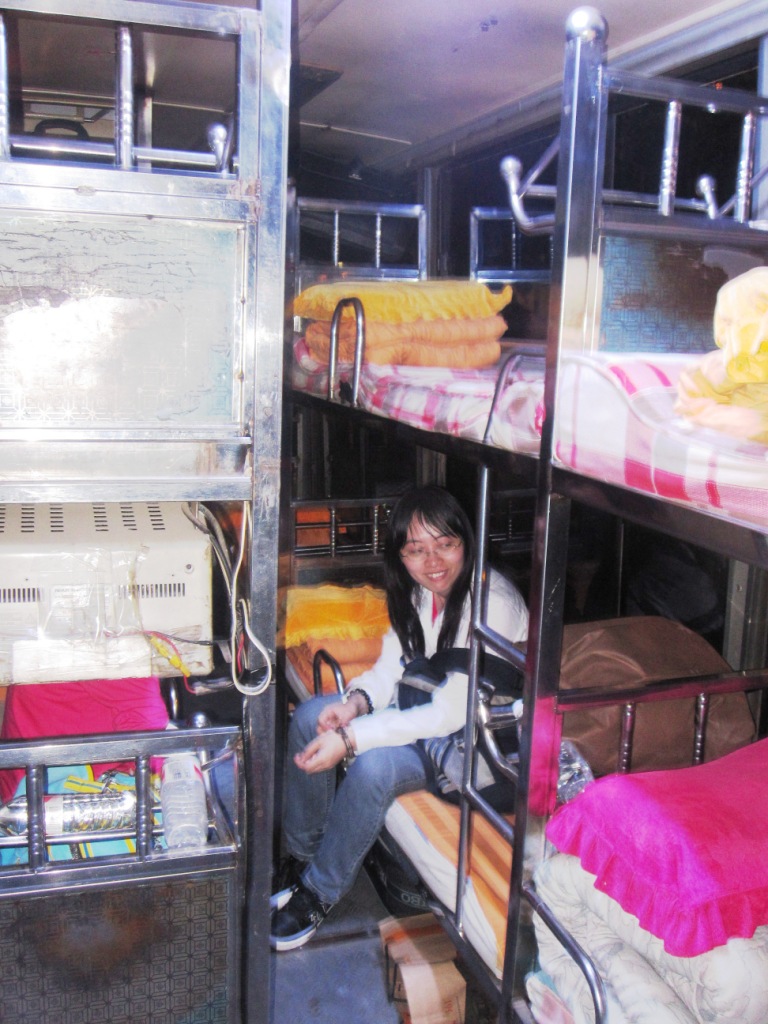
    I arrived at the travel agency early and waited.  I was then escorted to the edge of the city to meet the bus which had already arrived.  Words and pictures in the travel agency showed smart looking German buses.  What I travelled in was a Daewoo which was so old that the non slip steel plate on the steps had worn through. It had about 6 rows of double-decker steel bunks along each side with 5 rows in the centre.  The back seemed to consist of a row of adjoining beds. The beds were narrow but adequate and the mattress was reasonably thick.  The doona could have done with a wash long ago. I had asked for a bottom bunk and was allocated the one closest to the door. The bunk opposite me was for the drivers.


    Part of the interior of the bus

    The bus did not leave for over half an hour as it waited for late passengers.  Passengers and friends got on and off the bus and it was a bit of a circus.  More passengers arrived. Eventually we set off with 2 drivers and a conductor. We stopped at the new town of Dali known as Xiaguan where we collected a few more passengers and exchanged a driver.  Fortunately he took his incense with him.

    We dropped the conductor off somewhere in Xiaguan and set off again.  The resting driver sat on a stool and chatted to driver while they both smoked.  Later he retired to bed.  Initially we travelled on 2 lane toll roads (China is littered with toll roads) with a bit of a delay while all of the covered trucks, the bulk of the traffic, were filtered off by police for some sort of checking.  Later we and every other bus and truck, of which there were countless numbers, turned off the highway onto a 2 lane mostly unpaved, potholed mountain road.  We passed endless collections of small settlements and accommodations made from “stripy bag material.” (The same synthetic material that very large blue, red and white stripy bags found in shops in Australia are made from.)  Fortunately there was almost no traffic going the opposite direction.  The buses age did not prevent it from overtaking everything it encountered.  After some hours we stopped at a petrol station.  The drivers swapped over and we set off on a 4-6 lane highway for the remainder of the trip.  I’d been told I would arrive in Kunming around 6.30am, but the driver’s speedy work on the mountain roads meant we arrived before 5am.    A bossy woman bundled me into a minivan, after we’d agreed on price, and I was driven to my hostel.

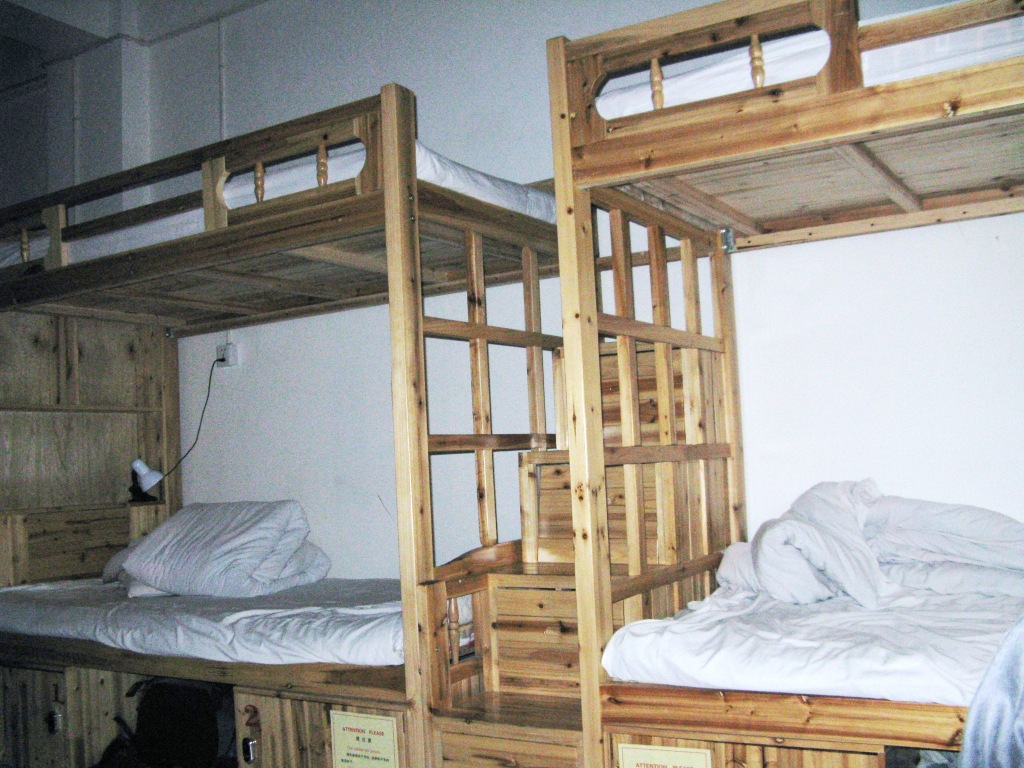
    It is summer time and tourist spots in China are popular and it has become difficult to get various bookings.  Hence I was unable to have a private room for the first night.  The only bed available was in a 10 bed mixed dorm.  The room was large and the beds were wide with the bottom bunks, which I had, having good storage.  However, like most Chinese dorm beds the mattress was fairly thin and as it was on a wooden base I found it hard.  Combined with the heat it was not a particularly satisfactory sleep.  Most of the others kept very late hours and while they were fairly quiet it was still not conducive to good sleep. I have my own room for 2 nights and then have to move to a 4 person dorm for one night. 

    Beds in the dorm.   It even had steps instead of ladders. The steps opened for storage.  An electronically locked cupboard was under the bottom bunk and available with each bed.

    Dali, Kunming

    Dali, hostels, Kumning, transportation

  • Dali

    Jul 21st 2010

    By: Kerry

    No comments

    Dali

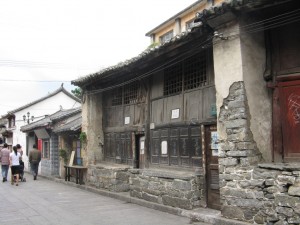
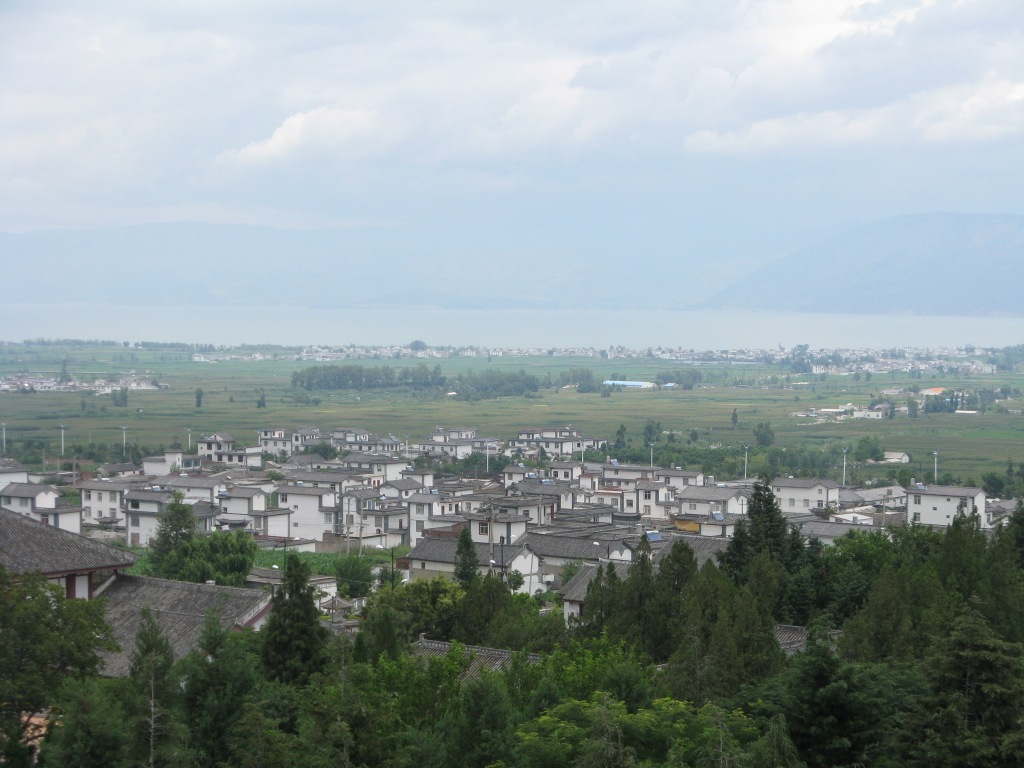
    Dali was an ancient capital in northern Yunnan.  The dominant population is the Bai people.  Outside of Dali they live in white painted villages with pictures painted on the exterior walls. 
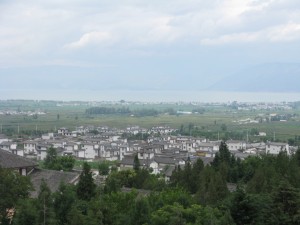
    This was taken from one of the buildings at Chongsheng Temple.  It shows one of the nearby villages.

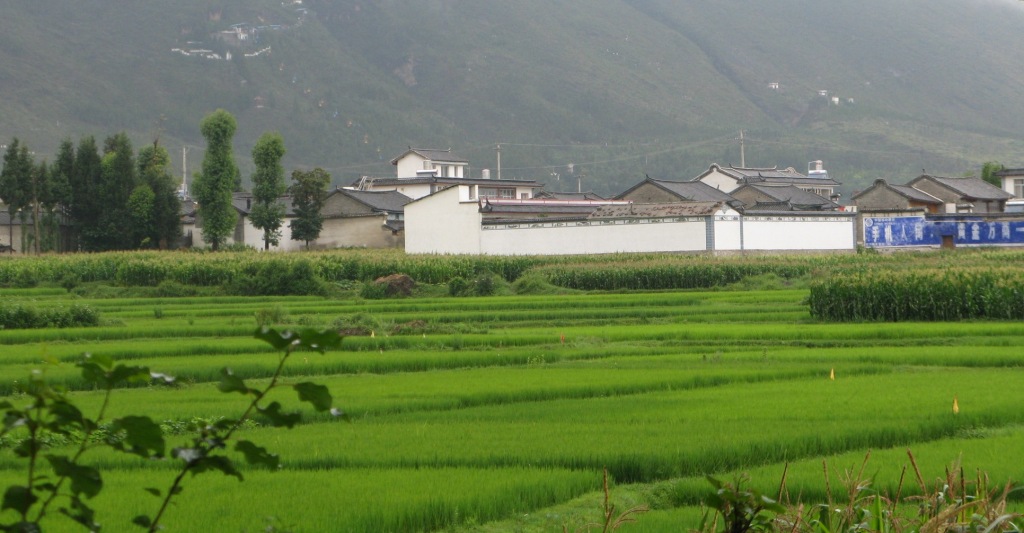
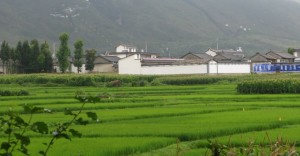
     Rice and corn are common crops as seen in this photo taken while walking  between Taoyuan & Zhoucheng.  Old Dali and modern Dali (Xioguan) sit beside a large freshwater lake.
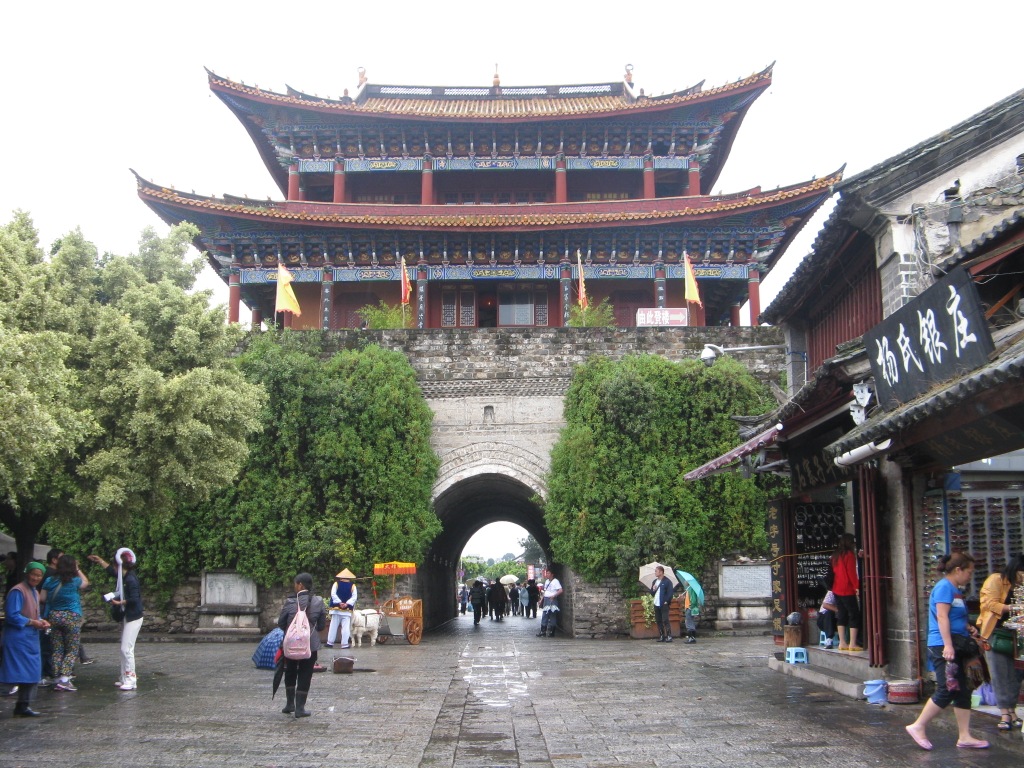
    The old city of Dali is laid out on a rectangular grid on fairly flat land and is reasonably easy to get around without becoming lost, although that has happened too. It has four city gates and the remains of some city walls. 
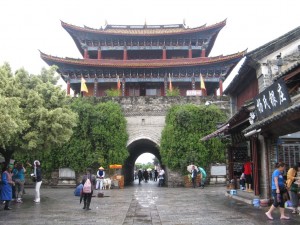
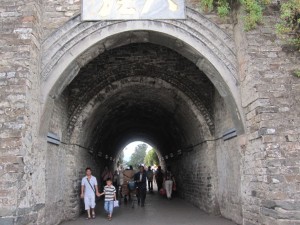
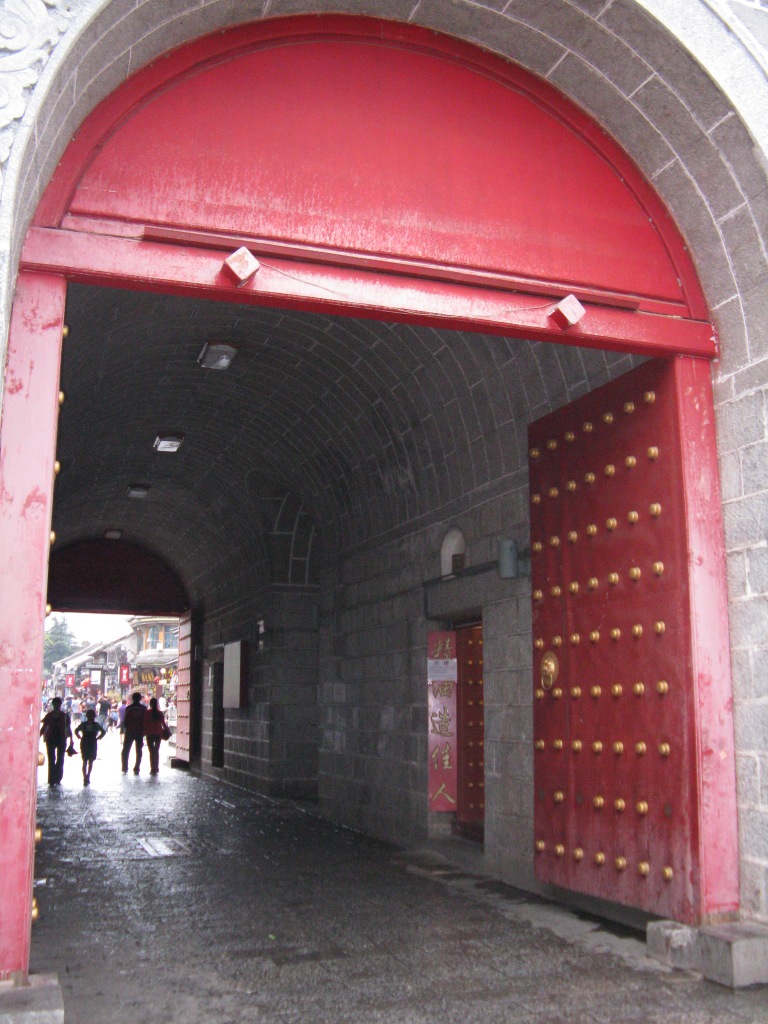
    The South Gate from inside Old Dali

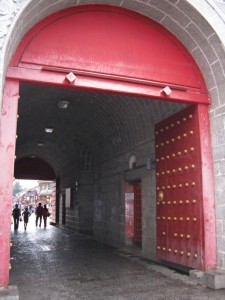
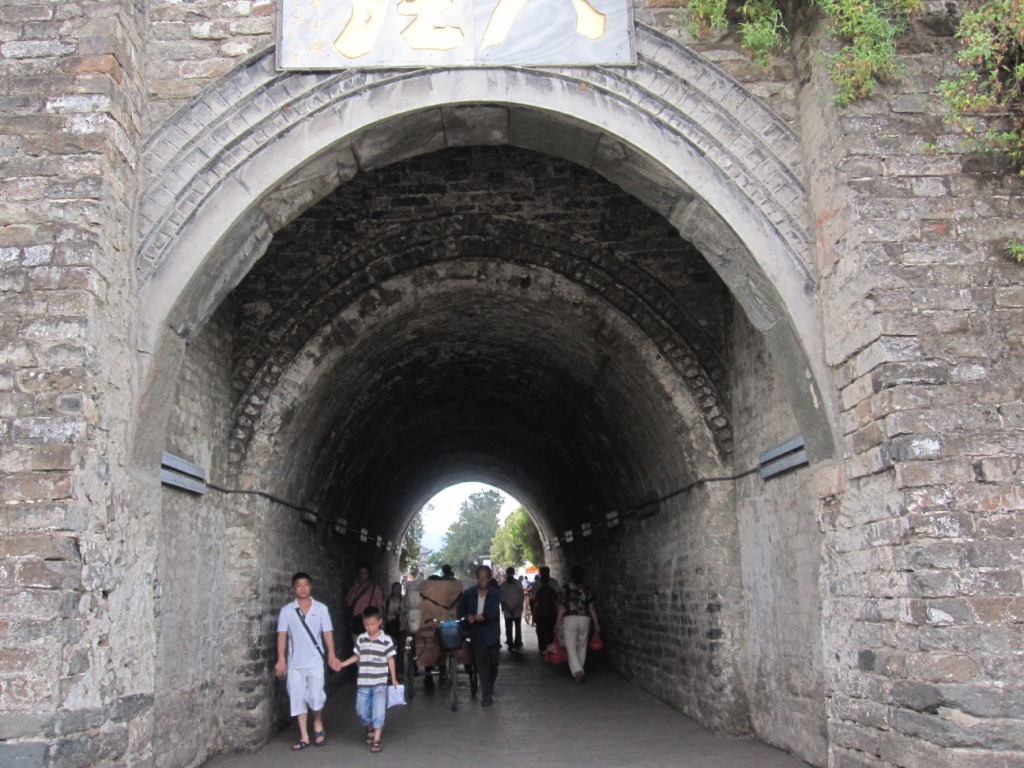
    The interior of the gate.

    The interior of the Wenhua Tower

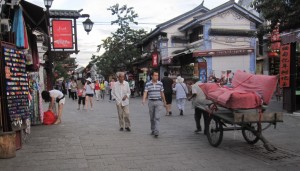
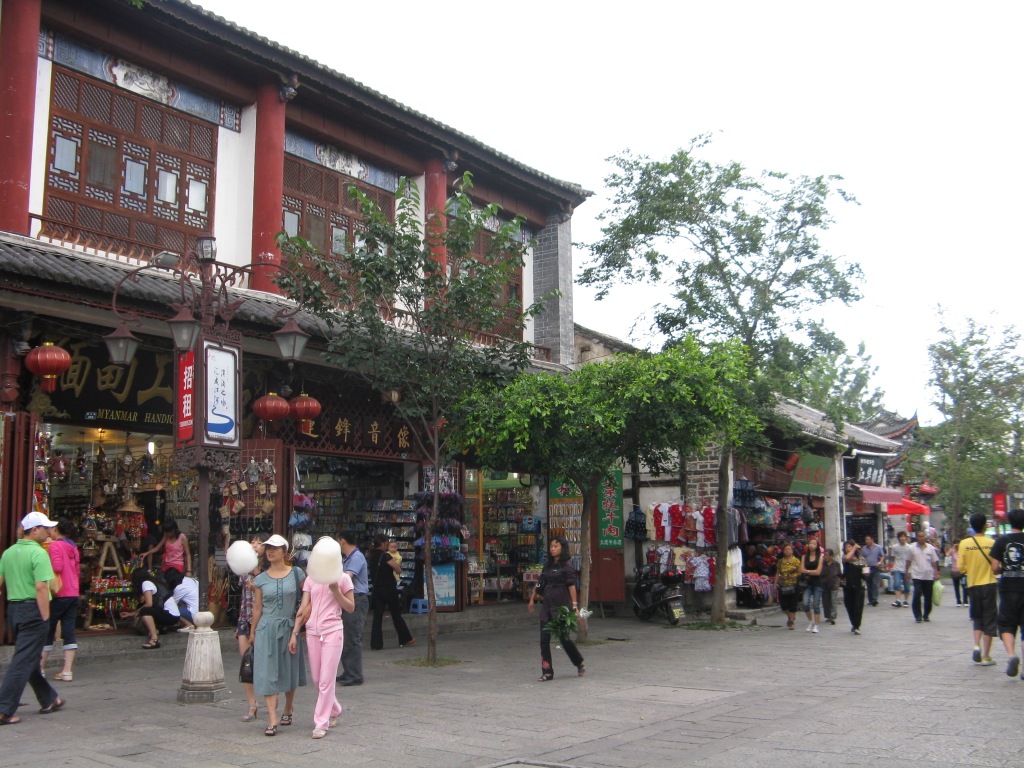
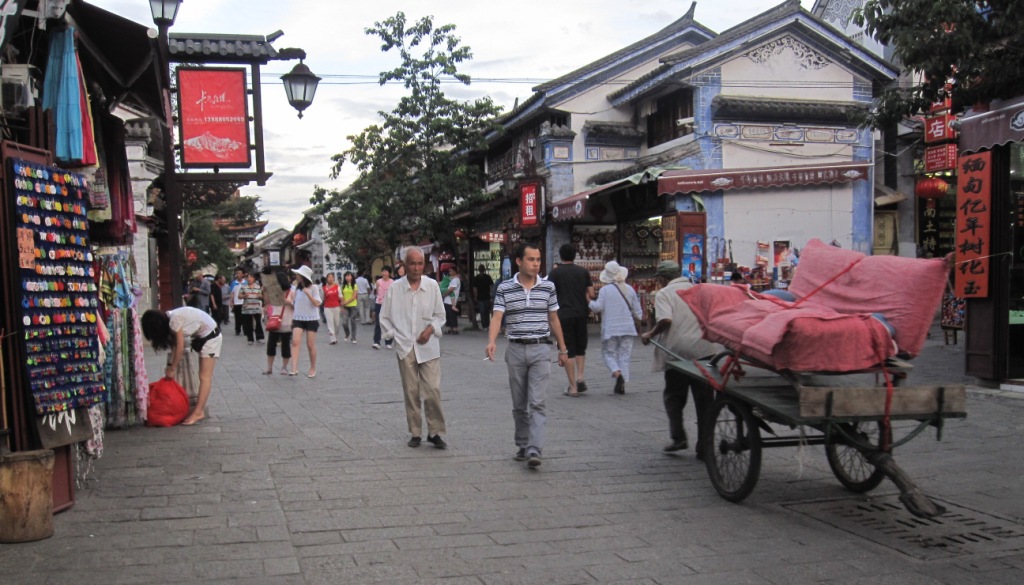
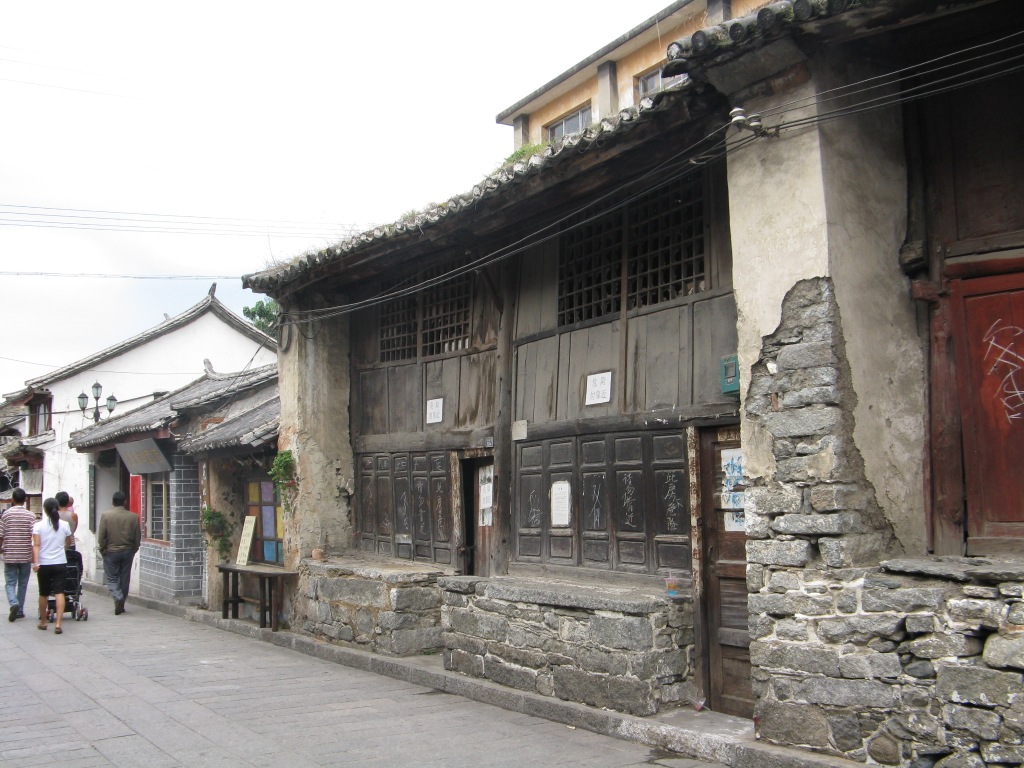
    Some areas have been gentrified while others look pretty untouched. 
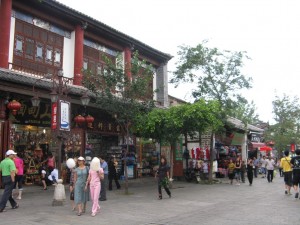
     

    This is an interesting part of town.  Buildings which seem abandoned sit beside alternative type shops and businesses.
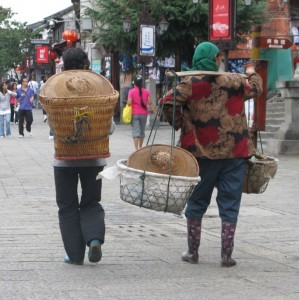
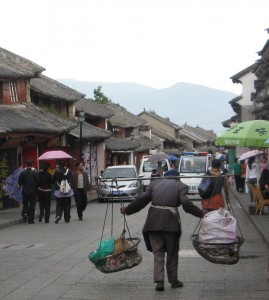
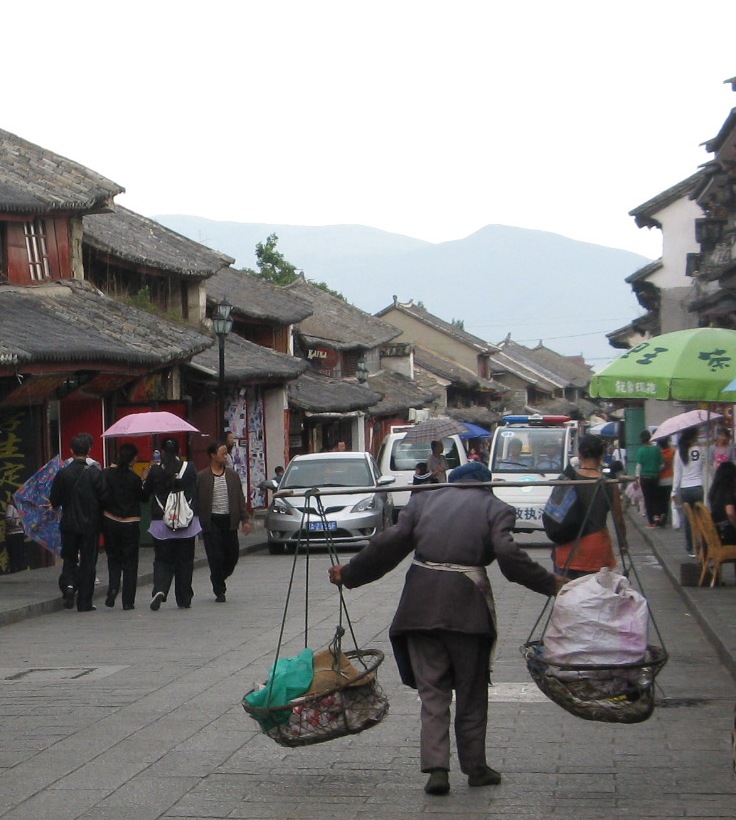
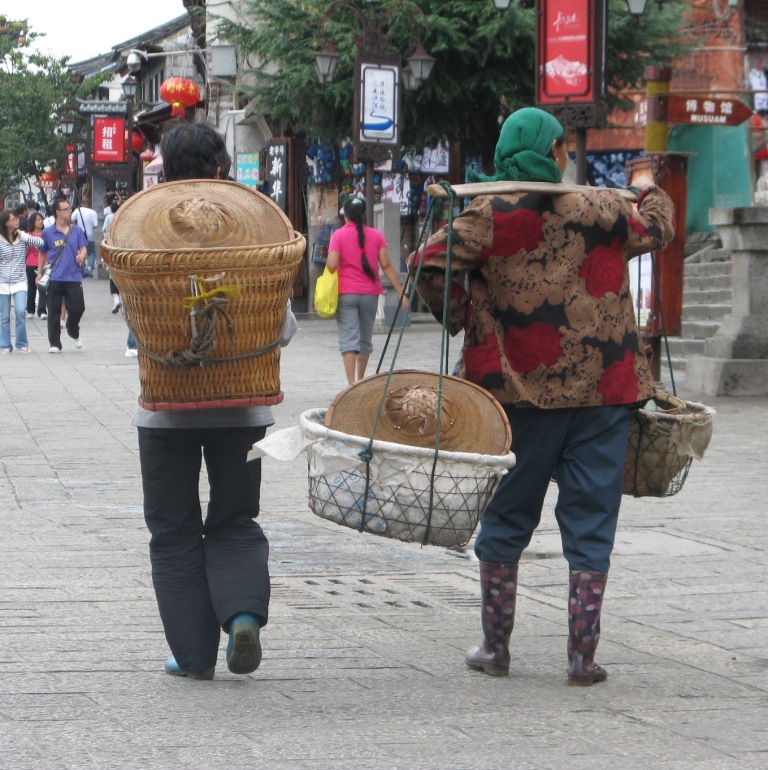
    It is still quite common in many parts of China to see people carrying items  using the pole over the shoulder method.

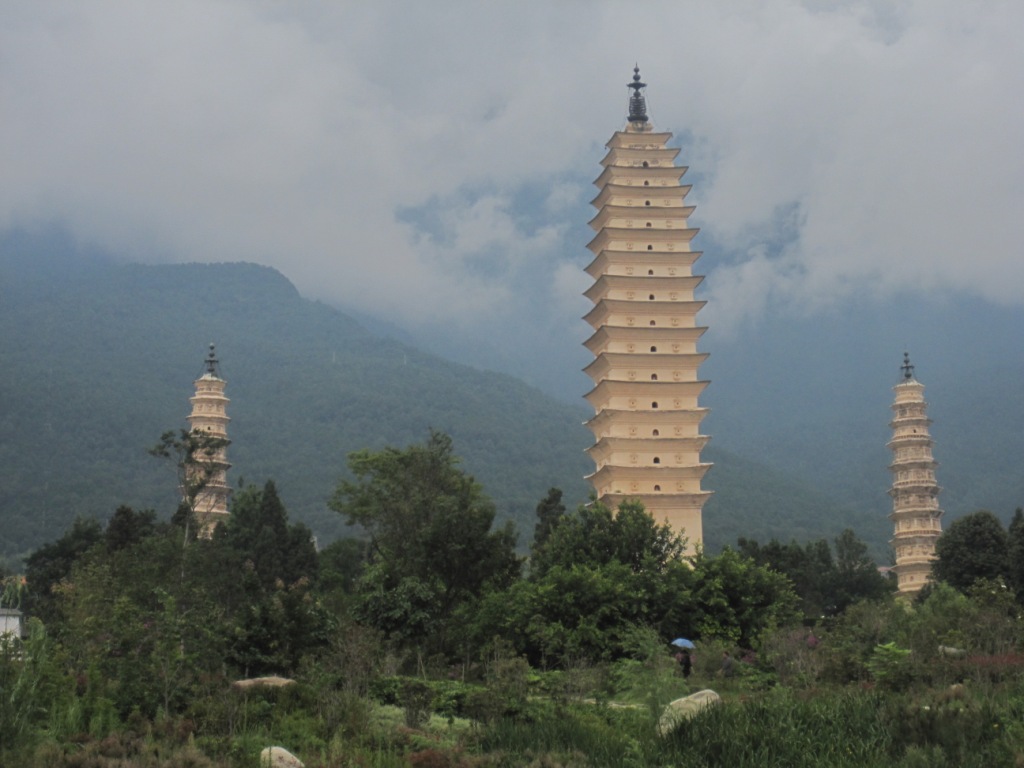
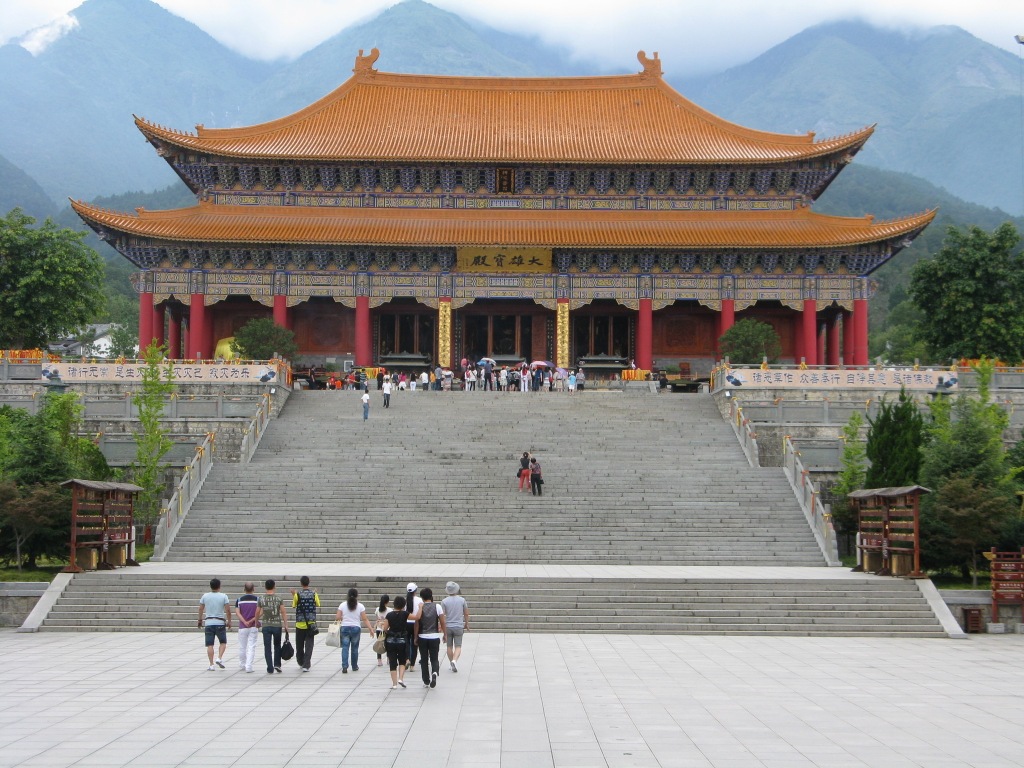
    Dali is well known for its pagodas and Chongsheng Temple which was rebuilt in recent times. 
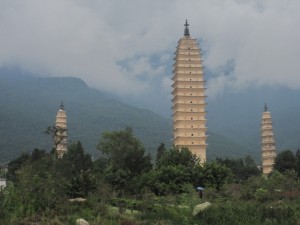
    Three Pagodas
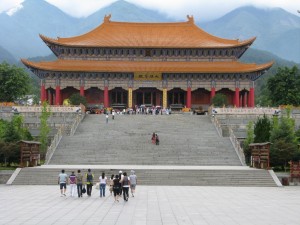
    One of the many temples at Chongsheng Temple complex.  It took me about 5-6 hours to walk around it all.

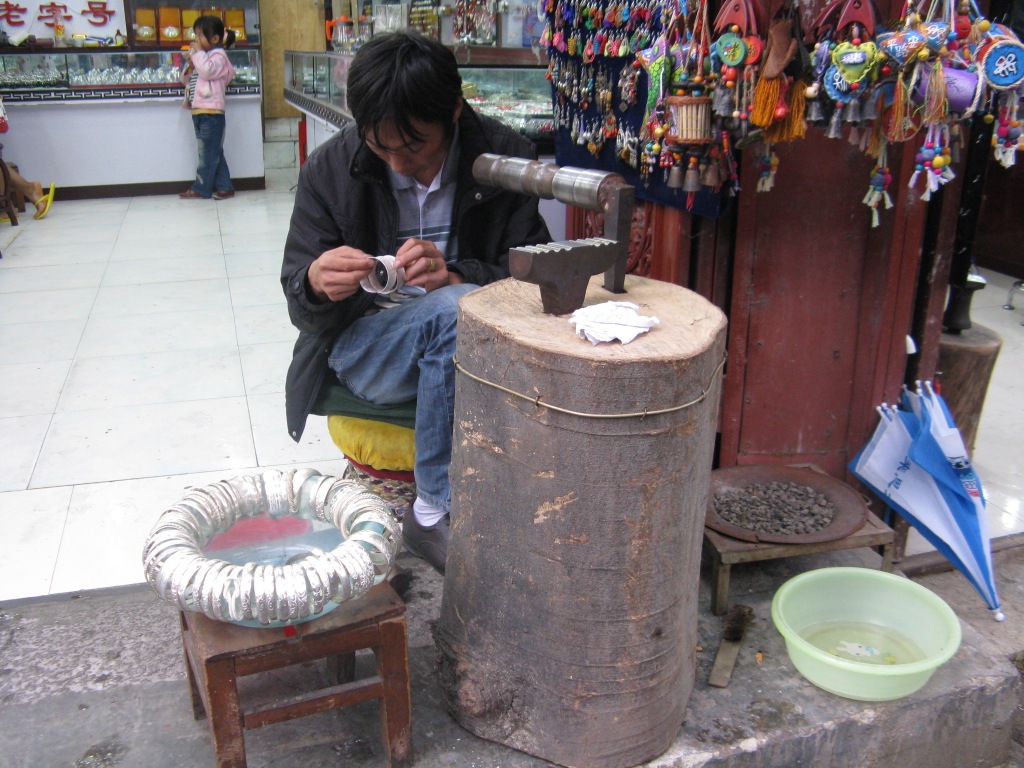
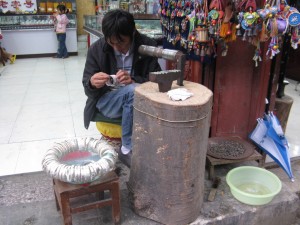
    Like Lijiang, silver is a common with silversmiths hammering away at the front of shops in addition to numerous shops selling clothing and nick knacks made from fabric.
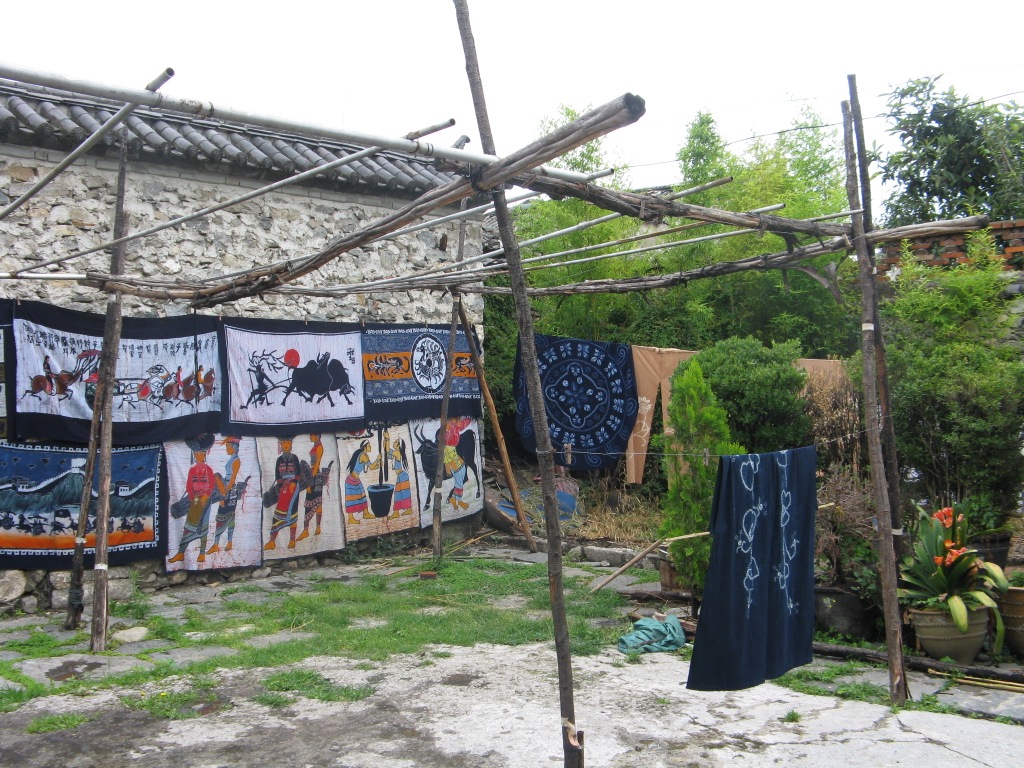
    Batik made from indigo in the traditional blue and white as well as other colours is  very common. I have seen the material being knotted and some dye vats but no dying yet.
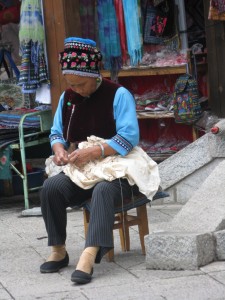
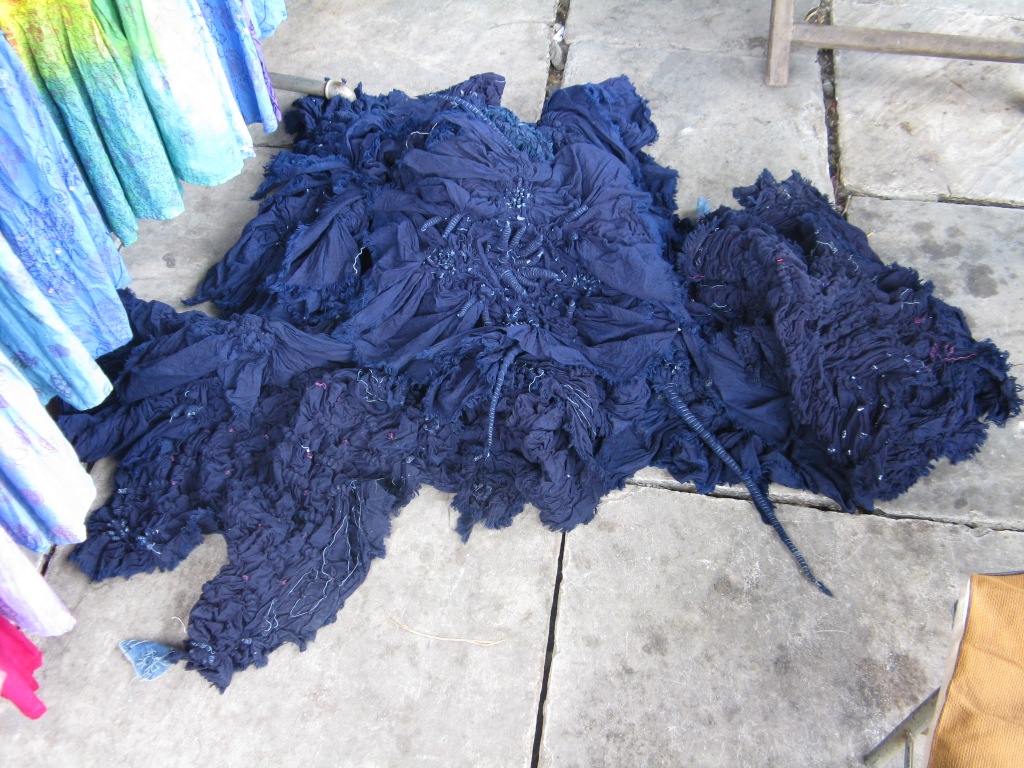
    Knotting the material to reist dye and provide the decoration.
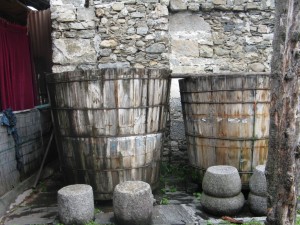
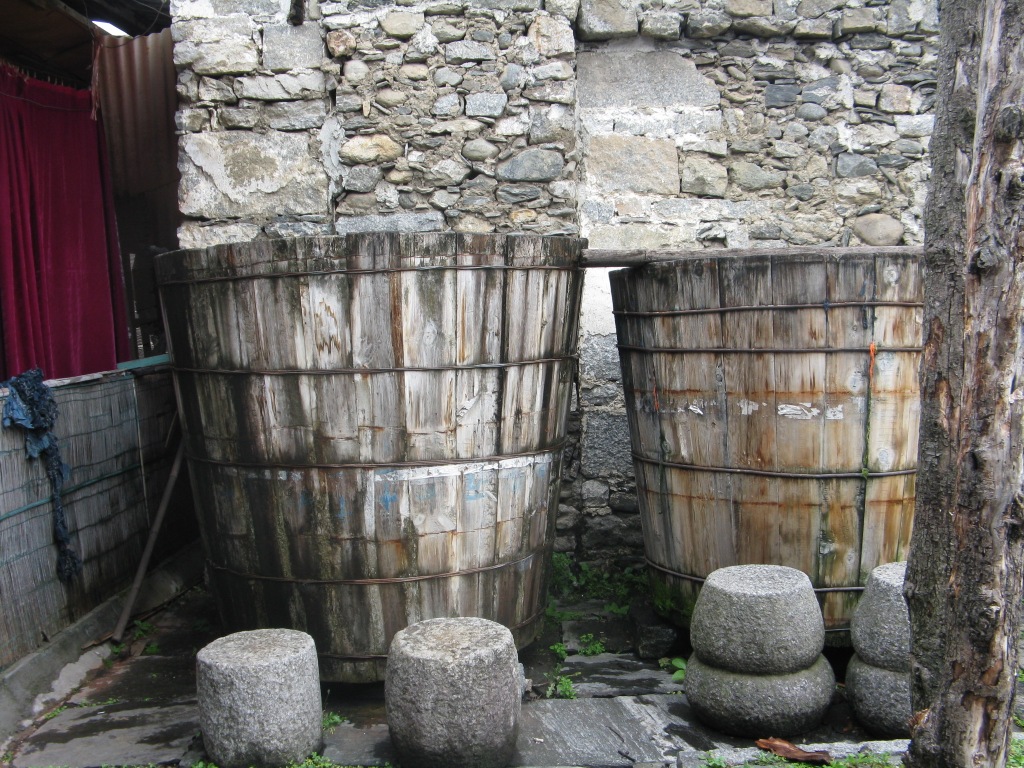
    Dye vats
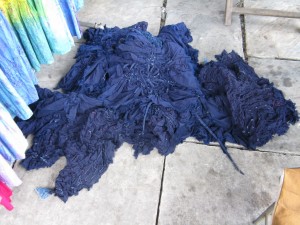
    Dyed material with the knots still in.
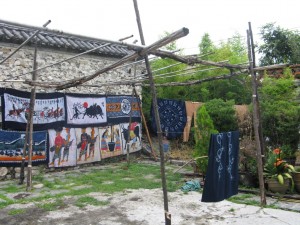
    Racks for hanging dyed material.  I’m not convinced much dying stil happens at that place.

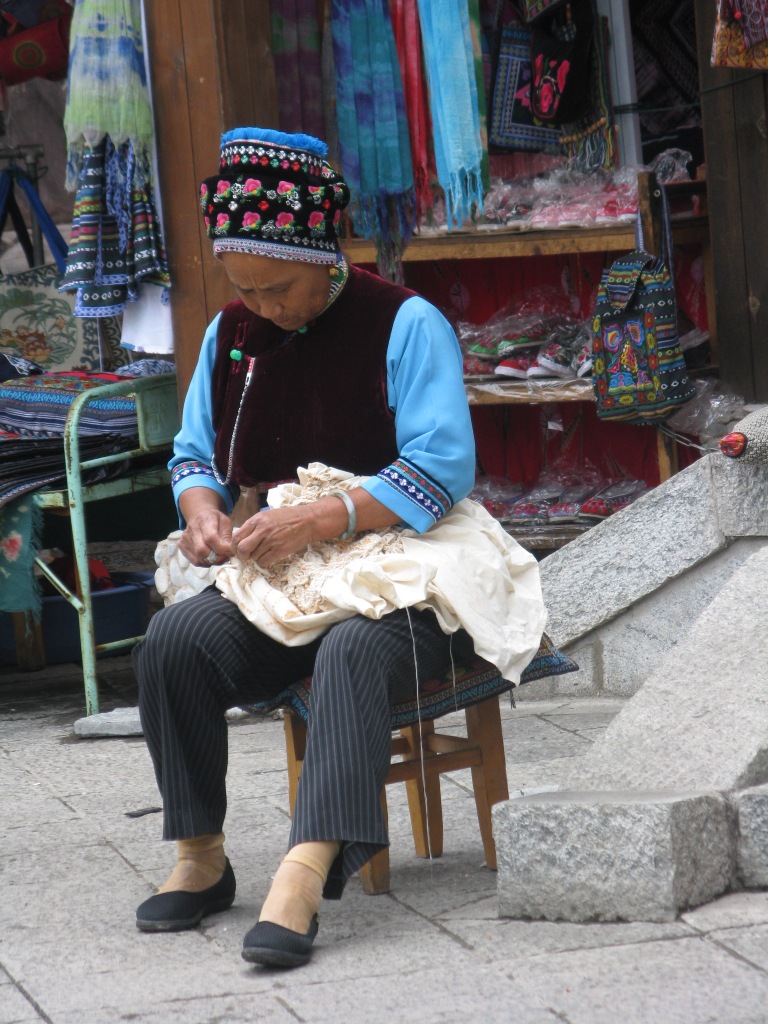
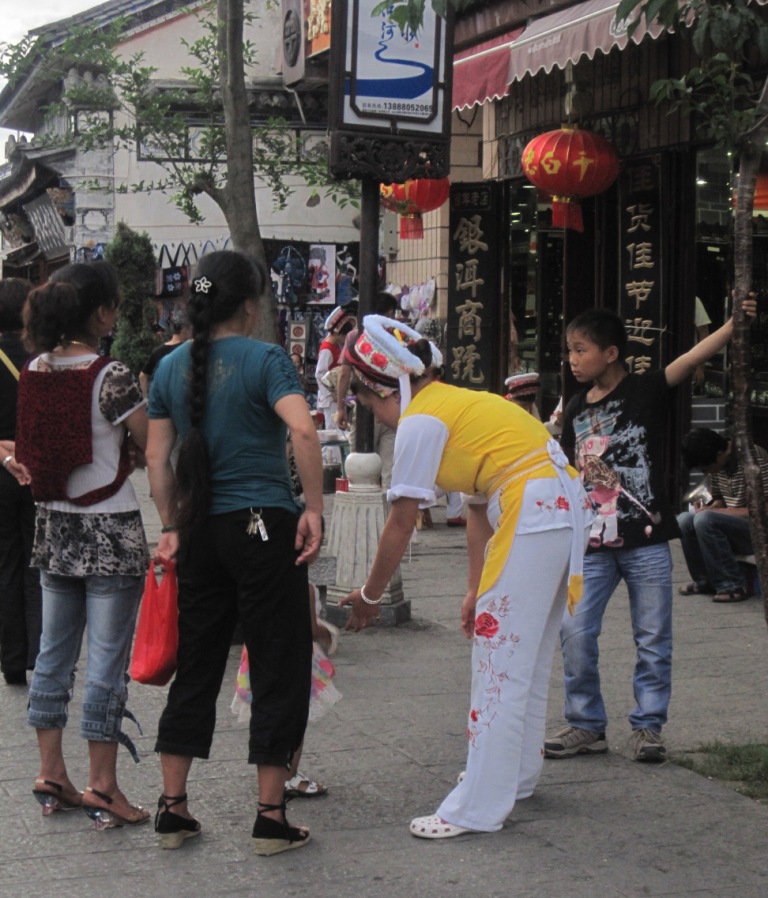
    As in Lijiang, local shopkeepers are required to wear ethnic dress, even if it’s only a vest. 
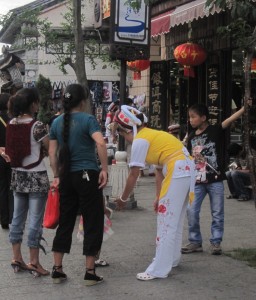
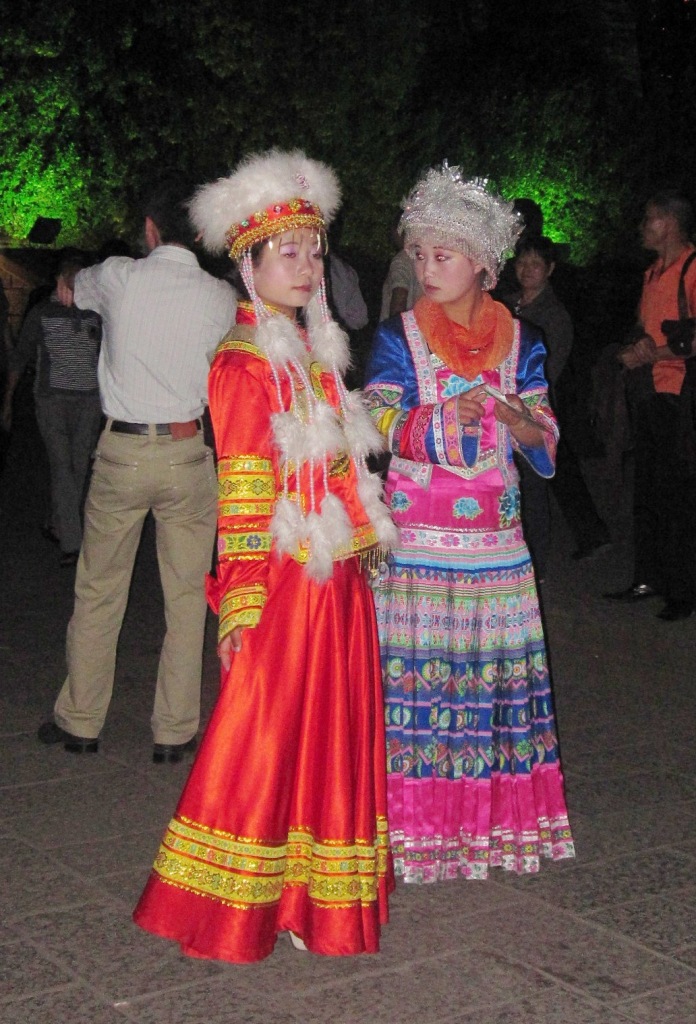
    More commonly this outfit is seen in  the colour of red and pink. 

     Or these two are providing photo opportunities, for a price.
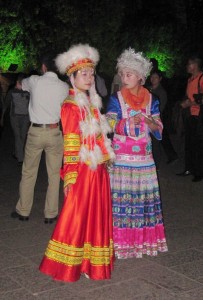
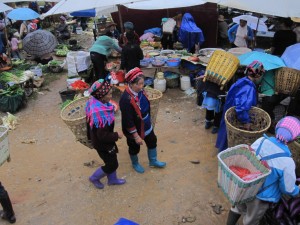
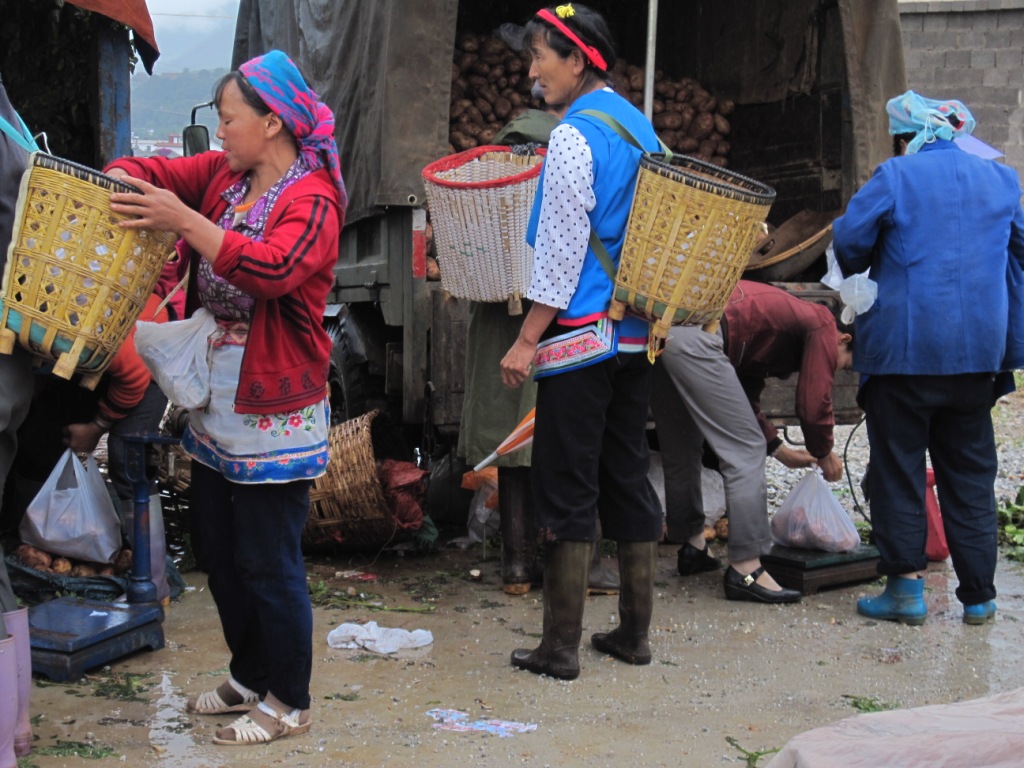
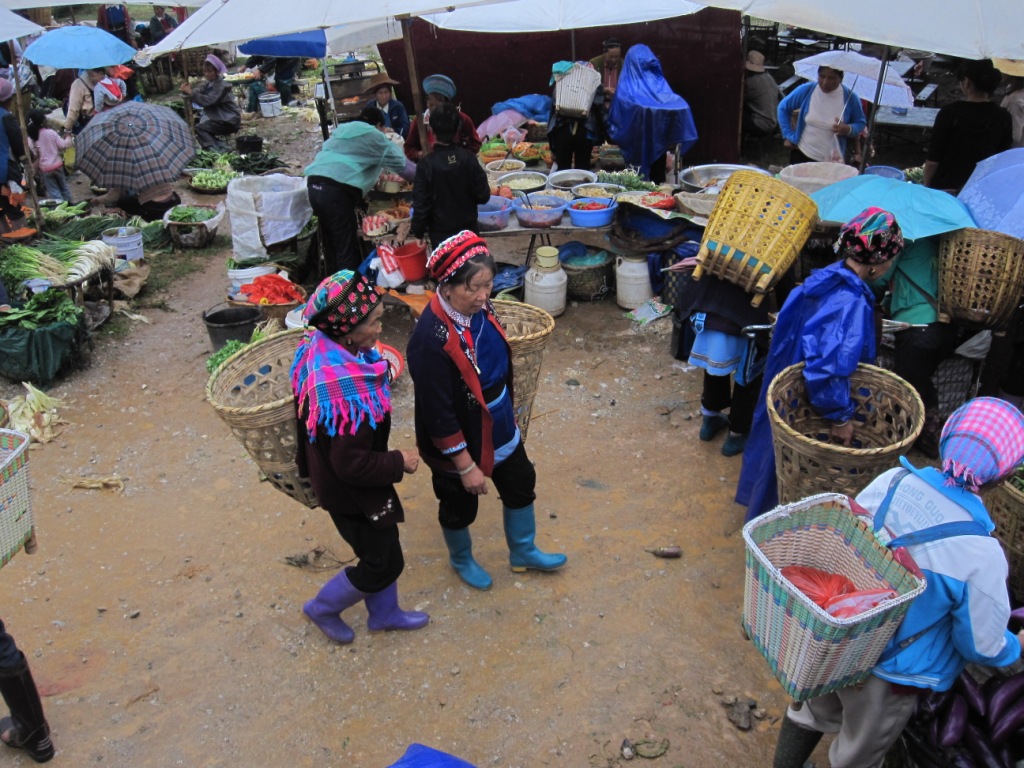
     However, many others seem to wear ethnic clothing as a matter of course, especially in the local villages.  Unfortunately, my visits to the villages have coincided with rain & it’s a bit hard to see much when people are obscured by umbrellas and sometimes raincoats.  The women in this area, unlike Lijiang & Lugu Lake  wear pants instead of skirts.   Much more practical. Almost all at the market were wearing gumboots of various styles.
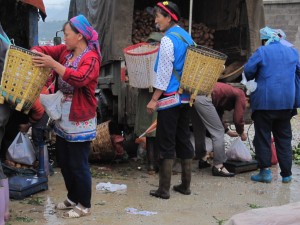
     I took these photos at Shaping market after the rain abated  for a while

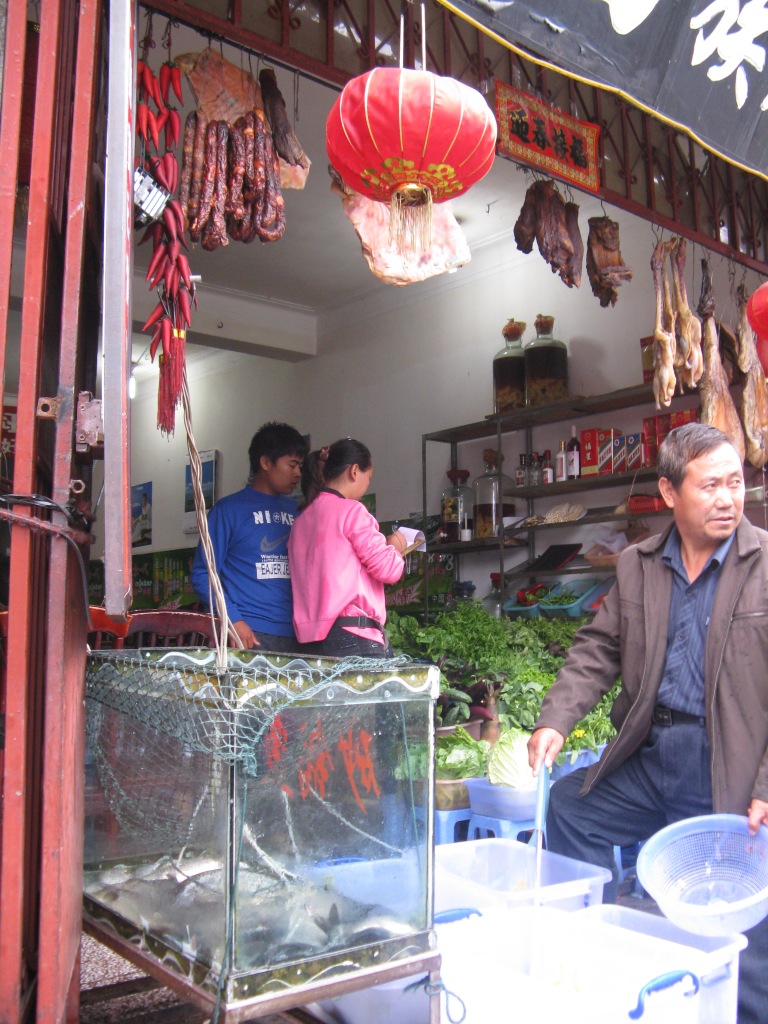
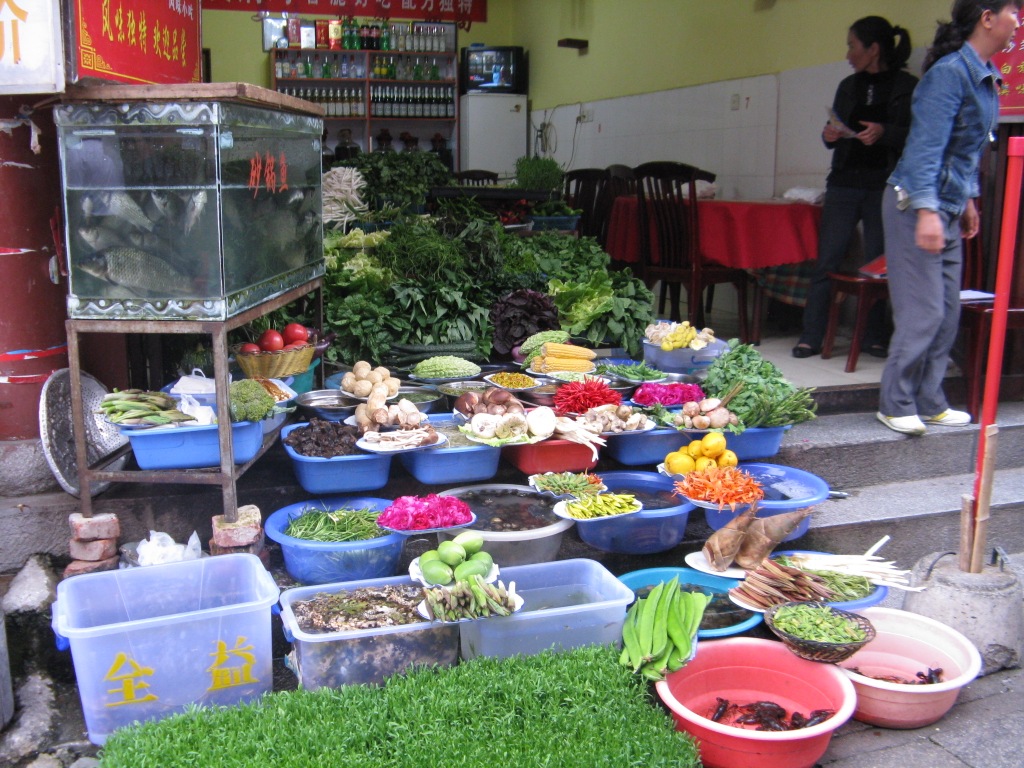
    Many of the restaurants have their ingredient options; plant and animal, alive and dead, laid out at the entrance and you choose what you want.
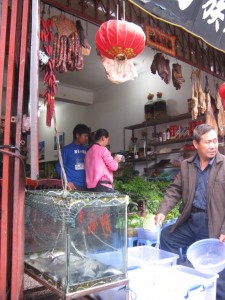
    The fish are having something done to their water and meat is hanging above
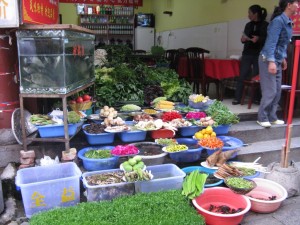
    Colourful array of vegies and edible flowers

      I have yet to try that.  Now I know how it’s done I’ll do the usual pointing and see what I end up with. When I was in need of food from one of those places the cook was cooking fried rice so I ordered that as a safe option.  It tasted better than fried rice I’ve had other places.
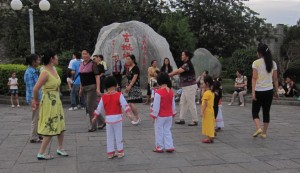
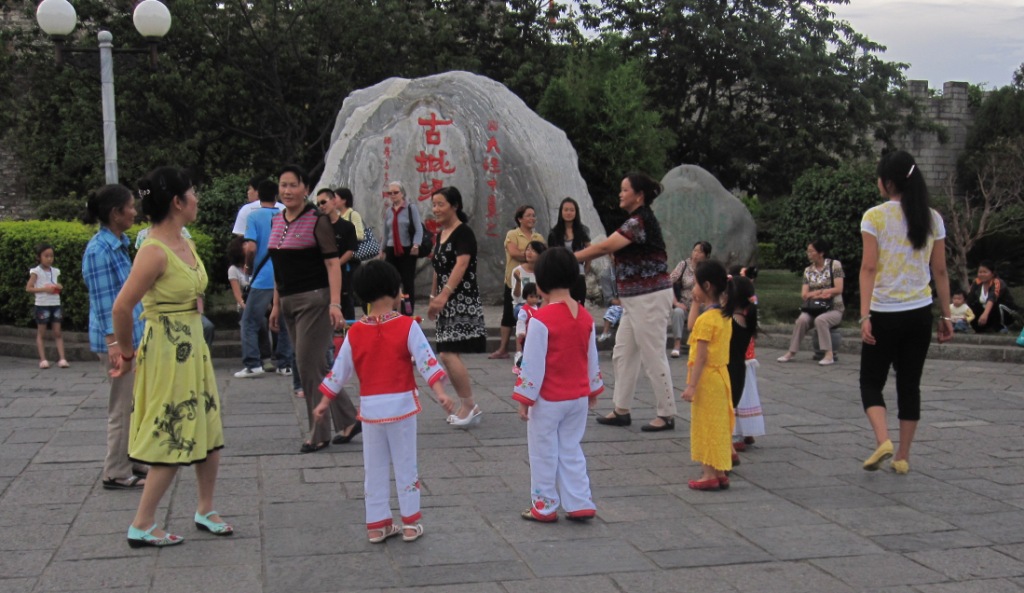
    These women and kids were dancing outide the South Gate the night I arrived.  The next night there were more of them and they wwre dressed in ethnic costume.
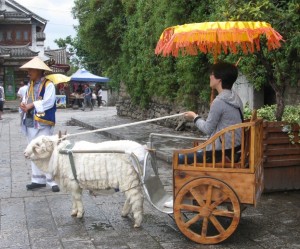
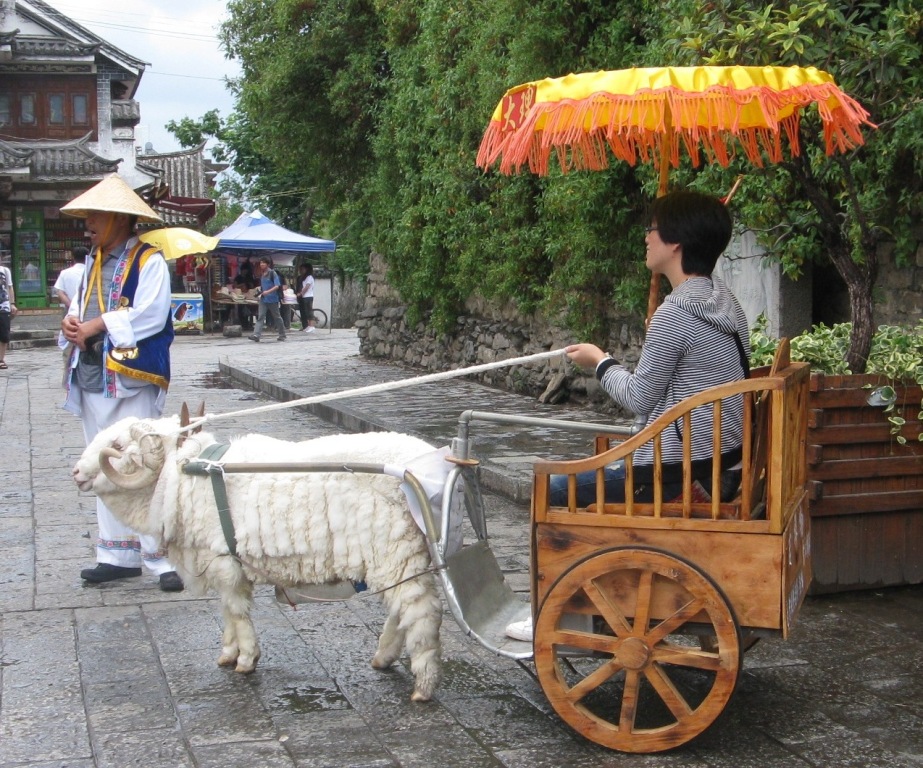
    This sheep is a photo opportunity for a price.  It’s the only sheep I’ve seen in China and its fleece is unusual to say the least.  Look under its stomach to see something even more unusual.  I’ve seen more than sheep urine in the streets of China, but Dali must have restrictions.
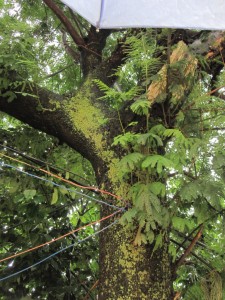
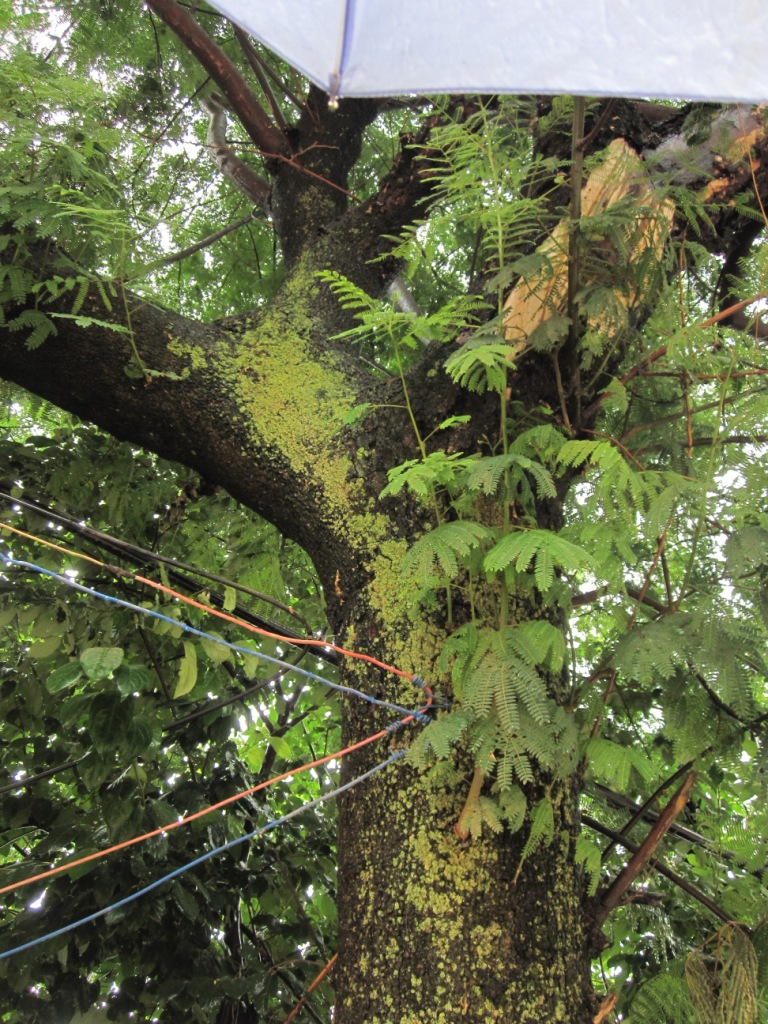
    This tree was photographed in Shaping where I had trouble getting any decent photos of people because of the rain, rather than lack of interesting opportunities.  It and the trees around it had lots of lichen.  It is not the first tree I’ve seen doubling as a power pole.
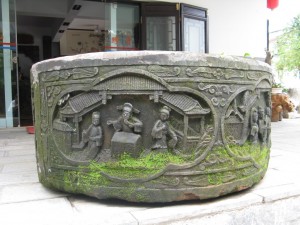
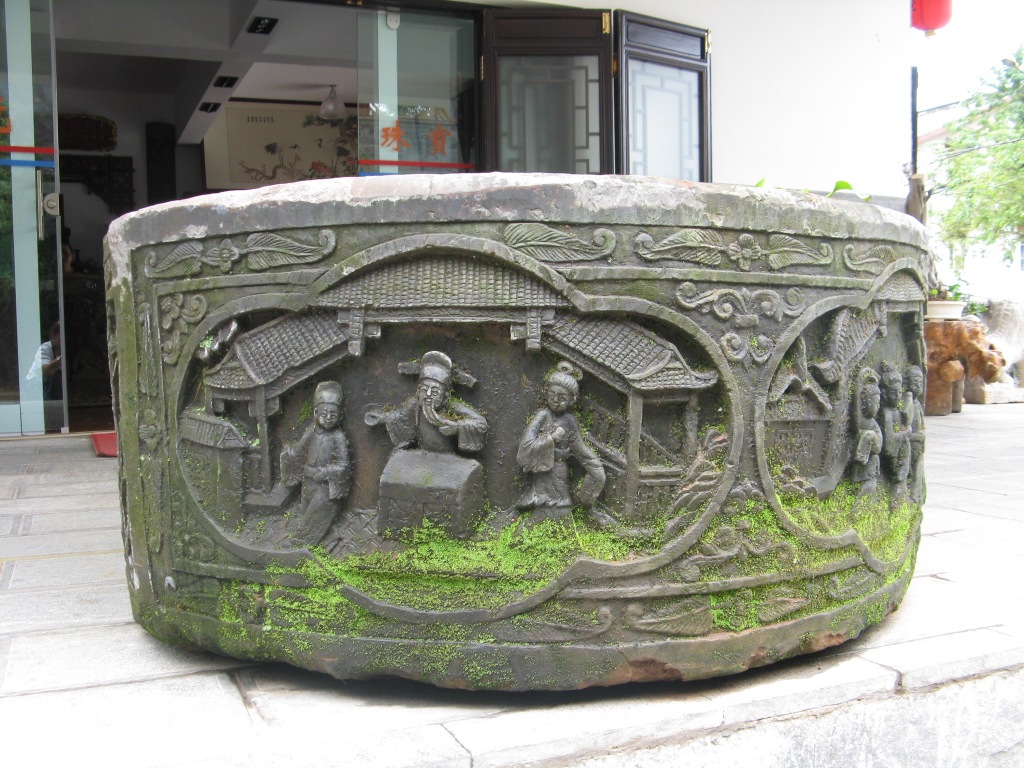
    This was outside one of the many antique shops I visited in several areas in Dali.  Some of them had interesting items for sale and were unlike the tiny,  dusty places I’ve sen elsewhere.
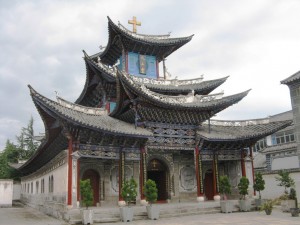
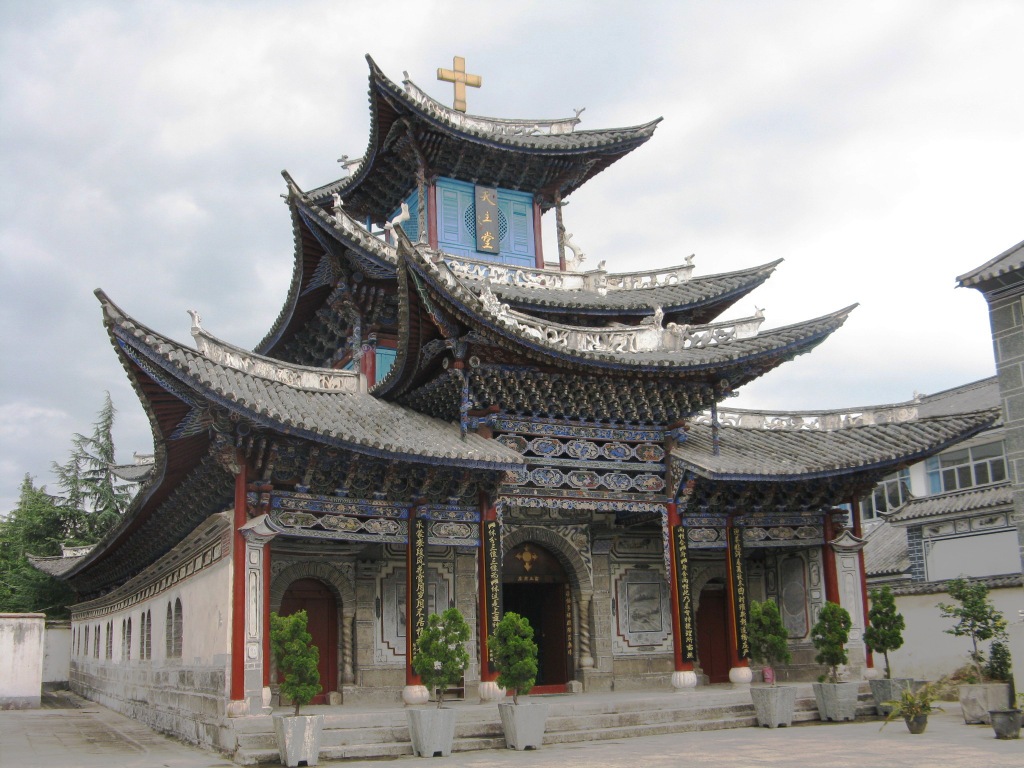
    This is the Catholic Church in Dali.  It was built in 1929.  According to the blub inside the church it is responsible for  about 80,000 catholics, covers an incredible territory and has next to no priests.  There is some sort of new  seminary attached to it. 

     There is another christian church in the city  but it was locked up and it wasn’t clear if it is still in use.  There is a mosque too.
    China, Dali

    agriculture, animals, architecture, art and craft, China, culture, Dali, ethnic minorities, Food, markets, religion

  • The Kindness of Strangers and another Scam

    Jul 19th 2010

    By: Kerry

    No comments

    The Kindness of Strangers and another Scam 

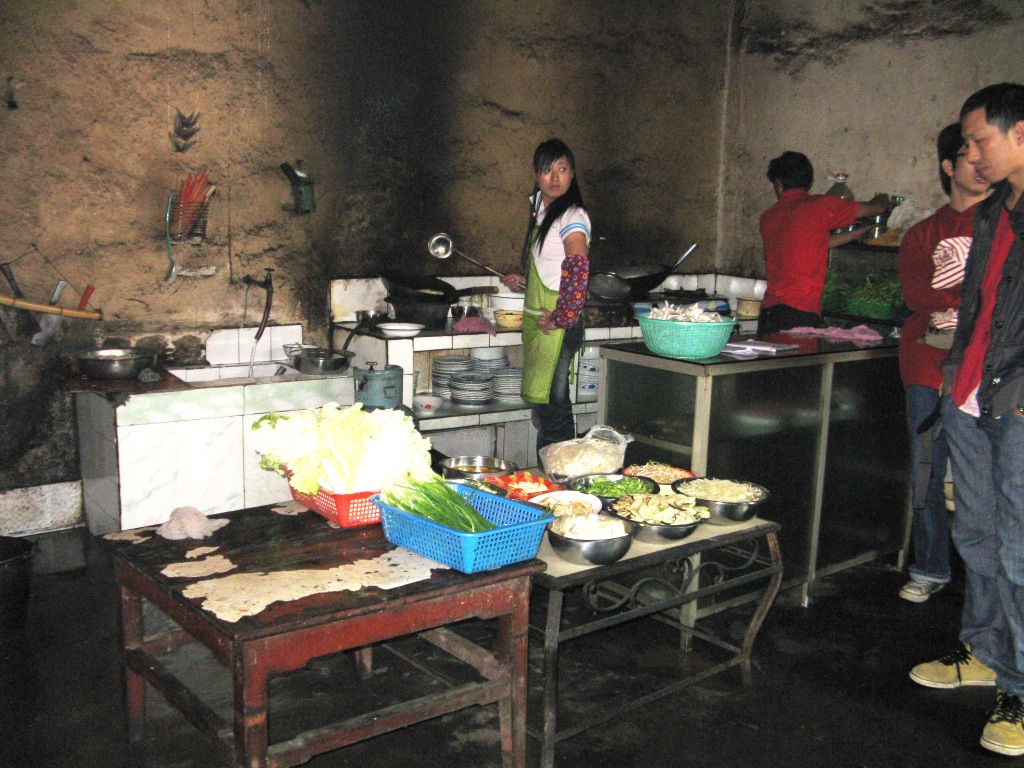
    I was the only non Chinese speaking foreigner in the 9 seater minivan to Lugu Lake.  It was an interminably long trip involving several stops for photos/calls of nature/lunch/tourist opportunities, one of which I wrote about previously.  Photo opportunities I understand as I do calls of nature as the Chinese use the term, WC.  However, lunch was a bit more problematic as we stopped at what looked to be someone’s house.  We trooped into a large dark, dingy kitchen and a cover was whipped from a large collection of prepared vegetables. 

    The kitchen

    A menu was not evident and anyway I wouldn’t have understood it.  One of the other passengers remembered enough English to explain the system to me and soon I was sitting down to a plate of tofu and vegetables.  

    The next day I found myself out on a minibus tour with some of the passengers.  One couple had hired the bus and the rest of us added on.  The girl I had left the previous hostel with to catch the minibus because I had been told she knew where the bus stop was located and didn’t, but that’s another story, decided it was time to practise her English.  After a very unpromising start she ended up being very kind and helpful and between her, the lunch time interpreter, a young man who decided to find his English voice and some others we met along the way I was very well cared for and got to see things I wouldn’t ordinarily have seen.  Lugu Lake was not really set up for the non speaker who didn’t want to spend much money as there was no public transport and most places were too far to walk and although bikes were available for rent the terrain was decidedly hilly.  I was able to tag along with other people’s plans and share and reduce the cost. 

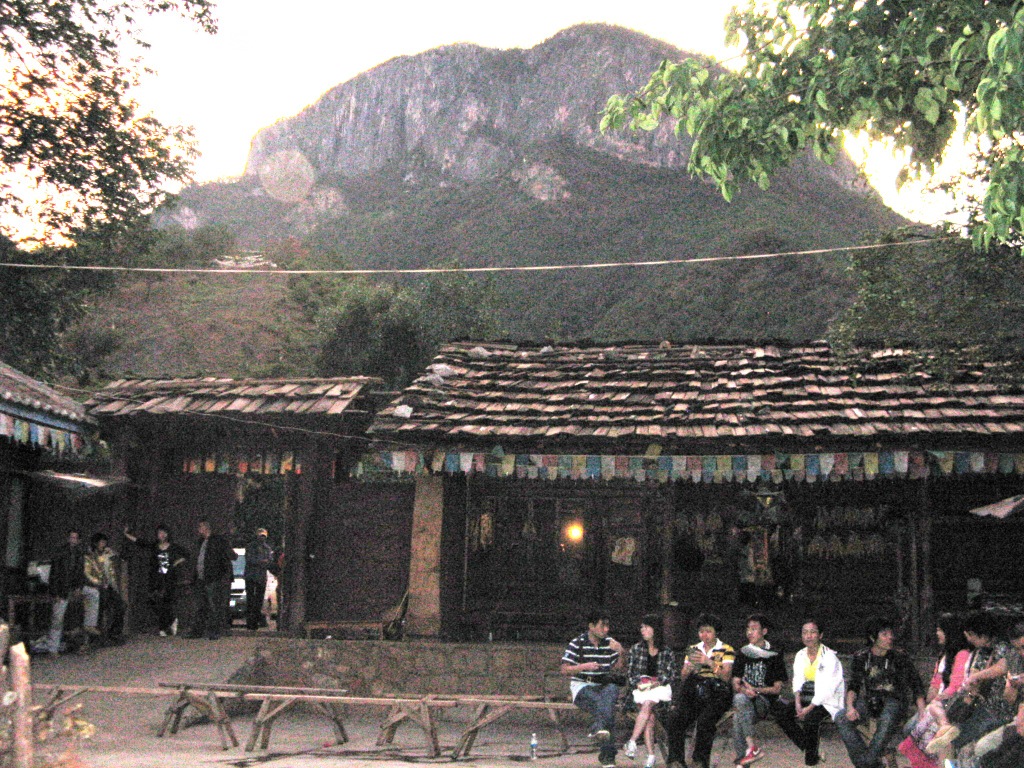
    Waiting for a Mosuo performance at a house.  It was already pretty dark.

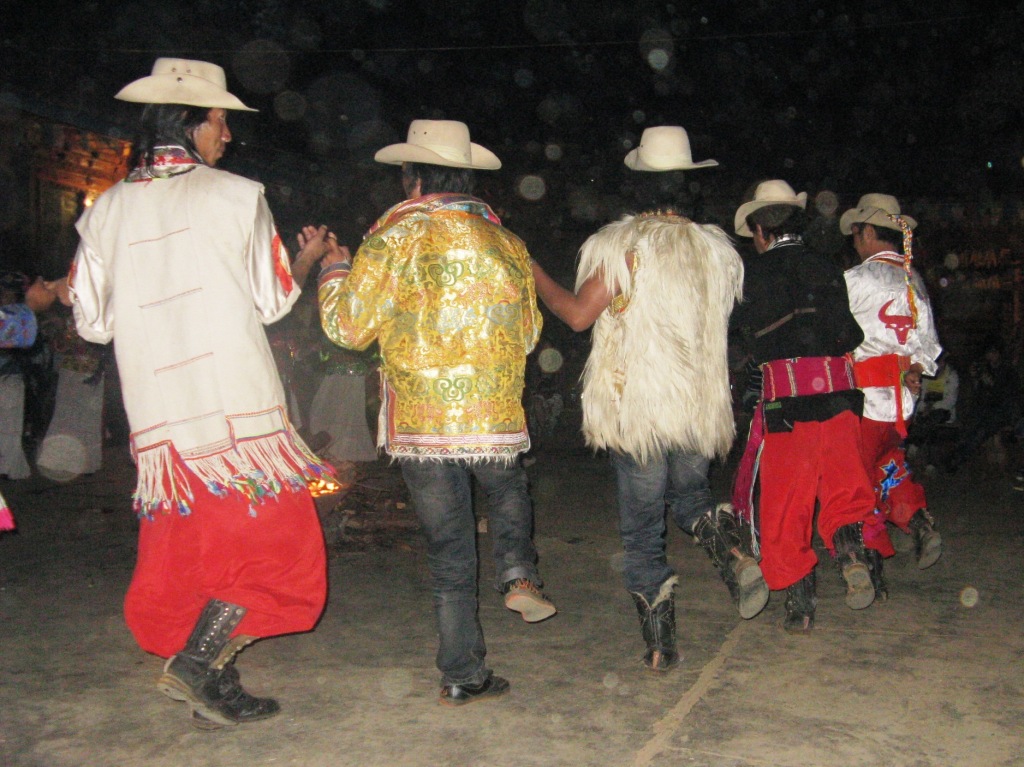
    Some of the men dancing.  They project a cowboy image.

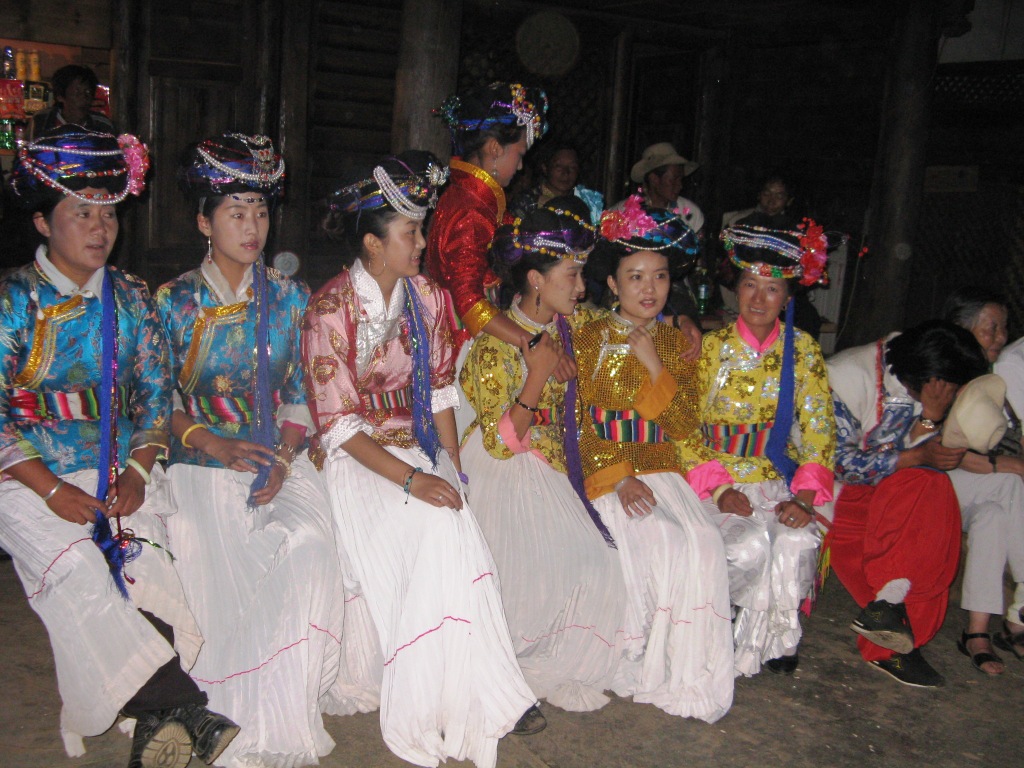
    Some of the women

    One girl was still a uni student and learning English but the others were all graduates of 1-10 years standing and didn’t use English in their daily lives.  The ones who were interested did well to remember sufficient English to understand me and visibly improved their English over a few days.


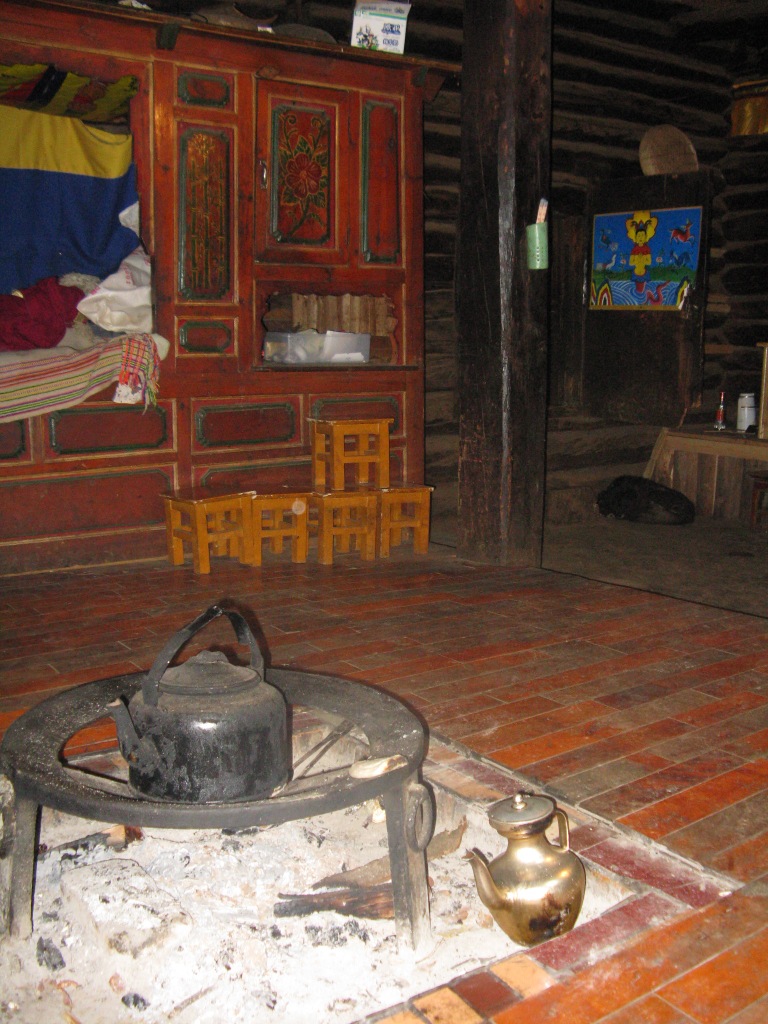
    Another night we went to dinner at someones house which was listed as a hotel.  The Mosuo live in large compounds with buildings on all four sides.  This photo was taken in the grandmother’s room, an independent building entered by a tiny doorway where we were taken for popcorn and sunflower seeds while waiting for tea to be ready.   Her room was said to be 300 years old.  The furniture in the top left is part of her large enclosed bed, common in years gone by.  The rest of her furniture matched.

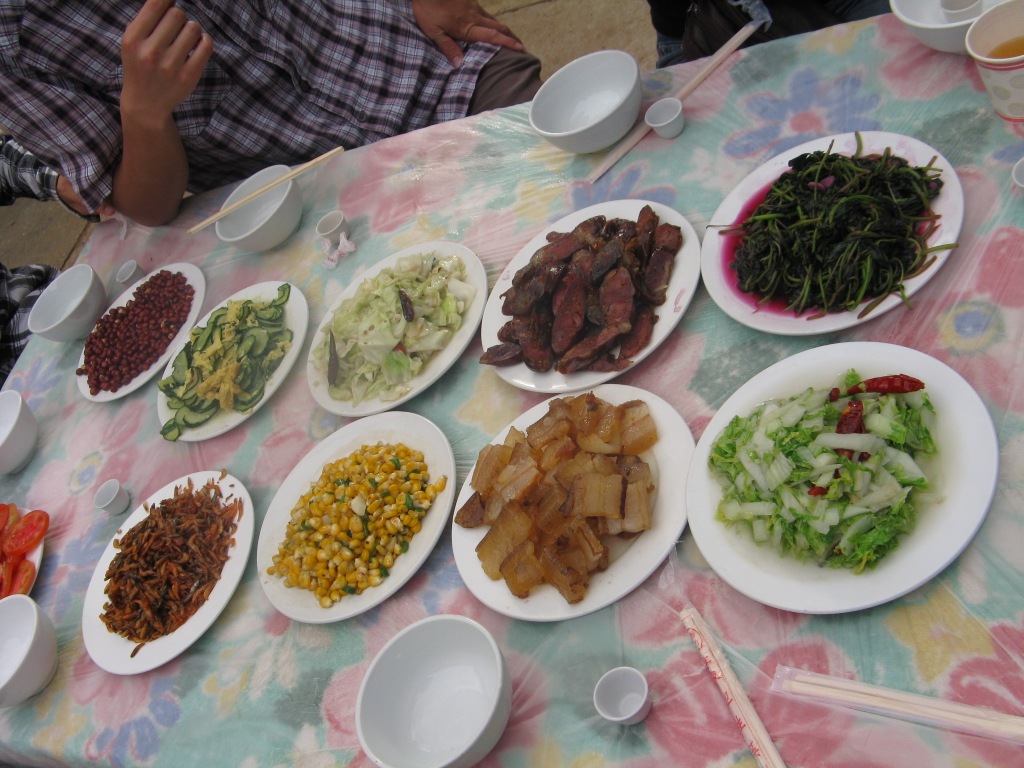
    Some of our food.  The second plate on the bottom right is pieces of fat.  I tasted one piece and had had some once before.  It tasted OK, but I noticed the Chinese left it alone too. Eating outside was always a battle against flies.
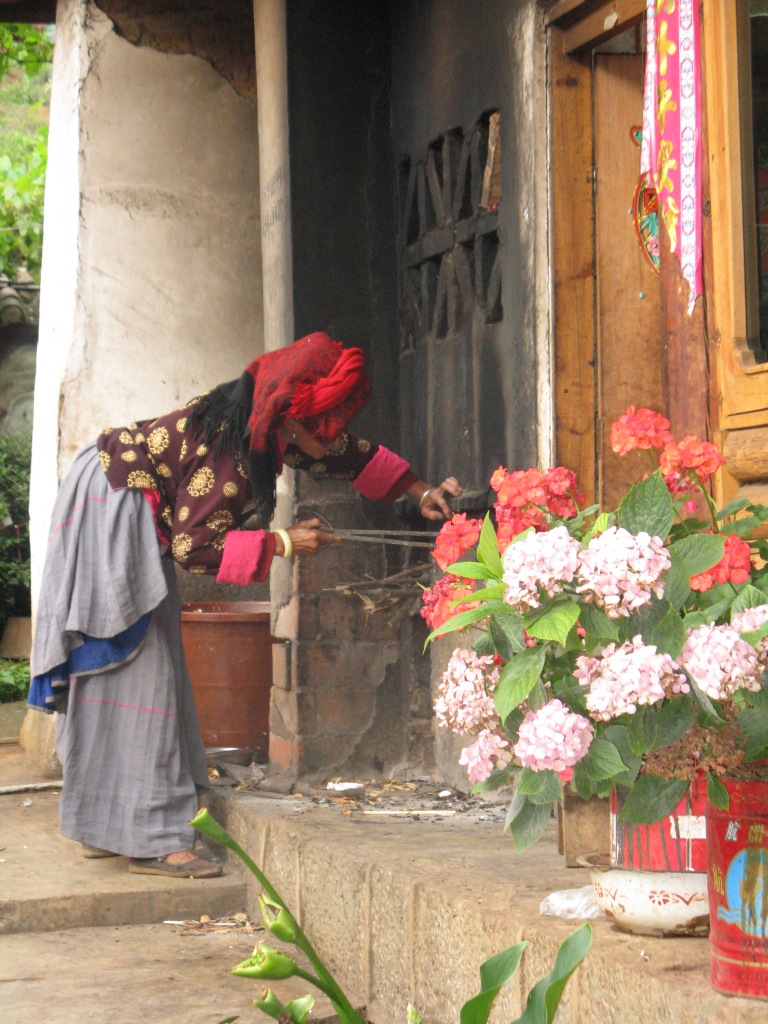
    This is the grandmother adding wood to the stove which is on the other side of the wall.  She has part of her skirt tucked into her waistband, which was quite common.  It seemed to be the way they  managed such voluminous skirts.  I’m constantly amazed by the amount and variety of food the Chinese manage to created from limited and often primitive conditions.

    One young man was kind enough to invite me to dinner in Shuhe (Lijiang) with some other people he’d made even though we arrived on different buses. 

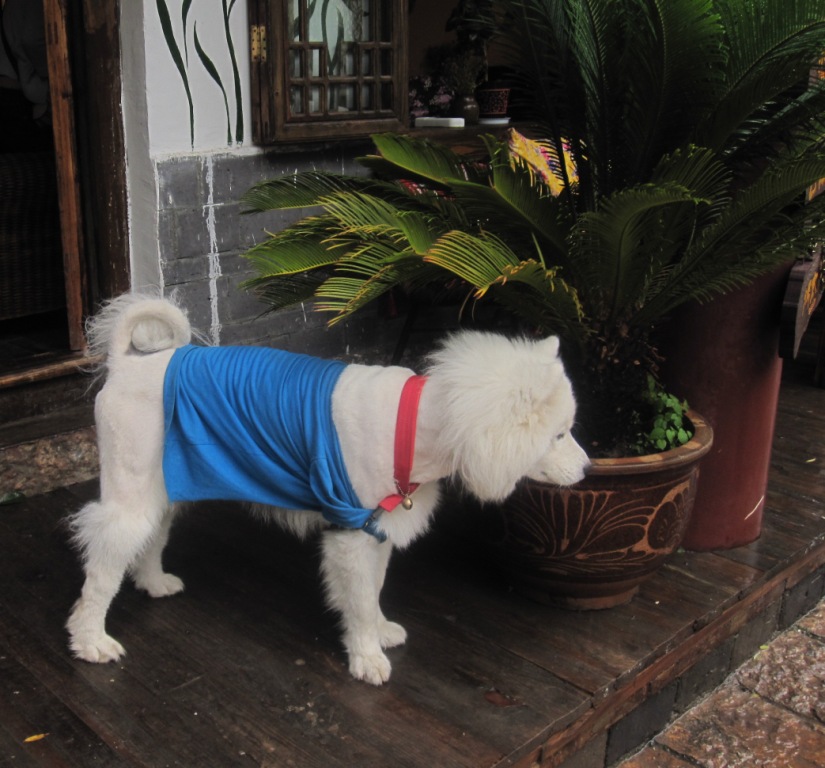
    This is a better photo of the same  dog I saw at night in Shuhe before I went to Lugu Lake.

      He then went out of his way to take me to the bus station to catch a bus to Dali. 

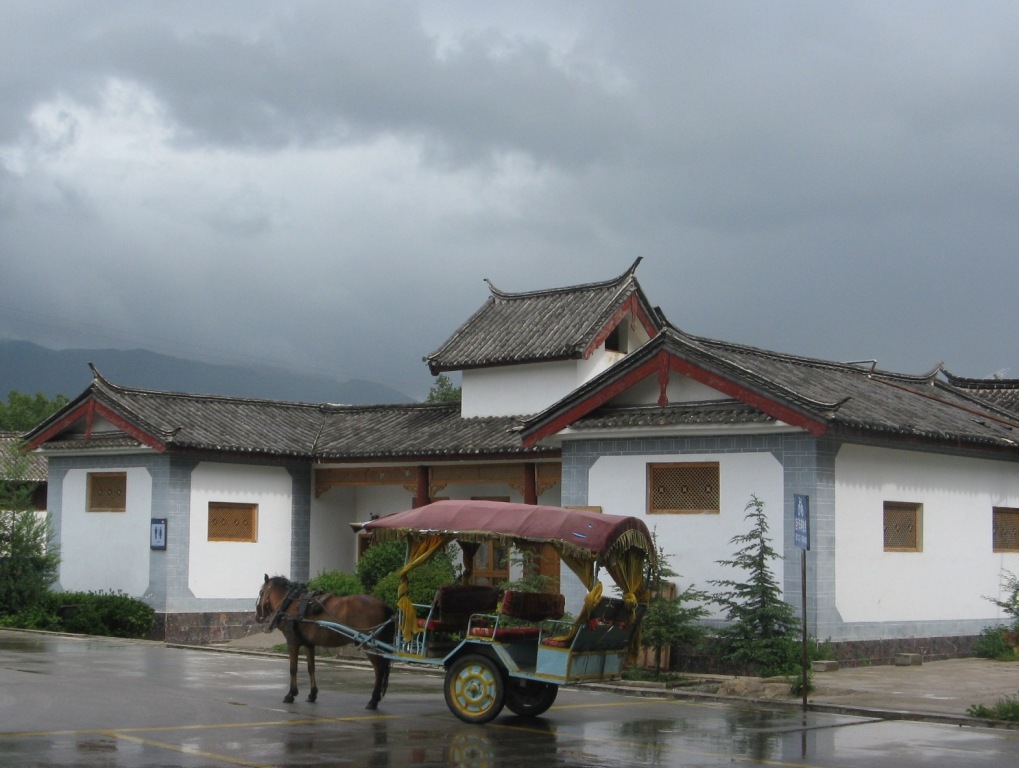
    On my last day in Shuhe I was wandering the streets taking a photo of a horse and buggy when it stopped to reveal some of the people I met the night before.  They were off to a nearby old town and invited me.  Their level of English at that stage was pretty minimal but they were very kind and it worked out well.   

    The horse and buggy

    Tomorrow I have arranged to be taken to the lake, a short drive, by the uncle of a young bloke from whom I bought some fabric.  He wanted to take me on a tour to some places of interest outside of Dali and not accessible by public transport,  but the price was too high so I declined.   I have been told I do not have to pay for the transport to the lake.  I will then take a boat which plies the lake and disembark at a village well known for batik making.  He said I can just poke my nose in anywhere and ask to see the batik making.  I went through the village on a bus today on my way to and from a market and it was full of tour buses. 

    Another Scam

    The bus trip to Dali had its own scam.  The bus stopped once.  The dirty toilets had a charge which I’ve never encountered before.  At least they had walls and doors, not a certainty in China. 

     The food area was selling corn cobs at up to twice the price of some other places, but as I was hungry I bought one.  The dried fruit was expensive too, but as I was getting low on dried fruit and finding it hard to find I bought some  pineapple.  I have since found some fruit in Dali but nuts are still problematic.

    China, Lake Lugu, Lijiang

    bus, China, culture, dogs, ethnic minorities, Food, Lake Lugo, Lijiang, matriarchial society, transportation

    • <
    • 1
    • …
    • 23
    • 24
    • 25
    • 26
    • 27
    • …
    • 31
    • >

© Copyright Kerry's Blog. All rights reserved.